

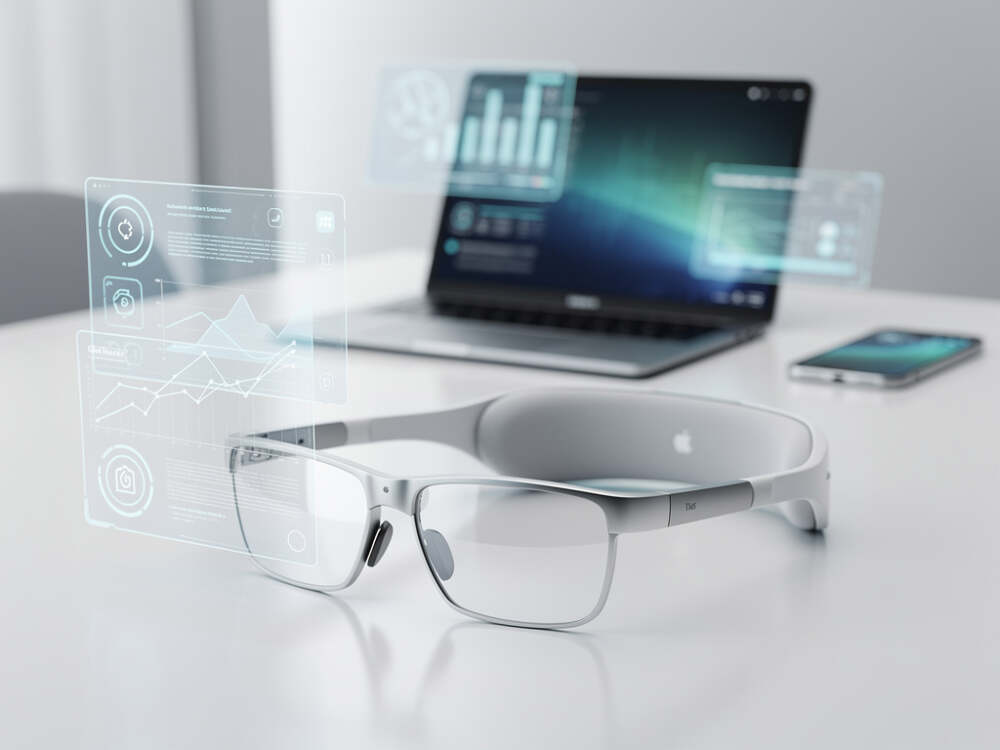
Apple is reportedly gearing up to release its next-generation augmented reality (AR) glasses in 2026, signaling a major step forward in CEO Tim Cook’s vision for the future of immersive technology. The upcoming device, widely expected to succeed the Vision Pro, aims to blend Apple’s signature design, advanced AR capabilities, and seamless integration with the broader ecosystem of iPhones, Macs, and Apple services.
Sources familiar with Apple’s plans indicate that the new AR glasses will be lighter, more compact, and more affordable than the Vision Pro, reflecting lessons learned from the initial launch. While the Vision Pro introduced consumers to Apple’s high-end AR and mixed-reality experience, its premium price and bulkier form factor limited early adoption. The 2026 model appears designed to expand accessibility while delivering a refined user experience.
Apple has reportedly focused heavily on enhancing the device’s optics, processing power, and battery efficiency. Early prototypes are said to feature ultra-high-resolution displays, improved field-of-view, and faster chipsets optimized for AR applications. These upgrades are expected to enable more immersive experiences, ranging from productivity and design to gaming and virtual collaboration.
Integration with Apple’s ecosystem remains central to the strategy. Observers expect the AR glasses to work seamlessly with iCloud, Apple Music, Apple TV+, and existing productivity apps like Pages, Keynote, and FaceTime. Developers are also anticipated to play a crucial role, as Apple expands its ARKit platform to support a wider range of applications, including entertainment, education, and remote work solutions.
Industry analysts note that Apple’s 2026 AR glasses could mark a turning point in the consumer AR market. While other companies have released mixed-reality headsets and AR devices, Apple’s approach typically focuses on design, usability, and ecosystem integration—factors that have historically helped it dominate new tech categories. If successful, the device could accelerate mainstream adoption of AR technology and reshape how people interact with digital content in daily life.
Pricing and availability remain speculative, but Apple is believed to be targeting a more mass-market-friendly price point than the Vision Pro, potentially broadening the device’s appeal. Supply chain optimizations and manufacturing advancements are reportedly helping Apple plan for larger-scale production, suggesting that the company anticipates strong demand.
Security and privacy are expected to be key considerations in the design. Apple has emphasized user control over data in its past product launches, and the AR glasses are likely to include features ensuring that personal information, eye-tracking data, and spatial mapping remain private.
While 2026 is still a few years away, anticipation is already building. Tech enthusiasts, investors, and developers are closely monitoring Apple’s progress, eager to see how the company will shape the next chapter of augmented reality. Many see this device as more than a gadget—it could represent a shift toward wearable computing that merges the physical and digital worlds more naturally than ever before.
Tim Cook’s push into AR reflects a broader strategic vision for Apple: to lead in emerging technologies while maintaining the brand’s reputation for innovation, design, and user-centric products. If the new AR glasses meet expectations, they could become a central platform for Apple’s next generation of digital experiences, influencing everything from entertainment and education to work and communication.
The AR glasses launch in 2026 promises to be one of the most significant tech events in the coming years, potentially cementing Apple’s role as a pioneer in immersive technology and providing a glimpse into the future of human-computer interaction.










Leave a Reply