

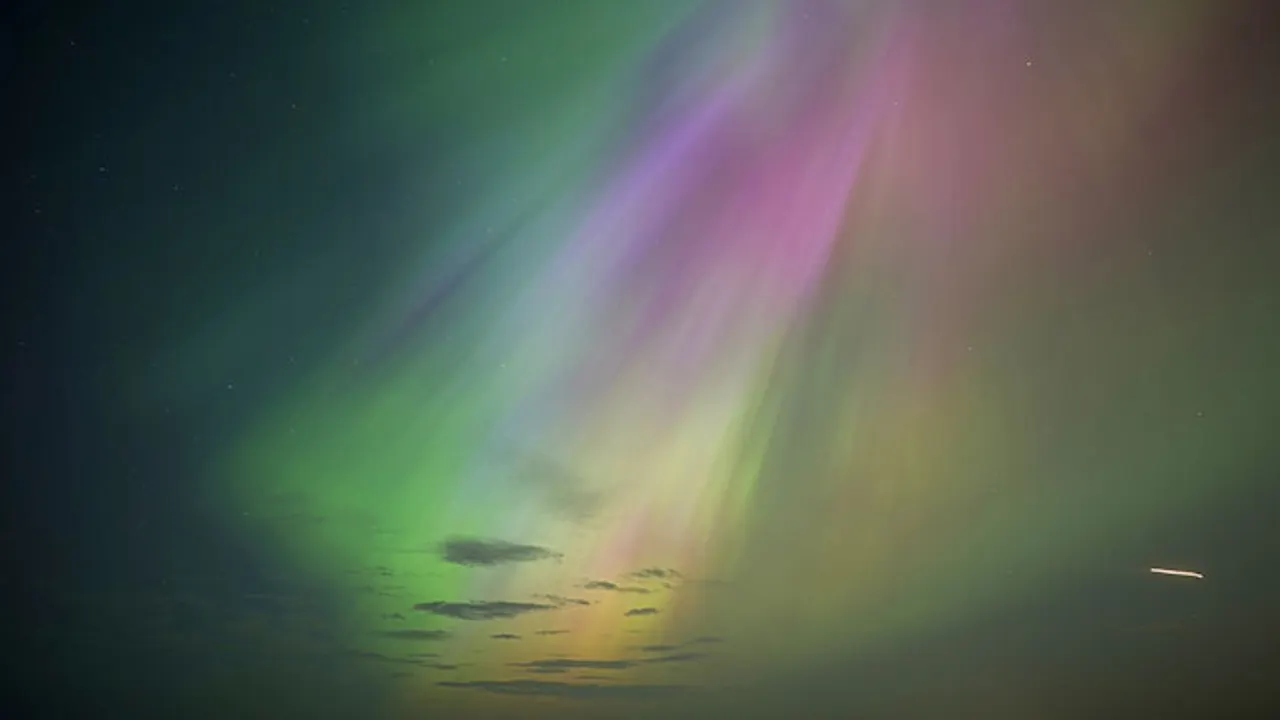
Astro‑enthusiasts and winter skywatchers are turning their eyes skyward as Arizona earns acclaim as the best place in the United States to witness the dazzling spectacle of the December Northern Lights this year. While aurora activity is usually associated with northern latitudes like Alaska, Canada, and Scandinavia, powerful geomagnetic storms have amplified this season’s auroras — pushing them farther south and making them visible in parts of the American Southwest.
The Northern Lights, or aurora borealis, occur when charged particles from the Sun interact with Earth’s magnetic field, triggering glowing waves of color in the upper atmosphere. These particles are typically funneled toward the poles, where magnetic field lines converge, which is why auroras are more common at high latitudes. However, during periods of strong solar activity, geomagnetic disturbances can stretch the auroral oval closer to the equator, enabling rare sightings farther south than usual.
Why Arizona Is Currently Ideal
Arizona’s recent ranking as the No. 1 state for December Northern Lights viewing is influenced by several key factors:
1. Low Light Pollution: Many regions of Arizona, especially areas outside major cities, offer exceptionally dark skies. This minimal light pollution dramatically improves visibility of faint celestial displays.
2. Dry Winter Air: The state’s arid climate means clear atmospheric conditions for much of December, reducing cloud cover and providing crisp views of the night sky.
3. High Geomagnetic Activity: Increased solar particle output and elevated geomagnetic indices have expanded the auroral zone southward, bringing vivid aurora displays into view across the southwestern U.S.
4. Accessibility and Scenic Backdrops: From desert landscapes to elevated plateaus, Arizona’s varied terrain provides stunning foregrounds for night‑sky photography and viewing experiences. Locations like state parks and remote wilderness areas offer unobstructed horizons ideal for aurora watching.
Best Viewing Tips for Arizona’s Aurora Borealis
For skywatchers planning to catch the show, experts offer these tips:
Choose Dark, Open Locations: Areas well outside of city lights — such as national forests, high desert expanses, or designated dark‑sky parks — are ideal. Elevation and unobstructed horizons can enhance visibility.
Check Geomagnetic Forecasts: The intensity of auroras depends heavily on solar wind conditions and geomagnetic activity. Forecasts can help pinpoint expected peak times for visibility.
Dress for Warm Nights: Even Arizona can become chilly after sunset in December. Layers, warm blankets, and thermoses make long stargazing sessions more comfortable.
Bring Photography Gear: For those hoping to capture the lights, a camera with manual settings, a sturdy tripod, and a wide‑angle lens are recommended. Long exposures can reveal colors and structures not easily seen by the naked eye.
Where in Arizona Offers the Best Views
While sightings can occur across much of the state during strong auroral displays, some regions are especially favorable:
Northern Arizona: High plateaus and forests — such as those near Flagstaff or the Grand Canyon region — combine elevation with low light pollution, making them strong candidates for aurora sightings.
Southern Arizona’s Desert: Far from urban centers like Tucson and Phoenix, desert spaces provide broad skies and minimal ambient light, enhancing the contrast and visibility of auroras.
Dark‑Sky Parks: Designated dark‑sky areas recognized for night‑sky viewing offer regulated environments free from artificial light, ideal for stargazers and aurora hunters alike.
A Unique Seasonal Opportunity
Although aurora borealis events in Arizona remain relatively rare, this December has offered an unusual window of opportunity due to heightened solar activity. Unlike year‑round viewing locations in the Arctic Circle, Arizona’s chance at aurora sightings is episodic and tied to specific solar weather conditions. That makes this season an exciting event for both casual observers and dedicated astrophotographers.
Local astronomy clubs and observatories have reported significant interest, with visitors and residents alike planning night outings to catch a glimpse of the celestial light show. Educational programs and community stargazing events are also drawing crowds eager to learn more about the science behind auroras.
Why This Matters
Beyond its visual spectacle, the arrival of the Northern Lights at such southern latitudes highlights the dynamic nature of space weather and its impact on Earth’s atmosphere. Solar activity follows an approximately eleven‑year cycle, and periods of peak activity are known to produce more frequent and intense auroras. This year’s forecast aligned with such patterns, creating optimal conditions for remarkable displays well beyond their usual range.
For skywatchers in Arizona and beyond, this December offers a rare chance to witness one of nature’s most stunning phenomena without needing to travel to the Arctic Circle. Whether you’re a seasoned observer or a newcomer to night‑sky wonders, the opportunity to see the aurora from Arizona is one you won’t want to miss.







Leave a Reply