

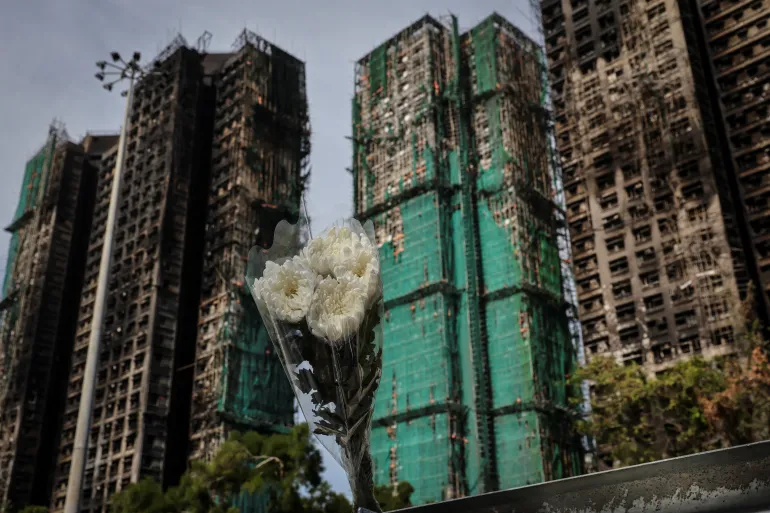
Hong Kong is confronting the aftermath of its deadliest blaze in years, a tragedy that has shaken a city still carrying political and emotional scars from past unrest. As officials sift through the ruins and residents mourn the victims, the disaster has stirred memories of 2019—another moment when Hongkongers felt exposed, anxious, and sharply aware of the city’s fragility.
A Tragedy That Exposed Old Vulnerabilities
The blaze, which tore through a densely populated district, quickly overwhelmed residents and emergency crews. Authorities have called it one of the most devastating urban fires in Hong Kong in recent decades, raising urgent questions about fire safety, building standards, and emergency response capabilities in older neighborhoods long known for congestion and aging infrastructure.
For many citizens, the disaster felt painfully familiar. The sense of fear, displacement, and uncertainty echoed the atmosphere during the mass protests of 2019, when public trust in institutions was deeply shaken.
Public Response: Grief Mixed With Skepticism
As news of the fire spread, so did public frustration. Complaints surfaced about slow rescue operations, inadequate safety measures, and long-ignored warnings about hazardous living conditions. Social media was flooded with emotional messages, many of which referenced the 2019 protests—where citizens regularly questioned whether the government was acting swiftly or transparently during moments of crisis.
This time, too, skepticism resurfaced. Some residents expressed doubts about the accuracy of official information, while others criticized the government for years of underinvestment in older, densely packed districts.
Echoes of 2019: Not Protests, but Mindset
While the fire itself bears no direct political connection to the turmoil of 2019, the emotional parallels are clear. The tragedy rekindled a collective memory of vulnerability—how quickly everyday life can be disrupted, and how deeply crises can expose social divides.
Analysts say the memory of 2019 has fundamentally reshaped how Hongkongers view public events. Large-scale emergencies now tend to revive old anxieties about government competence, communication, and accountability.
Government Scrambles to Reassure Public
Authorities have vowed a full investigation into the cause of the fire, with promises of support for the affected families and a review of fire prevention standards in older buildings. Officials emphasized that there was no delay in the emergency response, though they acknowledged the need to strengthen urban safety measures.
Still, regaining public confidence remains challenging. The lingering skepticism born from the 2019 crisis means government reassurances no longer land with the same authority they once did.
A City Reflecting on Its Future
As Hong Kong mourns the victims and begins the long process of recovery, the tragedy serves as a harsh reminder of the city’s evolving identity. The physical damage may be limited to one neighborhood, but the emotional impact is citywide.
The fire has reopened conversations about safety, cohesion, and what it means to live in a city where old wounds remain close to the surface. Whether the moment becomes a catalyst for meaningful reform—or yet another symbol of unresolved tensions—will depend on the government’s next steps and the public’s willingness to trust again.








Leave a Reply