

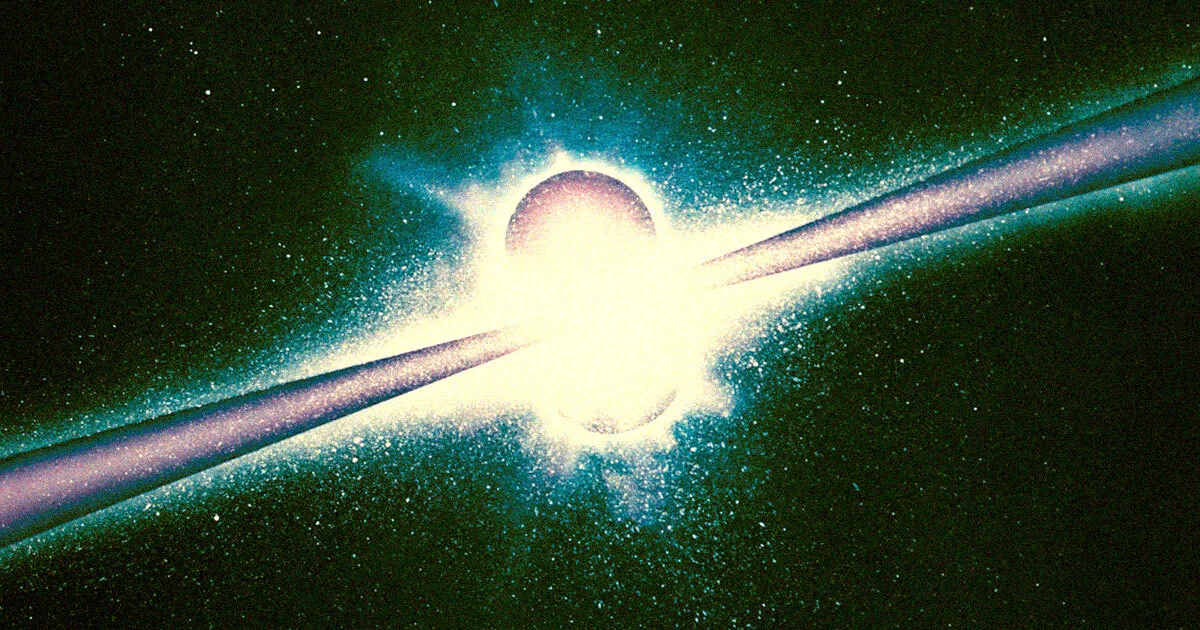
A gamma-ray burst (GRB) unlike any ever seen before has been detected, and scientists are struggling to explain it. Traditionally, GRBs are one-time cataclysmic events, but the new signal appears to have repeated multiple times — defying expectations and testing existing models of how such bursts form.
What Was Observed
- The event, labeled GRB 250702B, was first spotted by NASA’s Fermi Gamma-Ray Space Telescope on July 2. Over the course of a single day, at least three distinct bursts were recorded.
- Several observatories, including an X-ray telescope called Einstein Probe, detected earlier or related activity nearly a full day before the Fermi detection.
- The bursts are unusually long in duration—hundreds to a thousand times longer than most gamma-ray bursts, which normally flash briefly and then fade.
Why It’s Unusual
- Repetition: A key expectation about GRBs is that the source undergoes a catastrophic collapse (for example, a star exploding) that destroys the object. That makes repetition nearly impossible under standard models.
- Extragalactic Origin: Though the signal lies close to the plane of our Milky Way, follow-up observations using powerful instruments (including infrared surveys) suggest the source lies well beyond our galaxy. If so, this makes the signal even more immense and its nature more mysterious.
- Periodic Signals: Early indications are that there may be periodicity in the burst timing—something never observed before in this kind of GRB.
Theories Under Consideration
Astronomers are exploring several hypotheses, though none fit cleanly:
- A massive star collapse with sustained central engine activity — meaning that although a star is collapsing, something about the mechanism (perhaps fallback material or remaining core) continues to power bursts over time. But this is unprecedented and doesn’t match typical GRB behavior.
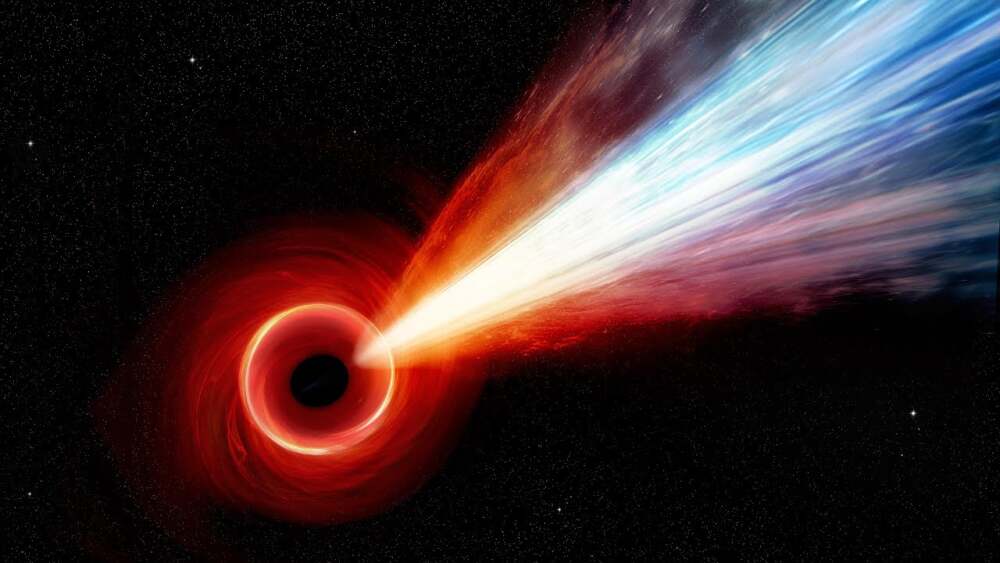
- Tidal disruption event (TDE) — where a star is being torn apart by a black hole. In some scenarios, this could produce repeated flares or bursts. However, the timescales, energies, and periodicity observed make this explanation challenging under conventional models.
- Intermediate-mass black hole involvement — possibly a black hole of an intermediate mass (larger than those formed from single massive stars, but smaller than the supermassive black holes in galactic centers) might be at play. Yet intermediate-mass black holes remain elusive, and observations of one in this context would be groundbreaking.
What This Could Mean
- If confirmed, GRB 250702B might reveal a new class of gamma-ray bursts or exotic astrophysical processes that we have not understood.
- It could push astronomers to revise existing GRB models or propose entirely new mechanisms for how repeating and long-duration bursts occur.
- For astrophysics as a field, it underscores how much remains unknown about energetic cosmic phenomena even after decades of observation.
What’s Next
- Continued observations are underway, including follow-ups with telescopes that can see in infrared, X-ray, and optical bands, to try to pinpoint the environment and host galaxy of the signal.
- Scientists will try to see if any similar repeating GRBs show up in archival data or in ongoing observation programs.
- Modeling work is likely to intensify: computational astrophysicists will test whether exotic or “hybrid” models (combining different kinds of known processes) can reproduce something like GRB 250702B.
Final Thoughts
This signal has excited the astronomy community because it seemingly breaks rules: repetition, extreme duration, and extragalactic power all in one event. Though we don’t yet have firm answers, the discovery pushes the frontier and reminds us how even well-studied phenomena like gamma-ray bursts can still surprise us.










Leave a Reply