

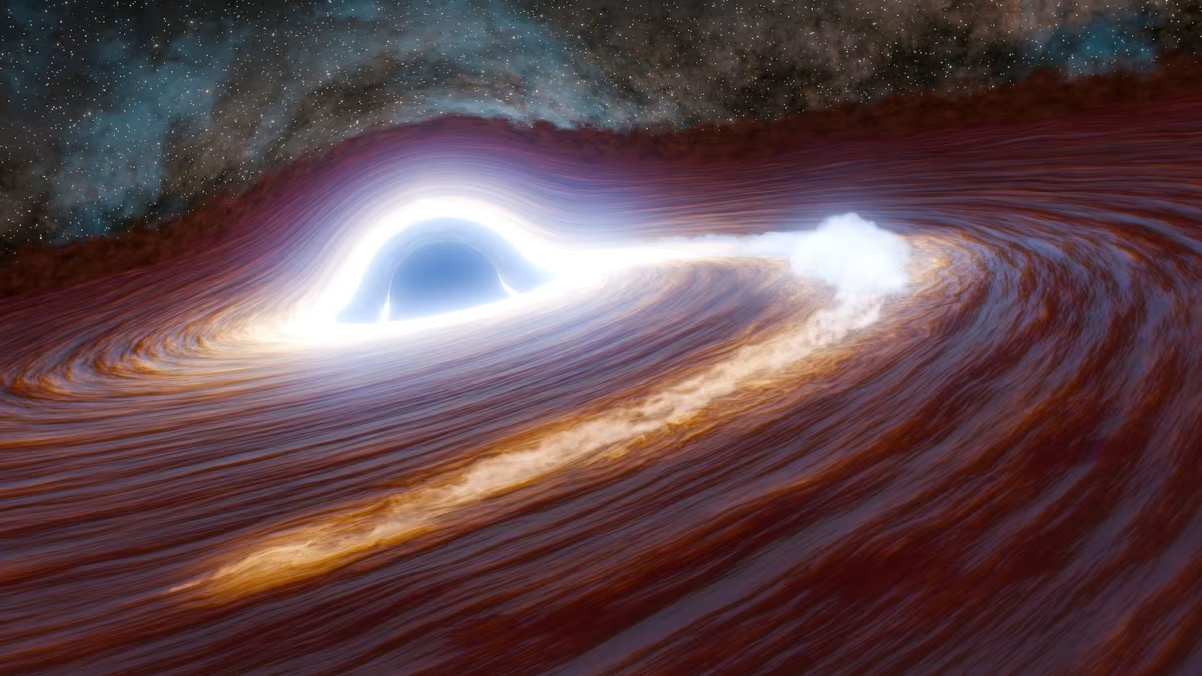
In a groundbreaking discovery that has astronomers around the world buzzing, scientists have observed the most powerful flare ever emitted by a supermassive black hole. This extraordinary cosmic event, occurring in a distant galaxy millions of light-years away, has set new records for both brightness and energy output.
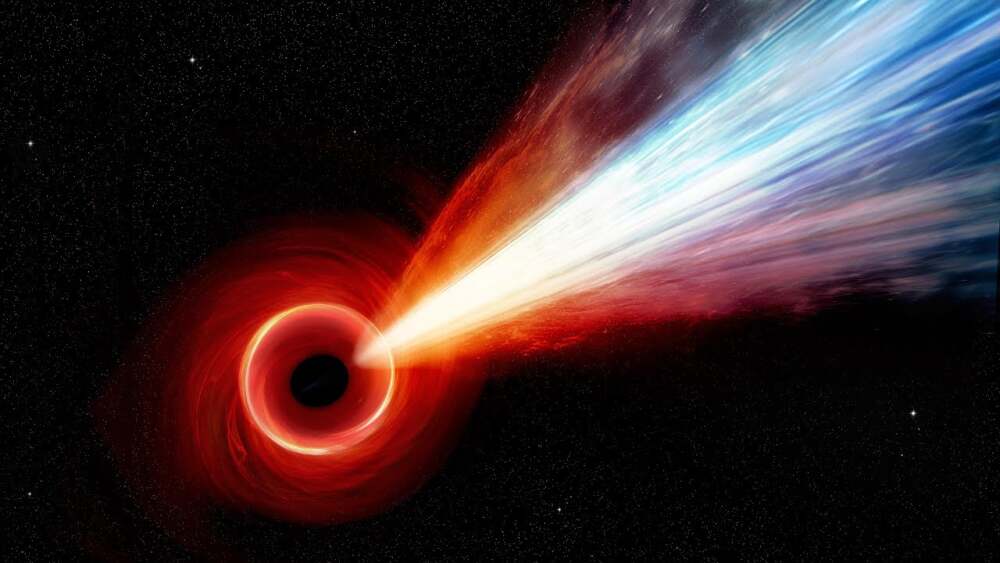
The flare, which is classified as a tidal disruption event (TDE), happens when a star strays too close to a supermassive black hole and is torn apart by immense gravitational forces. As the stellar material spirals into the black hole, it heats up to extreme temperatures, producing an intense burst of light and radiation. What makes this particular flare remarkable is that it outshone all previously recorded black hole flares, providing astronomers with an unprecedented view into the violent processes near a galaxy’s center.
“This is truly a once-in-a-lifetime observation,” said Dr. Lina Torres, an astrophysicist involved in the discovery. “The energy released during this event challenges our understanding of how black holes interact with their environment and how much light they can emit when consuming a star.”
The flare was detected using a combination of ground-based telescopes and space observatories, which captured both visible light and X-ray emissions. Analysis suggests that the black hole responsible for the flare is several million times the mass of our Sun, yet the energy from this single event briefly rivaled the combined light output of all the stars in its host galaxy.
Scientists are now studying the data to better understand the mechanics of tidal disruption events and their role in galactic evolution. Such extreme events offer a rare glimpse into the behavior of matter under conditions that cannot be replicated on Earth, providing critical insights into the fundamental laws of physics.
The discovery underscores the importance of continuous monitoring of the sky and international collaboration in astronomy. With more advanced telescopes and observation networks coming online, researchers hope to catch even more of these cosmic spectacles, shedding light on the most enigmatic objects in the universe.













Leave a Reply