

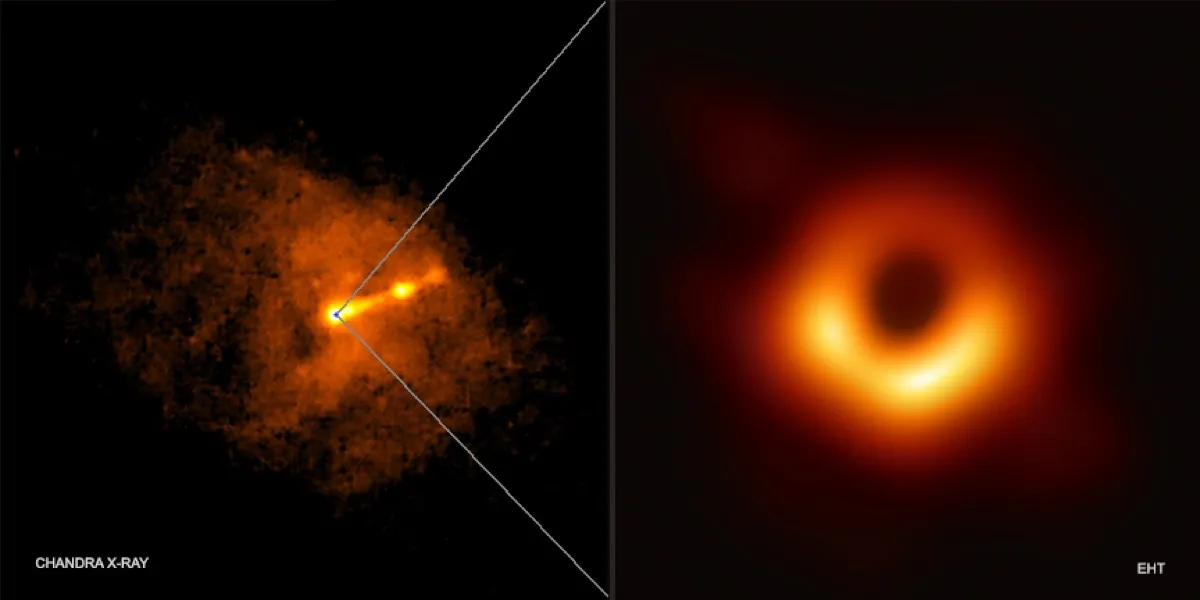
Astronomers are preparing to achieve a historic milestone in astrophysics: capturing the first-ever moving image of a supermassive black hole. This ambitious project will move beyond the static images that have previously fascinated both scientists and the public, allowing researchers to watch matter swirl and evolve around the black hole in real time.
The target of this groundbreaking observation is the supermassive black hole at the center of the Messier 87 (M87) galaxy, a cosmic behemoth with a mass of billions of suns. Its immense size and proximity make it ideal for studying dynamic processes over time, including the motion of its accretion disk and the behavior of high-energy plasma near the event horizon.
From Still Images to Dynamic Observation
In 2019, the Event Horizon Telescope (EHT) collaboration released the first-ever image of a black hole’s shadow, a landmark achievement in observational astronomy. Now, scientists aim to produce a time-lapse sequence, effectively creating a “movie” that reveals the movement of gas, dust, and magnetic fields just outside the black hole.
By repeatedly observing the black hole over several months, the EHT network — a global array of radio telescopes functioning together as an Earth-sized instrument — can track subtle changes in the black hole’s environment. These observations will allow astronomers to study the flow of matter, the dynamics of the accretion disk, and the origins of the relativistic jets that extend far beyond the galaxy.
Why Motion Matters
Capturing a moving image of a black hole has profound scientific significance:
- Understanding Spin and Growth: Observing how matter moves around the black hole provides insights into its spin rate and growth history, revealing whether it gained mass gradually or through mergers with other black holes.
- Accretion Disk Dynamics: Tracking changes in the disk of hot gas helps scientists understand how matter loses energy before falling into the black hole, shedding light on feeding mechanisms and energy release.
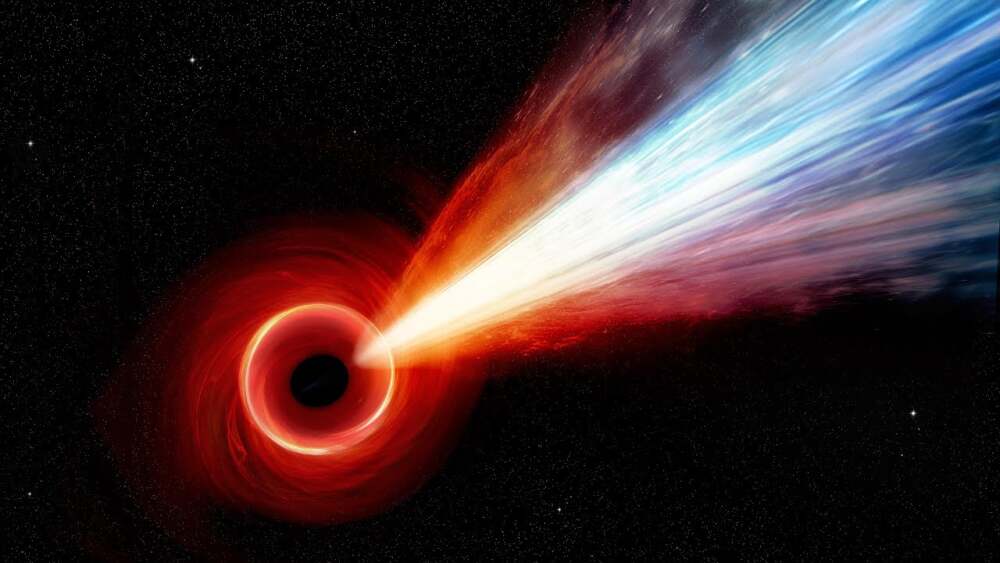
- Jet Formation: M87’s black hole produces high-speed jets that influence star formation and galaxy evolution. Motion studies may reveal how these jets are launched and how they interact with surrounding matter.
Technical Challenges
Producing a movie from EHT data is a highly complex endeavor. Observatories are located in remote and often harsh environments, such as polar regions, making data collection, transport, and processing a logistical challenge. Scientists must compile and synchronize massive datasets from multiple locations to create a coherent time-lapse sequence.
Despite these hurdles, the scientific community is eagerly anticipating the results. A moving image of a black hole will provide unprecedented opportunities to test Einstein’s theory of general relativity under extreme conditions and refine models of how black holes influence their galaxies.
A New Window on the Universe
This project represents a major step forward in visualizing one of the universe’s most extreme phenomena. For the first time, humanity may witness the dynamic behavior of a black hole, revealing the intricate interplay of gravity, plasma, and energy at the edge of one of nature’s most mysterious objects. Beyond its scientific significance, the resulting images will help reshape public understanding of black holes, showing them not as cosmic vacuum cleaners but as dynamic engines that shape their galactic neighborhoods.








Leave a Reply