

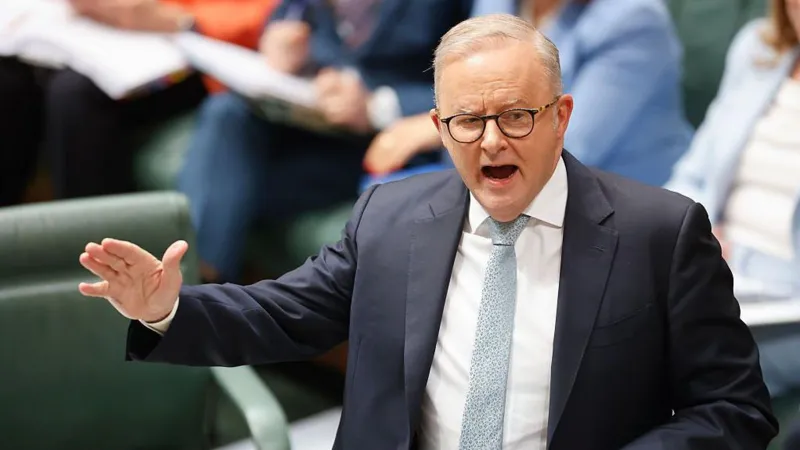
Australia’s Prime Minister has announced a sweeping crackdown on hate speech and extremist rhetoric following the deadly Bondi shooting, describing the attack as a grim reminder of how words can fuel violence if left unchecked.
Speaking after consultations with state leaders, security agencies, and community representatives, Prime Minister Anthony Albanese said the government would pursue stronger national laws to confront hate speech that incites violence, targets minority communities, or promotes extremist ideologies. The announcement comes as the country mourns victims of the Bondi attack, which has deeply shaken public confidence and reignited debate over social cohesion.
From Tragedy to Policy Shift
The Bondi shooting has become a defining moment in Australia’s ongoing struggle to balance freedom of expression with public safety. Authorities have indicated the attack was linked to extremist beliefs, raising urgent questions about the role of online platforms, radical preachers, and organised hate networks in spreading inflammatory content.
Albanese stressed that while free speech remains a core democratic value, it does not extend to language that encourages harm or dehumanises entire groups. “When hate is allowed to grow unchecked, it doesn’t stay online—it spills into our streets,” he said.
What the Crackdown Could Include
Under the proposed approach, the federal government is expected to work closely with states and territories to strengthen existing laws and close legal gaps. Measures under consideration include harsher penalties for inciting violence or hatred, expanded powers for authorities to act against repeat offenders, and tighter oversight of individuals or organisations that promote extremist views.
The government is also examining ways to improve cooperation with technology companies, aiming to ensure hateful content is identified and removed more quickly before it escalates into real-world harm.
Community Impact and National Unity
The Bondi attack has intensified fears among minority communities, with Jewish and Muslim groups in particular calling for stronger protections and clearer action against hate-driven threats. Community leaders have welcomed the prime minister’s stance, saying decisive leadership is essential to prevent further violence and restore a sense of safety.
At the same time, civil liberties advocates have urged caution, warning that new laws must be carefully drafted to avoid overreach. The government has signaled it will consult widely to ensure reforms are both effective and consistent with democratic principles.
A Broader Security Challenge
Security experts note that Australia, like many countries, is facing a more complex threat landscape where radicalisation can occur rapidly through digital channels. Hate speech, they argue, often acts as a gateway to more serious forms of extremism, making early intervention critical.
Albanese acknowledged this challenge, emphasizing that law enforcement alone cannot solve the problem. Education, community engagement, and responsible online behavior will also play key roles in preventing future attacks.
A Turning Point
As investigations into the Bondi shooting continue, the prime minister framed the proposed crackdown as part of a broader effort to safeguard Australia’s multicultural identity. He said the nation must draw a clear line between legitimate debate and rhetoric that seeks to divide, intimidate, or incite violence.
For many Australians, the reforms now being discussed represent not just a response to a single tragedy, but a statement about the kind of society the country aims to be—one that confronts hatred early, protects vulnerable communities, and refuses to let extremism take root.











Leave a Reply