

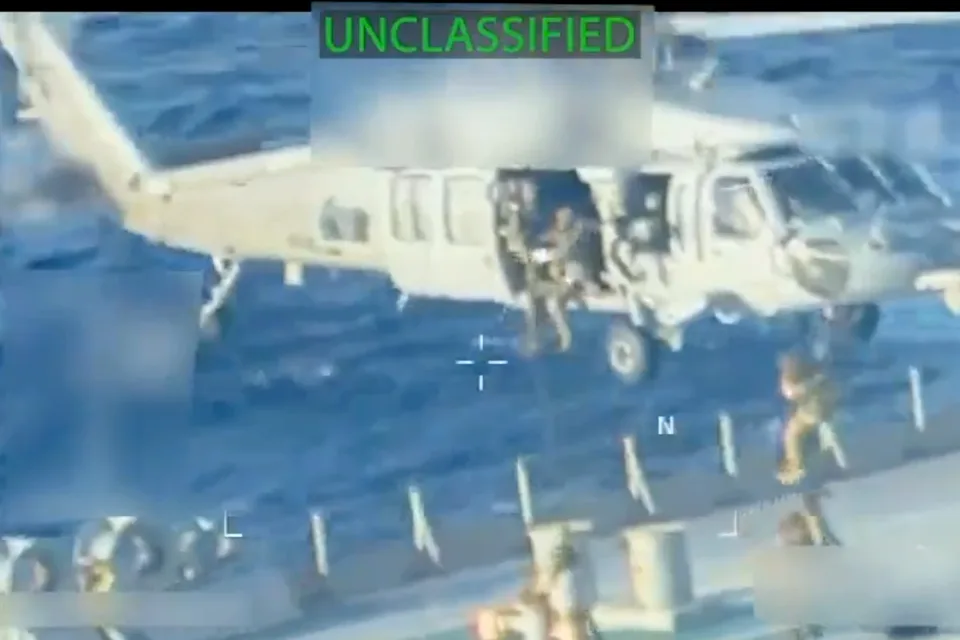
China has sharply criticized the United States for what it describes as unlawful seizures of oil tankers connected to Venezuela, accusing Washington of violating international law and abusing its power under the guise of sanctions enforcement. The remarks add a new layer of tension to already strained U.S.–China relations and highlight growing global divisions over unilateral economic measures.
In a statement issued by China’s foreign ministry, Beijing said the United States had no legal authority to seize foreign-flagged vessels operating on the high seas or in international waters. Chinese officials argued that such actions amount to “economic coercion” and set a dangerous precedent that threatens global trade and maritime security.
The dispute centers on U.S. actions against oil tankers allegedly carrying Venezuelan crude in violation of American sanctions. The United States has imposed sweeping restrictions on Venezuela’s oil sector in an effort to pressure the government in Caracas, accusing it of corruption, human rights abuses, and undermining democratic institutions. U.S. authorities have previously seized cargoes or redirected tankers, claiming the oil sales help the Venezuelan government evade sanctions.
China, one of Venezuela’s key economic partners and creditors, rejected that justification. Beijing reiterated its long-standing position that unilateral sanctions imposed without United Nations authorization are illegal and illegitimate. Chinese officials emphasized that disputes over trade or sanctions should be handled through multilateral mechanisms, not enforced through what they called “extraterritorial law enforcement.”
Venezuela has also condemned the seizures, describing them as acts of “modern piracy” and warning that such moves worsen the country’s economic hardship. The Venezuelan government maintains that it has the right to sell its oil freely and that U.S. actions interfere with its sovereignty and the livelihoods of its people.
The controversy underscores broader geopolitical fault lines. While the United States argues that strict enforcement of sanctions is necessary to prevent sanctioned governments from accessing global markets, critics—including China, Russia, and several developing nations—say these measures disrupt supply chains and undermine international norms governing freedom of navigation and commerce.
Analysts note that the issue could resonate beyond Venezuela. Energy-importing nations are watching closely, concerned that aggressive enforcement actions could increase uncertainty in global oil markets. Shipping companies, insurers, and port authorities may also face heightened risks as geopolitical rivalries increasingly spill into maritime trade.
China called on the United States to immediately halt what it described as illegal seizures and urged respect for international law and the authority of the United Nations. While Washington has not publicly responded to Beijing’s latest comments, the episode reflects how sanctions policy has become another arena for strategic competition between major powers.
As global energy markets remain sensitive to political shocks, the clash over Venezuelan oil tankers illustrates how economic pressure tactics can escalate into broader diplomatic confrontations—raising questions about the future balance between sanctions enforcement and the rules-based international order.










Leave a Reply