

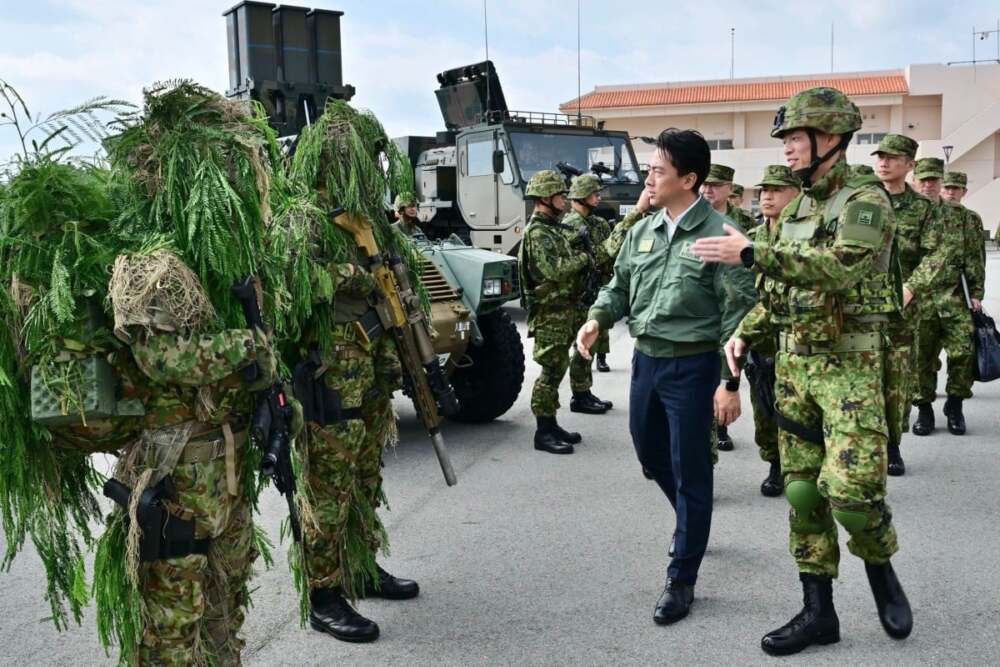
Beijing has issued a sharp condemnation of Japan’s plans to station medium-range surface-to-air missiles on Yonaguni Island — a strategic outpost located merely 110 kilometers from Taiwan — warning that the move could inflame regional tensions.
Chinese Foreign Ministry spokesperson Mao Ning labeled the deployment a deliberate provocation, accusing Tokyo of stoking military confrontation in the region. She argued that Japan’s right-wing political forces are driving not just their own country, but the broader region, toward destabilizing conflict.
Mao further linked the missile deployment to recent comments by Japanese Prime Minister Sanae Takaichi, who suggested that a Chinese attack on Taiwan might justify a Japanese military response. According to Beijing, her remarks have already raised the stakes dangerously high.
Revisiting Japan’s post-World War II constraints, Mao warned that Tokyo’s defense posture is shifting. She pointed to Japan’s gradual rearmament: rising defense spending, looser restrictions on arms exports, and a departure from strictly defensive military policies. In her words, these moves represent a “wrong path of military buildup,” one that risks unleashing disaster both in Japan and across its neighborhood.
Citing historical memory, Mao recalled the suffering of China during Japan’s wartime aggression and stressed that the “wheels of history” must not be turned backward. She declared defiantly that China will not tolerate “external forces” meddling in what Beijing considers its Taiwan region.
On the Japanese side, Defense Minister Shinjiro Koizumi defended the deployment. During a visit to Yonaguni, he argued that missile units there would serve as a deterrent, reducing the risk of an armed attack on Japanese territory. For Koizumi, placing the missile system on Yonaguni is a rational defensive measure, not a provocation.
The tensions between Beijing and Tokyo have already manifested in economic and diplomatic fallout. China has taken retaliatory steps, including trade restrictions and issuing travel warnings, signaling its serious displeasure. Meanwhile, Japan insists its strengthening of air defense positions is consistent with its sovereign right to defend itself.
As both sides dig in, the strategic role of Yonaguni — once a quiet, remote island — is being dramatically redefined. In the eyes of Beijing, the missile deployment is a dangerous escalation; for Tokyo, it is a vital shield in a fraught security environment.













Leave a Reply