

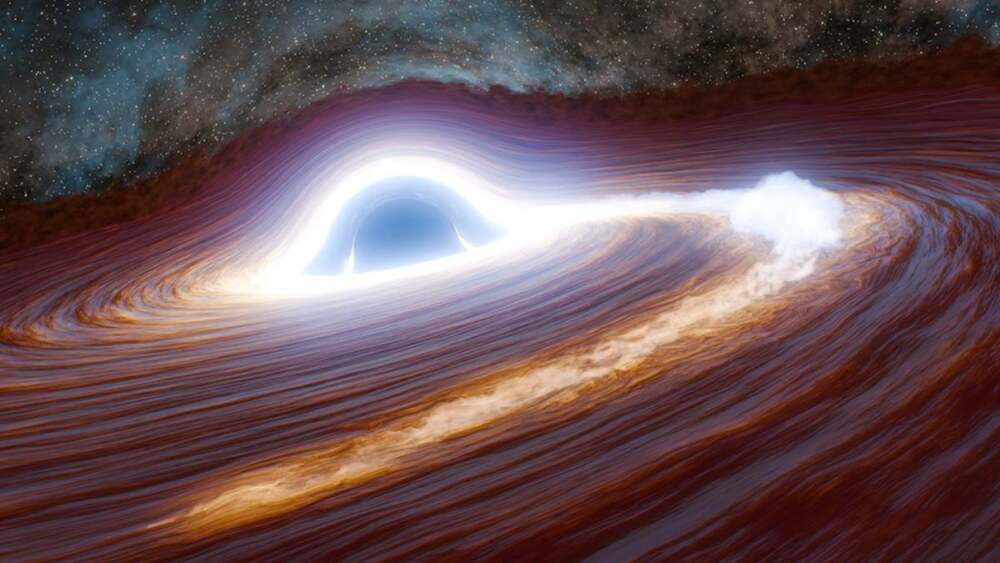
In one of the most astonishing cosmic discoveries of the decade, astronomers have detected a massive flare from a distant black hole that shone with the power of 10 trillion suns. The event, described as the brightest and most distant black hole flare ever observed, offers an extraordinary glimpse into how supermassive black holes interact with their surroundings—and the devastating fate of stars that venture too close to them.
A Celestial Beacon From the Early Universe
The flare originated from a galaxy located nearly 10 billion light-years away, meaning we are seeing it as it appeared when the universe was still young. At its core lies a supermassive black hole estimated to be hundreds of millions of times the mass of our Sun. For a brief period, the black hole’s light output surpassed the brightness of entire galaxies, burning with an intensity never before recorded.
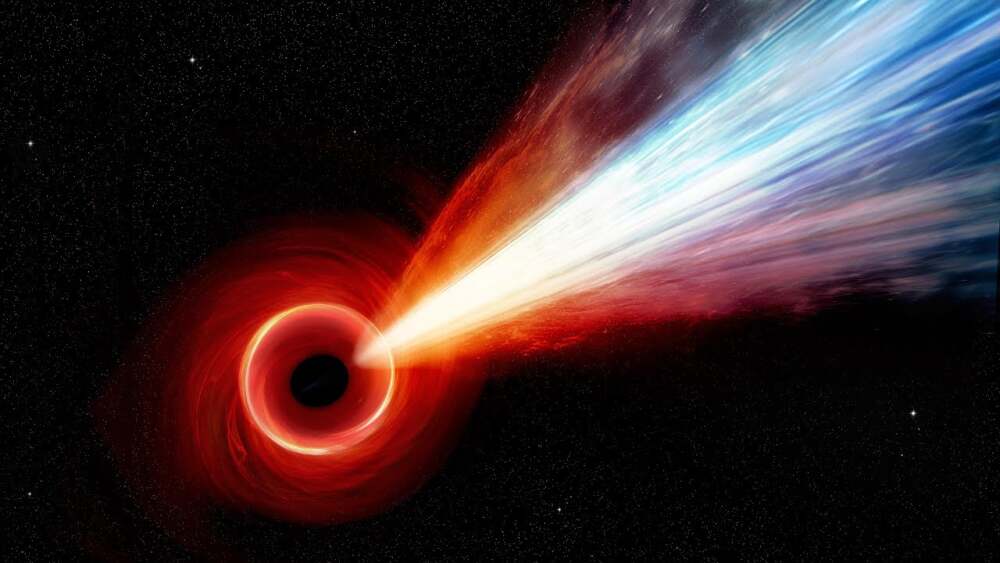
This brilliant eruption is believed to have occurred when a massive star wandered too close to the black hole’s immense gravitational field. As the star was torn apart by the black hole’s tidal forces—a process known as a tidal disruption event—its gas and dust were heated to extreme temperatures, releasing an enormous burst of radiation.
The Power of Destruction and Creation
When a star is devoured by a black hole, the encounter is not silent. The shredded stellar material spirals around the black hole, forming an accretion disk. As it falls inward, the friction and heat generated cause the material to emit powerful X-rays and visible light. In this case, the energy output was so colossal that astronomers estimate it was 40 times brighter than typical tidal disruption events.
This rare flare not only astonished scientists with its luminosity but also provided a chance to study black hole behavior in a part of the universe that existed billions of years ago. Since light from this event has traveled for so long to reach us, it offers a look back in time, helping researchers understand how early galaxies and their central black holes evolved together.
Challenging Astronomical Theories
Such extreme brightness has puzzled scientists. Traditional models of black hole feeding don’t fully explain how an object can radiate at this scale without tearing apart its own accretion disk. Researchers suggest that the black hole might have consumed the star unusually fast, or that magnetic fields around the disk amplified the light emission beyond what standard physics would predict.
Additionally, the flare’s prolonged duration—lasting several months—indicates a massive supply of material was drawn into the black hole. Astronomers are still analyzing the light spectrum and energy patterns to determine the precise mechanisms behind this cosmic event.
A Window Into the Distant Past
Because this flare comes from such a distant galaxy, it serves as a window into the early universe, showing that supermassive black holes were already active and destructive billions of years ago. These violent events may have played a crucial role in shaping galaxies by regulating star formation and distributing energy across vast cosmic distances.
For scientists, this discovery reinforces the importance of long-term sky surveys that continuously monitor distant regions of space. Instruments capable of detecting subtle changes in brightness have become essential in spotting rare events like this one, which might otherwise go unnoticed.
Looking Ahead
Astronomers plan to continue observing the fading remnants of the flare to better understand how black holes digest the material they capture. By comparing this event to other, smaller tidal disruptions, they hope to refine models of black hole growth and test the limits of general relativity under extreme conditions.
This record-shattering flare is more than just a spectacle—it’s a reminder of the extraordinary power that lies at the heart of galaxies. Even in the cold emptiness of space, forces exist that can outshine the combined brilliance of billions of stars, reshaping the cosmos in their wake.









Leave a Reply