

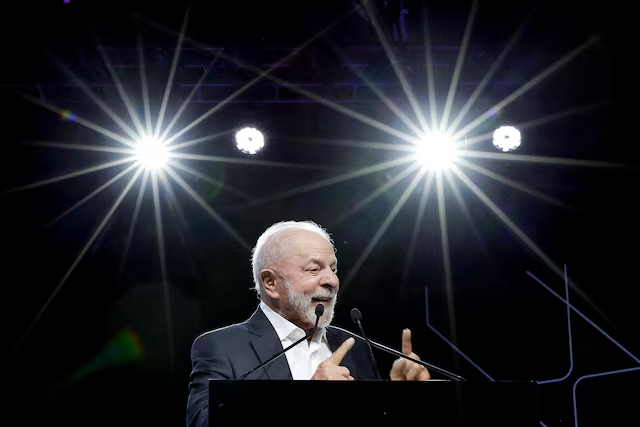
Brazil has warned that it could abandon the long-negotiated trade agreement between the Mercosur bloc and the European Union, as Italy and France push for delays that threaten to derail the deal after years of talks.
Senior Brazilian officials expressed growing frustration with what they described as repeated hesitation from European capitals, arguing that the agreement has already undergone extensive revisions and concessions. The Mercosur–EU pact, which would create one of the world’s largest free trade zones, has been under negotiation for more than two decades and is seen by South American nations as a cornerstone of their economic strategy.
Italy and France have emerged as leading voices calling for a pause or renegotiation, citing concerns over agricultural protections, environmental standards, and the potential impact on European farmers. French leaders in particular have warned that the agreement could undermine domestic agriculture and fall short of the EU’s climate and deforestation commitments.
Brazilian leaders counter that the agreement already includes robust environmental safeguards and argue that Europe’s shifting demands risk undermining trust between partners. Officials in Brasília said continued delays could force Mercosur countries to seek alternative trade partnerships, particularly with Asia and the Middle East, where demand for agricultural products and raw materials remains strong.
Mercosur, which includes Brazil, Argentina, Uruguay, and Paraguay, views the deal as a gateway to greater access to European markets for beef, soy, sugar, and ethanol, while European exporters would benefit from reduced tariffs on cars, machinery, chemicals, and pharmaceuticals. Economists on both sides have said the pact could boost trade volumes significantly and strengthen geopolitical ties at a time of global economic fragmentation.
European divisions over the deal reflect broader political pressures within the EU, where farming communities have staged protests over rising costs and competition from imports. Italy has aligned itself with France in calling for more time to assess the agreement’s economic and environmental consequences, while other EU members have urged swift ratification to avoid losing credibility as a global trade partner.
Brazil’s warning marks one of the strongest signals yet that patience is wearing thin in South America. Diplomats familiar with the negotiations say that walking away would be a dramatic step, but one that Brazil may be willing to take if the agreement remains stalled indefinitely.
As talks continue behind closed doors, the standoff highlights the growing tension between trade liberalization, domestic political pressures, and environmental commitments. Whether the Mercosur–EU deal moves forward or collapses altogether may depend on whether European leaders can bridge their internal divisions before Brazil decides the cost of waiting is too high.










Leave a Reply