

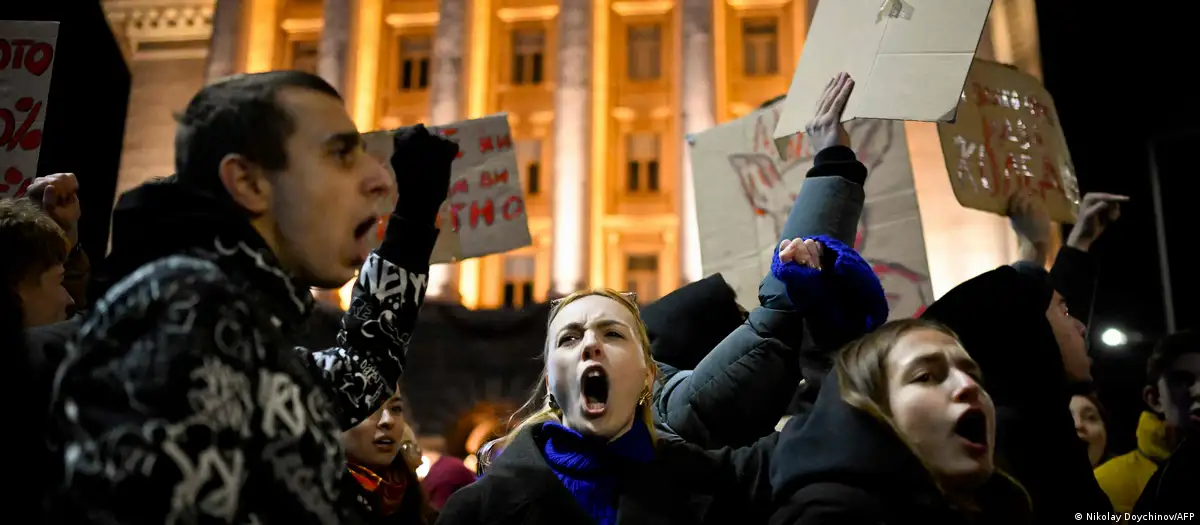
Tens of thousands of Bulgarians have taken to the streets in one of the largest protest waves the country has witnessed in years, voicing fierce opposition to the government’s proposed budget and longstanding issues of corruption. What began as scattered demonstrations has transformed into a nationwide movement spanning Sofia, Plovdiv, Varna, Burgas, and numerous smaller towns, with citizens demanding transparency, economic fairness, and political accountability.
Public Anger Reaches Boiling Point
The proposed budget—criticized for introducing higher taxes, reducing subsidies, and tightening public spending—has sparked outrage among workers, pensioners, business owners, and students alike. Many say the measures place an unfair burden on ordinary citizens while failing to address systemic corruption that drains national resources.
Protesters carried signs reading “Enough!” and “Stop the Theft” as they marched through city centers. Demonstrators say that years of unfulfilled promises, political scandals, and widening inequality have eroded public trust.
“We’re not just protesting the budget,” said one demonstrator in Sofia. “We’re protesting a system that puts citizens last and protects corrupt interests first.”
Corruption at the Heart of the Unrest
Corruption has been a persistent challenge in Bulgaria, often cited as one of the country’s most significant obstacles to economic development and EU integration milestones. Activists argue that billions are lost annually through misuse of public funds, questionable procurement deals, and political patronage networks.
The latest budget proposal, critics say, does nothing to confront these entrenched practices. Instead, they argue, it shifts financial pressure onto citizens while leaving powerful political and business elites untouched.
Civil society groups have released statements calling for independent audits, judicial reforms, and stronger oversight mechanisms.
Government Responds With Caution
The government has attempted to quell the backlash, stating that the budget is necessary to stabilize public finances during a challenging economic period. Officials argue that difficult decisions must be made to prevent further debt escalation.
However, many citizens remain unconvinced. Opposition parties have joined the movement, accusing the administration of using economic hardship as a cover to push through unpopular measures that protect vested interests.
A Movement That Cuts Across Society
One of the defining features of the protests is their diverse makeup. Teachers, health workers, transport unions, small business owners, farmers, and students have all joined the demonstrations. Calls for resignation of senior officials echoed through multiple cities, signaling a deepening political crisis.
Social media has played a major role, with footage of crowds blocking roads, gathering outside government buildings, and staging symbolic vigils spreading rapidly and fueling further mobilization.
What Comes Next for Bulgaria?
As the protests grow, political analysts warn that the government may face increasing pressure to revise the budget or launch concessions to ease public anger. Some predict that snap elections could become more likely if the unrest intensifies.
For many Bulgarians, the demonstrations are about far more than a single budget cycle—they reflect a decade-long struggle for dignity, accountability, and a government that functions in the public’s interest.
The movement’s message is clear: citizens will no longer tolerate policies that ignore their needs or perpetuate corruption.
Whether the government will make meaningful changes remains to be seen, but Bulgaria’s streets have spoken loudly—and change, one way or another, appears inevitable.







Leave a Reply