

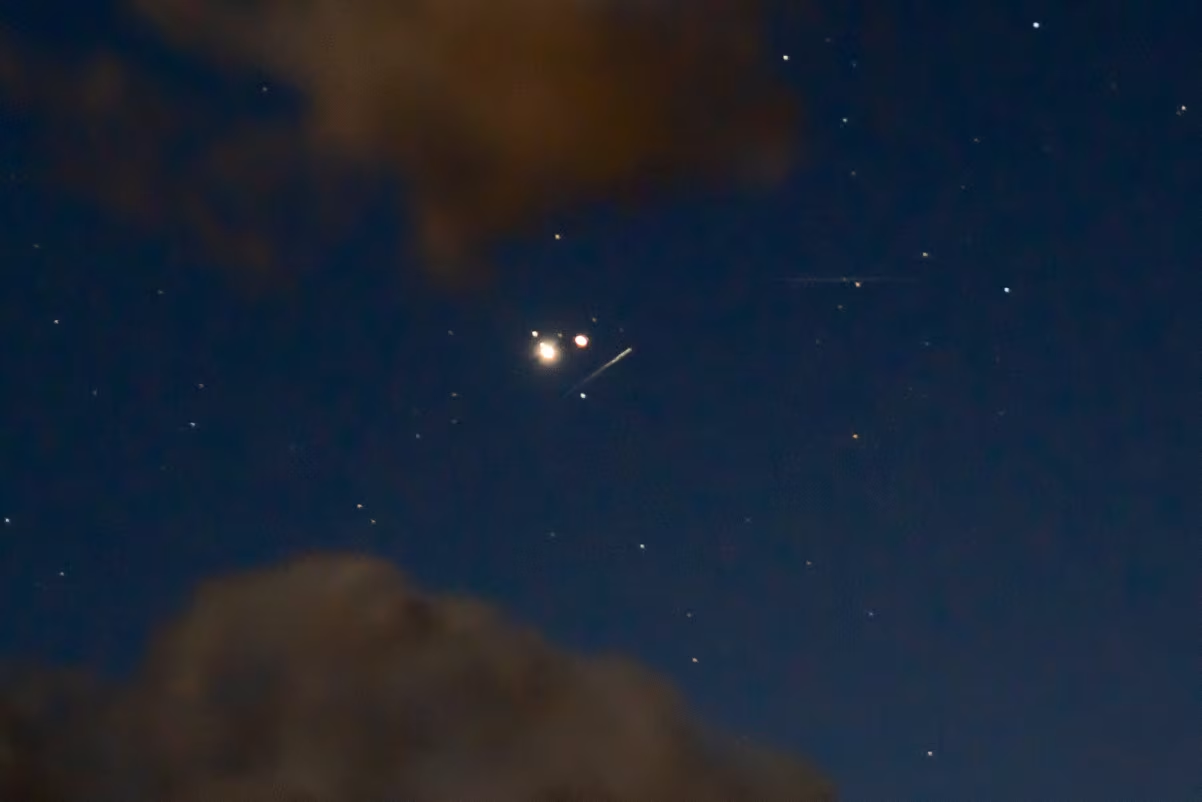
As 2025 draws to a close, stargazers have one last celestial spectacle to enjoy: the Ursid meteor shower. Known for its steady bursts of shooting stars, the Ursids provide a perfect opportunity for both amateur and seasoned astronomers to cap off the year with a dazzling display.
When and Where to Watch
The Ursid meteor shower peaks between December 22 and December 23, with the best viewing window typically in the pre-dawn hours. Observers in the Northern Hemisphere have the greatest chance of seeing meteors, as the radiant—the point from which the meteors appear to originate—is located near the constellation Ursa Minor, close to Polaris, the North Star.
Unlike some larger meteor showers, the Ursids are modest in intensity, producing around 5 to 15 meteors per hour at peak. However, under clear, dark skies away from city lights, observers may catch occasional bursts of brighter meteors.
Viewing Tips
- Find a Dark Spot: Light pollution can significantly reduce visibility, so head to a rural location or park away from streetlights.
- Give Your Eyes Time to Adjust: Allow at least 20–30 minutes for your eyes to adapt to the dark. Avoid looking at phone screens or other bright lights.
- Bring a Blanket or Chair: Comfort is key for extended skywatching sessions, especially during cold December nights.
- Look Up, Not at Polaris: While the meteors radiate from Ursa Minor, they can appear anywhere in the sky. Pan your view to catch them streaking across different areas.
- Patience Pays Off: Meteor showers are unpredictable, so the longer you watch, the more likely you are to see multiple meteors.
A Quiet End-of-Year Tradition
The Ursids are associated with Comet 8P/Tuttle, whose debris creates the meteors as Earth passes through its dust trail. Historically, the Ursids have been a quieter shower compared with the Perseids or Geminids, but their timing around the winter solstice makes them a special treat for night sky enthusiasts.
Whether you’re a dedicated amateur astronomer or a casual skywatcher, the 2025 Ursids offer a serene and beautiful way to close out the year. Grab some warm clothing, head to a dark sky, and make a wish on one of the season’s final shooting stars.











Leave a Reply