

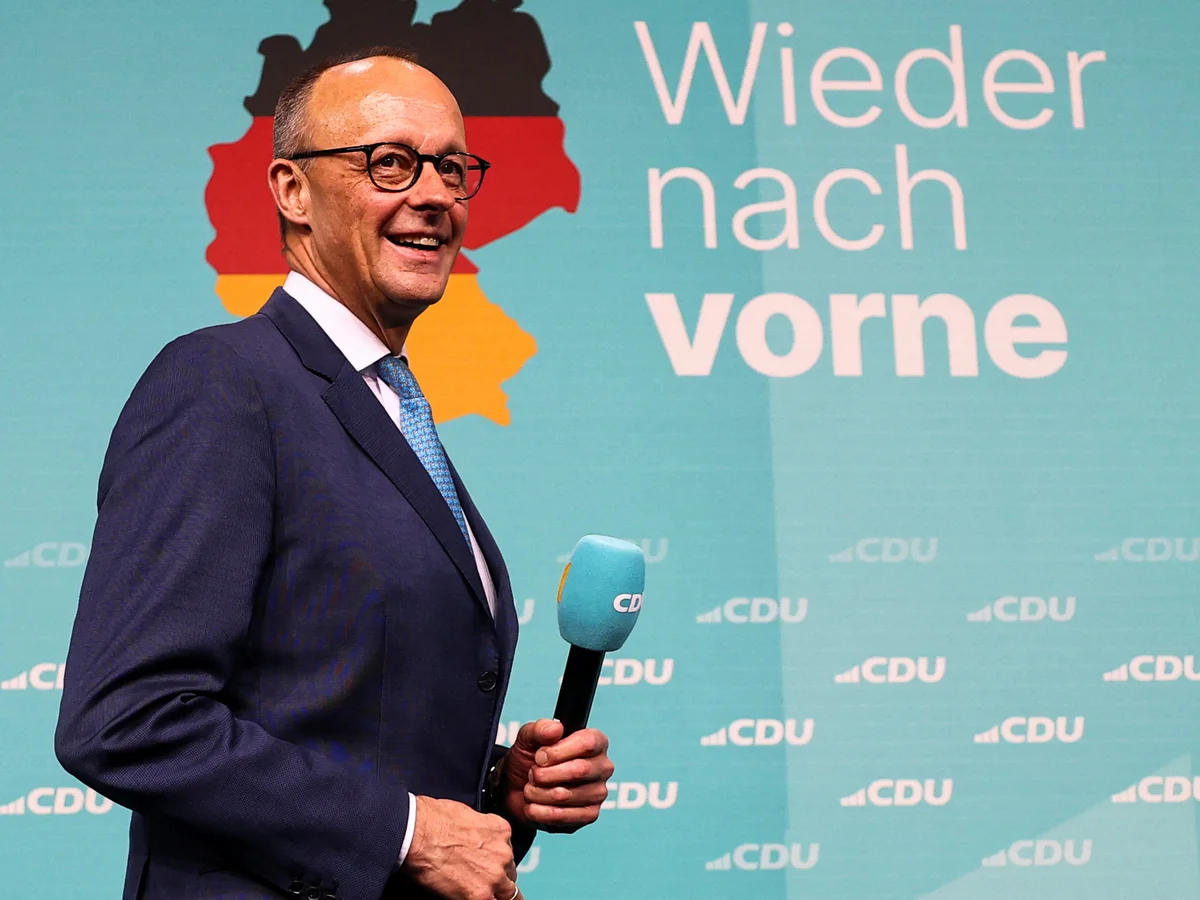
In the recent local elections in North Rhine-Westphalia (NRW), Germany’s most populous state, Chancellor Friedrich Merz’s Christian Democratic Union (CDU) emerged victorious, securing approximately 33.3% of the vote. This result underscores the CDU’s stronghold in the region, with the party maintaining its position as the leading political force.
However, the elections also marked a notable surge for the far-right Alternative for Germany (AfD), which nearly tripled its support compared to the previous election, achieving 14.5% of the vote. This significant increase reflects the AfD’s growing influence in western Germany, particularly in NRW, where it has been consolidating its presence.
The Social Democratic Party (SPD) followed with 22.1% of the vote, maintaining a substantial share but trailing behind both the CDU and the AfD.
NRW Premier Hendrik Wüst, a member of the CDU, expressed satisfaction with the party’s performance, describing the state as the “powerhouse” of the governing party. However, he acknowledged the AfD’s gains as a cause for concern, urging centrist politicians to address issues such as poverty and migration to prevent further shifts toward the far-right.
Political analysts view the AfD’s performance as indicative of its deepening entrenchment in western Germany, a region traditionally less supportive of the party. This development suggests that the AfD’s appeal is broadening beyond its strongholds in the east, posing new challenges for mainstream parties in both federal and state politics.
The NRW elections serve as a critical barometer for German politics, reflecting shifting voter sentiments and the evolving political landscape. As the CDU celebrates its victory, the surge in AfD support signals a need for introspection and strategic recalibration among Germany’s centrist parties to address the concerns driving voters toward the far-right.












Leave a Reply