

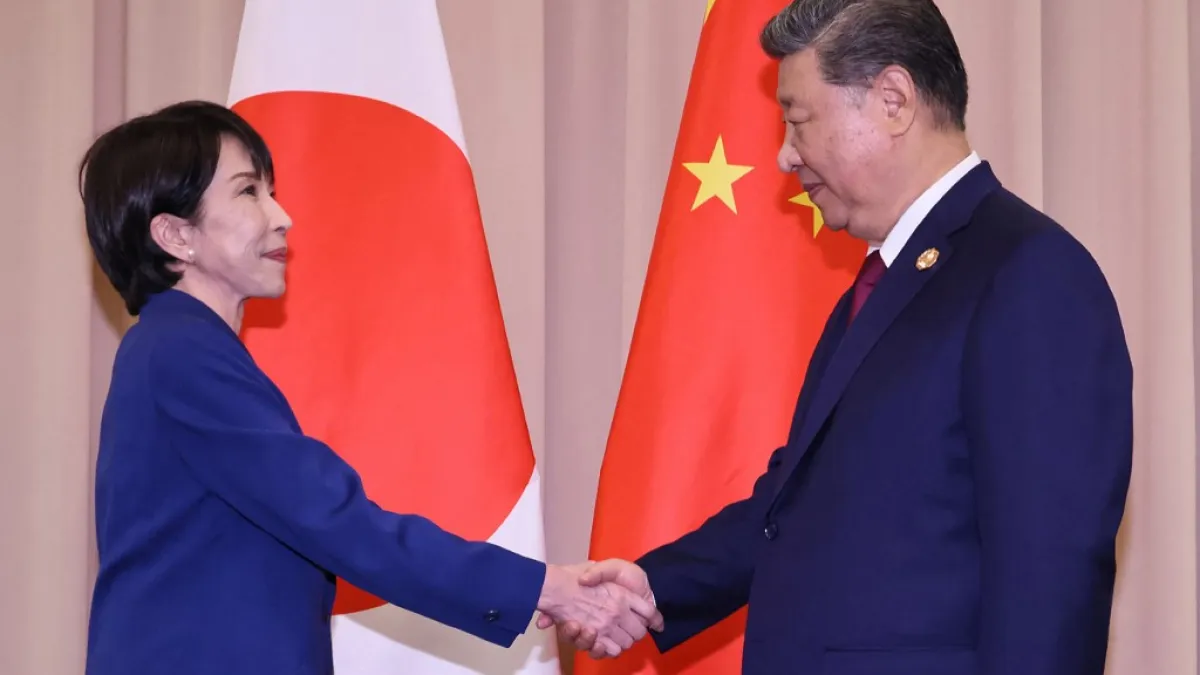
China has formally taken its growing conflict with Japan over Taiwan to the United Nations, accusing Tokyo of threatening military intervention and pledging to defend itself if provoked. The latest developments mark a significant spike in bilateral tension, raising concerns about regional stability.
The UN Letter and China’s Strongest Warning Yet
China’s U.N. Ambassador, Fu Cong, wrote a forceful letter to U.N. Secretary-General António Guterres, calling out Japanese Prime Minister Sanae Takaichi for remarks she made in parliament earlier this month. Takaichi suggested that a hypothetical Chinese attack on Taiwan — which Beijing considers its own territory — could be interpreted as “a situation threatening Japan’s survival,” potentially justifying a military response.
In response, Fu condemned Takaichi’s comments as a “grave violation of international law” and warned that any Japanese intervention in a cross-Strait conflict would be viewed by Beijing as an act of aggression. The letter made clear that China reserves the right to “resolutely exercise its right of self-defence under the U.N. Charter and international law” to protect its claimed territorial integrity.
A Bilateral Crisis Deepens
The dispute is being described as the most serious diplomatic crisis between the two nations in years. Beijing’s denunciation comes amid a broader campaign to portray Japan’s current leadership as increasingly assertive and nationalistic. China accuses Tokyo of undermining core Chinese interests by making overt threats regarding Taiwan.
Japan, for its part, has rejected China’s accusations and reaffirmed its commitment to peace. Tokyo insists that Takaichi’s remarks do not reflect a shift toward militarism but rather a response to changing regional dynamics. Still, the very framing of her words — particularly using the language of “survival” — represents a break from Tokyo’s traditionally more cautious posture on Taiwan.
Historical Undertones and Sovereignty Claims
Beijing has not shied away from historical rhetoric in this showdown. In its diplomacy, China has invoked post-World War II declarations — specifically the Potsdam and Cairo agreements — suggesting they support its claim that territories once occupied by Japan, including Taiwan, should “be restored” to Chinese rule.
Chinese officials also argue that Japan’s recent comments revive painful memories of wartime aggression. In recent days, Beijing has urged Tokyo to repent for its wartime conduct, framing the current dispute as deeply rooted in history and national pride.
Broader Retaliation and Diplomatic Fallout
Beyond the letter to the U.N., China is reportedly taking concrete retaliatory measures. The economic fallout is already visible: trade ties are being strained, and cultural exchanges are taking a hit. In what some analysts see as a deliberate signal, high-profile Japanese cultural events in China have been canceled, and Chinese tourists are being discouraged from traveling to Japan.
The diplomatic rift also threatens to reverberate across regional alliances. As China tightens its rhetoric, Tokyo faces a delicate balancing act — asserting its security interests without pushing its powerful neighbor into a corner.
What Lies Ahead — Risks and Scenarios
This confrontation at the U.N. is not just symbolic — it illustrates a dangerous new phase in East Asian geopolitics. There are several possible trajectories:
- Escalation into Military Posturing: If China or Japan continues to raise the stakes, the region could see increased military deployments or signaling, heightening the risk of miscalculations.
- Economic Retaliation: China may apply deeper economic pressure on Japan, targeting trade, tourism, and investment more aggressively.
- Diplomatic Isolation: Beijing could work to isolate Tokyo internationally, pressuring other countries to condemn or distance themselves from Japan’s Taiwan policy.
- Negotiation or Cooling Off: There is still room for a diplomatic de-escalation if Japan offers a qualified retraction or clarifies its position — though this seems unlikely in the near term, given the rhetoric on both sides.
Strategic Implications for Taiwan and the Region
For Taiwan, this crisis underscores just how much it remains at the heart of great-power rivalry. While Taipei is not a direct party to the U.N. confrontation, its future — and that of its security — is being actively shaped by Beijing-Tokyo dynamics.
For the wider region, the dispute signals a shift: Japan, under new leadership, appears ready to more openly challenge Chinese ambitions. Meanwhile, China is using international institutions to assert its claims and warn against foreign interference.
Conclusion
China’s dramatic move to bring its dispute with Japan to the United Nations is more than diplomatic posturing — it is a clear message that Beijing views Japan’s current leadership as crossing a red line. By invoking self-defence and historical grievances, China is raising the stakes dramatically. How Japan responds, and whether other global actors choose sides, will shape the stability of East Asia in the months ahead.








Leave a Reply