

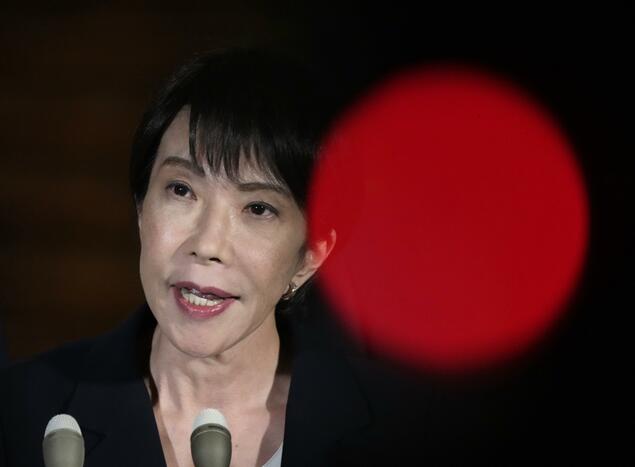
A senior source within Japan’s prime minister’s office has triggered intense political and public debate by suggesting that the country needs to possess nuclear weapons, a statement that challenges decades of Japan’s official security doctrine and postwar identity.
The remarks, attributed to an internal government source rather than a formal policy announcement, come amid growing regional tensions in East Asia. Japan faces an increasingly complex security environment, marked by North Korea’s advancing missile and nuclear programs, China’s military expansion, and uncertainty over the long-term reliability of global security arrangements.
Japan is the only country to have suffered atomic bombings in wartime, an experience that has shaped its strong public opposition to nuclear weapons. The nation has long adhered to its “Three Non-Nuclear Principles,” pledging not to possess, produce, or allow the introduction of nuclear arms. These principles, while not legally binding, have been a cornerstone of Japan’s domestic and diplomatic posture for decades.
The suggestion that Japan should possess nuclear weapons represents a dramatic departure from that tradition. According to political analysts, the comments may reflect growing frustration within parts of the security establishment about perceived gaps in deterrence, particularly as neighboring states continue to modernize their arsenals.
Government officials were quick to distance the administration from the remarks, emphasizing that Japan remains committed to its non-nuclear principles and to international nonproliferation efforts. The prime minister’s office reiterated that Japan’s security strategy is firmly based on its alliance with the United States and the extended deterrence provided under that partnership.
Opposition parties and civil society groups reacted sharply, warning that even discussing nuclear armament risks damaging Japan’s moral authority on disarmament and could provoke regional instability. Survivors of the Hiroshima and Nagasaki bombings, along with peace advocacy organizations, condemned the comments as deeply troubling and contrary to the country’s historical responsibility.
Supporters of a more assertive defense posture argue that Japan must openly examine all options in light of evolving threats. They contend that nuclear deterrence discussions, even if hypothetical, reflect a broader global shift as countries reassess security assumptions in an era of heightened geopolitical competition.
International observers are closely watching the fallout from the remarks, as any move toward nuclear armament by Japan would have profound implications for regional security dynamics and global nonproliferation norms.
While no policy change has been announced, the episode has reignited a sensitive national conversation about how Japan balances its pacifist ideals with the realities of an increasingly uncertain world.











Leave a Reply