

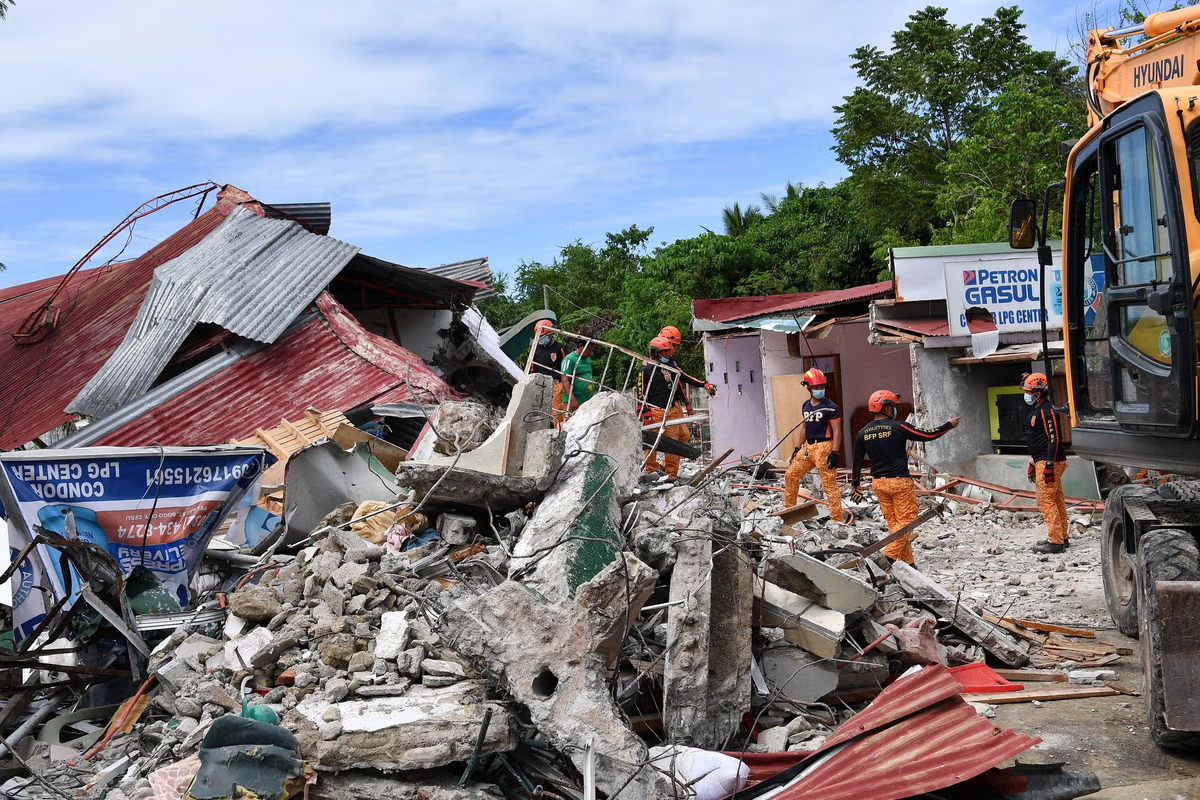
Cebu, Philippines — A powerful earthquake struck the central Philippines late Tuesday night, unleashing chaos across several towns and cities in northern Cebu province. Authorities confirmed dozens of deaths and hundreds of injuries, with rescue efforts ongoing as survivors remain trapped under rubble.
A Night of Terror
The quake, measured at magnitude 6.9, hit at around 9:59 p.m. local time. Its epicenter was located near Bogo City, a densely populated area with nearly 90,000 residents. Because the earthquake was shallow, the shaking was felt with greater intensity, toppling homes, weakening infrastructure, and sending terrified residents fleeing into the streets.
Multiple aftershocks followed, some strong enough to cause additional collapses. Residents reported that power lines snapped, buildings cracked, and walls crumbled within seconds of the tremor.
Rising Death Toll
Local officials have placed the confirmed death toll at over 60 people, though numbers are expected to rise as rescue teams reach remote and badly hit areas. More than 140 people have been reported injured, with hospitals quickly overwhelmed.
In San Remigio, part of a sports complex collapsed during a basketball game, killing and injuring spectators. In nearby towns, families sleeping inside their homes were crushed when walls and ceilings gave way. Several schools, markets, and government buildings have also sustained heavy damage.
Humanitarian Emergency
Thousands of people have been displaced from their homes. Emergency shelters are being set up, but food, clean water, and medical supplies are already running low. In Bogo City, the provincial hospital itself suffered cracks and partial damage, forcing staff to treat many of the wounded outdoors under temporary tents.
Rescue teams are battling multiple challenges. Landslides triggered by the quake have blocked key roads, while damaged bridges have slowed the delivery of aid. Communication lines remain unstable in many towns, making it difficult to assess the full scope of destruction.
Government Response
Cebu’s governor has declared a state of calamity in the worst-hit areas, unlocking emergency powers and funds. Search-and-rescue operations are being carried out with heavy equipment, sniffer dogs, and military support.
President Ferdinand Marcos Jr. extended his condolences to the victims’ families and vowed that the national government would deploy all available resources for relief and recovery. He urged residents to remain vigilant as aftershocks are expected to continue in the coming days.
Why This Quake Was So Destructive
Experts note that the Philippines, sitting along the Pacific “Ring of Fire,” is prone to earthquakes and volcanic eruptions. However, this tremor struck an area that had just been battered by a tropical storm days earlier, leaving infrastructure already weakened. The combination of storm damage and shallow seismic shaking made the destruction especially severe.
Seismologists are now studying the quake, with early reports suggesting it may have originated along a fault line that had not been fully mapped. This has raised new concerns about hidden seismic risks across the archipelago.
Stories of Survival and Loss
Survivors have described harrowing escapes. One mother in Bogo said she grabbed her children and ran barefoot into the street just seconds before their roof collapsed. In San Remigio, rescuers pulled a teenager alive from the rubble of a collapsed home after neighbors heard faint cries.
But not all stories have ended in rescue. Families are gathering outside makeshift morgues to identify loved ones, with grief compounded by uncertainty as dozens remain missing.
Looking Ahead
Relief organizations are mobilizing food, medicine, and temporary shelter supplies. Engineers are assessing which structures can still be inhabited and which must be demolished. Schools and government offices in Cebu province have been closed until further notice.
The disaster highlights once again the Philippines’ vulnerability to natural calamities. Experts are urging greater investment in earthquake-resistant construction and improved disaster preparedness to minimize future tragedies.
For now, the priority remains saving lives. As heavy machinery clears rubble and rescuers continue their desperate search, the people of Cebu brace for aftershocks—both geological and emotional—that may linger long after the ground stops shaking.













Leave a Reply