

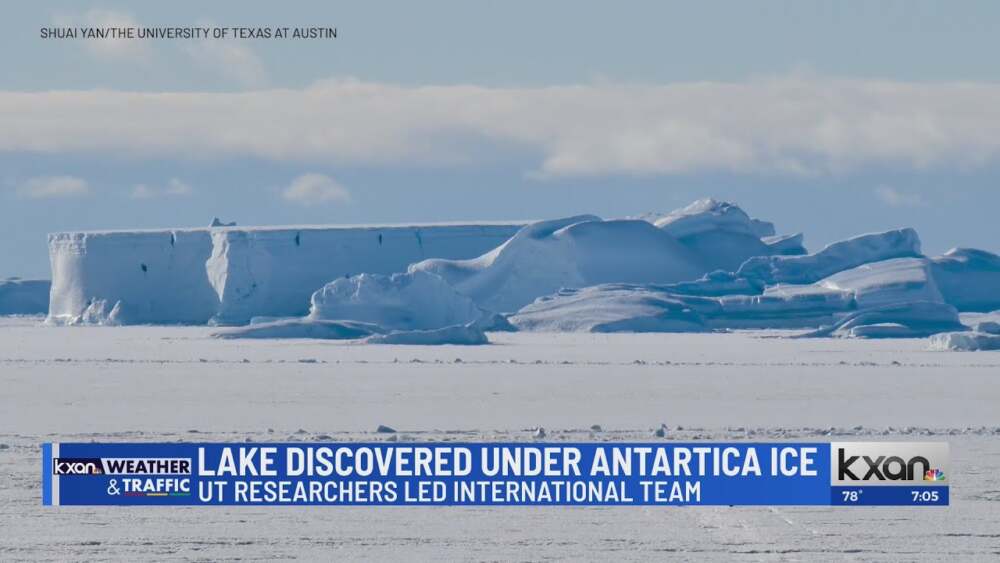
Researchers studying Antarctica’s shifting ice have uncovered a surprising fact: there are dozens more active subglacial lakes under the Antarctic ice sheet than previously known. A decade of satellite data has led to the discovery of 85 new active subglacial lakes, raising the total known number of such dynamic lakes to 231.
What the New Study Found
- The study used CryoSat-2, a radar altimetry satellite operated by the European Space Agency, analyzing ice sheet surface height from 2010-2020. Changes in surface elevation (rise when a lake fills, drop when it drains) revealed the presence of active lakes buried under the ice.
- The new findings push up the number of active lakes by nearly 60%. Earlier inventories had documented about 146; this study adds 85 new ones.
- Many of the newly discovered lakes are beneath fast-flowing ice streams, where ice moves at more than 50 meters per year. A small set of lakes also lie very close (within about 8 kilometres) of the grounding line — the line where ice begins floating as ice shelves.
Dynamics: Filling, Draining & Networks
- Among the lakes studied, the researchers observed complete fill-drain cycles in many. Specifically, 37 lakes saw full drainage episodes over the decade, while 34 completed full filling episodes.
- The study also identified interconnected networks of lakes: in several regions the draining of an upstream lake lined up with the filling of a downstream one, suggesting water moves beneath the ice in channels or networks.
- The speed of these cycles varies. On average, full drainage takes about 2.2 years, while filling tends to take longer—around 3.5 years on median.
Why It Matters: Implications for Ice Sheet Behavior & Sea Level
- Subglacial lakes are significant because water at the base of an ice sheet lubricates the ice-bed interface. This can impact how quickly ice flows toward the sea, especially under ice streams. In short: water beneath the ice can accelerate ice loss.
- Some of these lakes being very close to the grounding lines matter more than we thought: changes here are especially relevant to ice shelves, which help hold back ice flow. If ice shelves thin or collapse, inland ice can flow more freely into the ocean, boosting sea level rise.
- Current ice-sheet models often do not include dynamic subglacial hydrology — the behavior of water beneath ice: where it pools, drains, and moves. These new lake maps and data will help refine models to better predict how Antarctica will respond to climate change and how much it may contribute to global sea level rise.
What Challenges Remain & What We Need to Watch
- Even with this detection, many questions remain: what exactly triggers a given lake to drain or fill? How does pressure, melting at the base, geothermal heat, and ice flow interact to cause these changes over time?
- Satellite observations are powerful but indirect. They detect changes in surface elevation, not the water directly. Thus, there’s uncertainty in mapping exact lake extents, how deep they are, or how connected they are beneath the ice.
- Because some fill-drain cycles take several years to complete, continuous monitoring over decades is needed. This will reveal long-term patterns.
- There is also geographic bias: many of these lakes are at the margins of the continent, where ice is thinner and where satellites can get clearer signals. More remote or thicker ice areas are harder to study but just as important.
Conclusion
The discovery of 85 new active subglacial lakes under Antarctica marks a major advancement in understanding what lies beneath the ice. The findings reshape our view of the continent’s hidden water systems, showing that the ice sheet is more dynamic than presumed. As Earth’s climate changes, knowing where water lies, how it moves, and how fast it interacts with ice flow will be essential for predicting future sea level rise with greater confidence.










Leave a Reply