

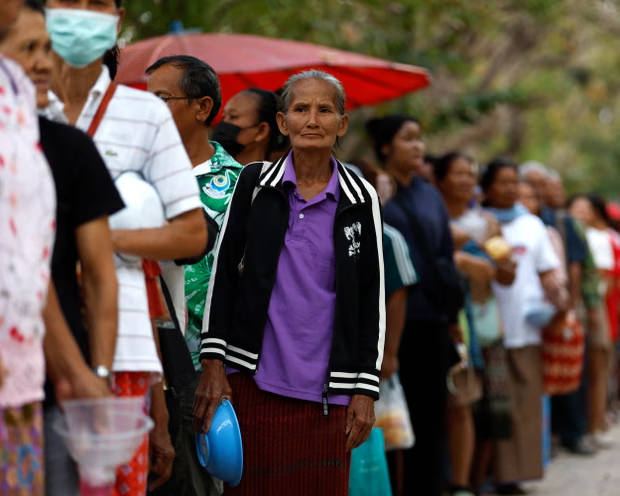
Tensions along the Thailand–Cambodia border have once again flared, forcing dozens of Thai families to flee their homes amid renewed armed clashes. For those displaced, uncertainty about their future has deepened, with many expressing the chilling sentiment: “It’s not going to end.”
The most recent clashes erupted near a contested frontier area where both nations maintain a heavy military presence. Skirmishes between Thai and Cambodian forces have been sporadic for years, but this latest outbreak of violence marked one of the most intense in recent memory. Shelling and small-arms fire prompted authorities to issue evacuation orders for several villages close to the border.
Evacuees, now sheltering in makeshift camps and community centers farther inland, described chaotic scenes as they fled. Families carried only what they could grab in the panic: children clutching teddy bears, elderly relatives supported by family members, and livestock herded hastily along dirt roads. Many fear returning home, wary that peace may be temporary.
Local residents recounted the sound of explosions and tracer fire lighting up the early morning sky. “We thought it was safe, but then it started again,” said one evacuee, her voice laden with exhaustion. “Now we don’t know when—or if—we’ll ever go back.”
The clashes stem from long-standing disputes over territory along the border, where hard-to-define lines have been a source of diplomatic friction for decades. Previous attempts at negotiations have faltered, and both sides have accused the other of incursions and violations of sovereignty.
Thai authorities have deployed additional security forces to stabilize the situation and have appealed for calm. Meanwhile, humanitarian workers are providing emergency aid—food, water, and medical care—to those displaced. Still, the emotional toll on families remains high.
Parents worry about their children’s education, health, and long-term wellbeing. “My kids ask me when we can go home,” said another evacuee father. “I don’t have an answer. I’m scared it’s going to be like this forever.”
International observers and regional diplomats have called for restraint and a return to dialogue, urging both sides to de-escalate and protect civilian populations. Yet for the evacuees facing uncertain nights and unstable days, words of diplomacy offer little comfort.
As dusk settles over the temporary shelters, the same refrain echoes among the displaced: “It’s not going to end.” Their plea underscores a growing fear that without sustainable peace—and real political will—the cycle of conflict and displacement in this borderland will continue.









Leave a Reply