

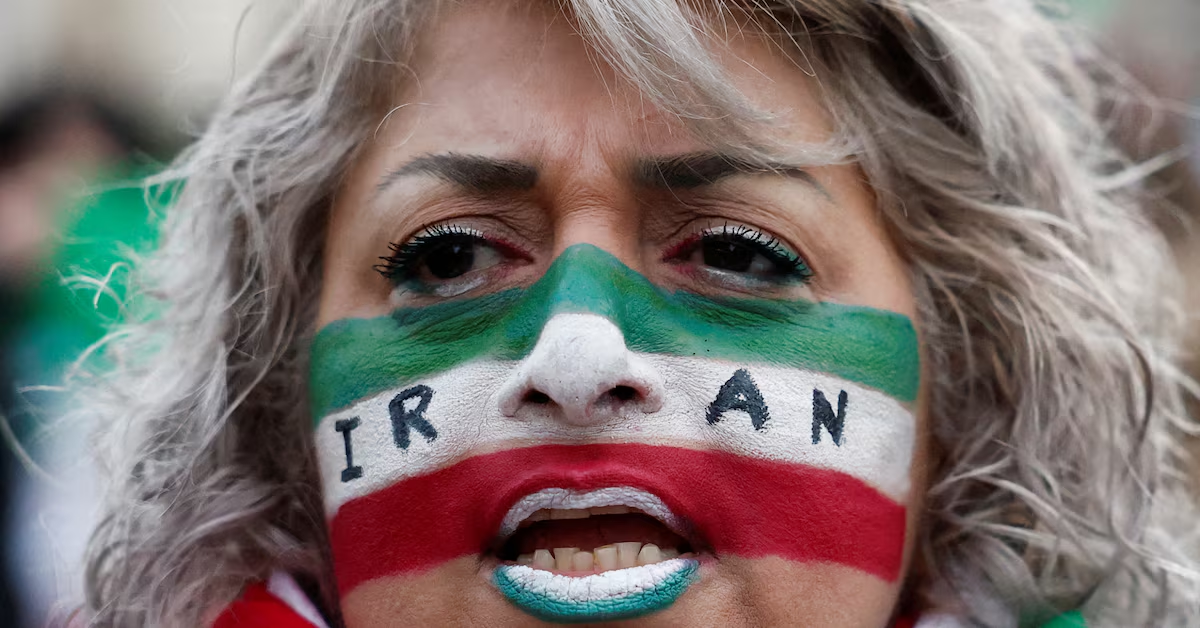
In a dramatic shift in European foreign policy, the European Union has formally designated Iran’s Islamic Revolutionary Guard Corps (IRGC) as a terrorist organisation, a decision that reflects mounting international concern about Tehran’s domestic repression and regional influence. The decision was announced by the EU’s top diplomat during a meeting of foreign ministers in Brussels, after years of debate and increasing pressure from rights advocates and allied governments.
This rare move places the IRGC — an elite branch of Iran’s armed forces established after the 1979 Islamic Revolution — on the same terrorist list as global extremist groups, marking a major departure from previous EU policy that refrained from branding a state-run military institution with that label.
What the Designation Entails
By classifying the IRGC as a terrorist organisation, the EU has introduced tough legal and financial measures against the corps and its network. These include asset freezes, travel bans on commanders and affiliates, and a prohibition on financial support from EU actors. The designation is designed to curb the Guard’s international operations and limit its ability to function freely within and beyond Europe’s economic system.
The decision was backed unanimously by foreign ministers of the EU’s 27 member states, reflecting a rare moment of consensus after years of hesitation — particularly among historically cautious capitals like France. States that once feared diplomatic fallout have shifted positions amid the growing crisis in Iran and global concerns about human rights abuses.
Driving Forces Behind the Decision
The EU’s move comes amid reports of large-scale crackdowns on nationwide protests in Iran, which began as demonstrations against economic hardship and political repression but have since evolved into widespread calls for systemic change. Human rights observers have documented thousands of civilian deaths and mass detentions, with the IRGC frequently identified as a leading force behind the violent repression.
The EU’s foreign policy chief emphasised that the designation sends a strong signal: “Any regime that kills thousands of its own people is working toward its own demise.” This language underscores how European leaders view the IRGC not simply as a military actor but as a central instrument of state power used against civilians.
Parallel Sanctions and Broader Pressure
In addition to the IRGC designation, the EU also imposed sanctions on 15 Iranian officials and six entities linked to repression, media censorship and digital surveillance. These targeted individuals include senior commanders and government ministers believed to have played roles in recent crackdowns, signalling the bloc’s intent to hold a broad spectrum of responsible actors accountable.
This wave of sanctions expands on previous EU measures targeting Iranian drones, missile technology and contributions to conflicts abroad. It also aligns European policy more closely with earlier designations by countries such as the United States, Canada and Australia.
Iran’s Reaction and Regional Implications
Iran reacted angrily to the designation, condemning it as a politically motivated act with “destructive consequences.” Officials warned that the move could harm diplomatic ties and escalate tensions between Tehran and European capitals.
The broader geopolitical backdrop — including heightened tensions between the United States and Iran — adds complexity to the EU’s decision. With competing pressures on oil markets, regional security, and global alliances, Europe’s move may have implications far beyond its own borders.
A Symbolic and Strategic Shift
Analysts view the IRGC designation as both symbolic and strategic: symbolic in its condemnation of repression and human rights abuses, and strategic in its attempt to degrade the global reach of an organisation deeply involved in regional military conflicts and internal security enforcement in Iran.
By placing one of Tehran’s most powerful institutions on its terrorist list, the EU has underscored its willingness to take unprecedented steps in defence of fundamental rights and global security, even at the risk of diplomatic friction.





Leave a Reply