

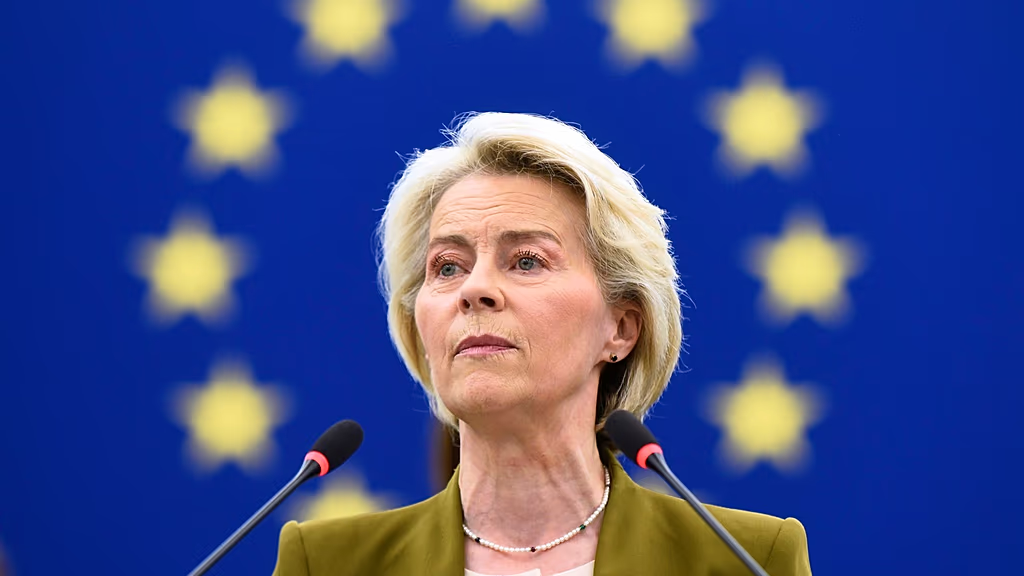
The European Union has taken its toughest step yet against Moscow by moving to permanently lock in billions of dollars’ worth of Russian state assets, signaling a decisive shift from symbolic sanctions to sustained economic confrontation. After years of debate over legality and political risk, EU leaders appear to have concluded that restraint no longer carries strategic value.
Since the start of Russia’s war in Ukraine, European governments have frozen vast sums belonging to the Russian central bank and state-linked entities. Until now, those assets were held in limbo, preserved but untouched. The new approach effectively ends that ambiguity, ensuring the funds remain inaccessible to Moscow indefinitely and opening the door for their use in long-term reconstruction support for Ukraine.
Supporters of the move argue that Russia forfeited its claim to financial normalcy the moment it launched a full-scale invasion. By securing the assets for good, Brussels is betting that sustained financial pressure will weaken Russia’s ability to wage war while reinforcing Europe’s credibility as a geopolitical actor willing to absorb legal and economic risk.
The decision was not without resistance. Some member states had feared that permanent asset restrictions could undermine confidence in European financial institutions or trigger retaliatory seizures of Western investments abroad. But those concerns have been overtaken by a growing consensus that inaction carries even greater costs, both for European security and for international norms.
Critics warn that the move may deepen global financial fragmentation, pushing countries wary of Western sanctions to diversify away from European systems. Yet EU officials counter that allowing aggressor states to retain access to frozen wealth would set a far more dangerous precedent.
For Ukraine, the decision represents more than financial relief—it is a political signal that European support is shifting from temporary solidarity to long-term commitment. For Russia, it marks a clear message: the economic consequences of war will not fade with time.
By turning frozen assets into a permanent lever of pressure, the EU has crossed a threshold. It is no longer simply reacting to events—it is shaping them, and in doing so, redefining how economic power is used in modern conflict.








Leave a Reply