

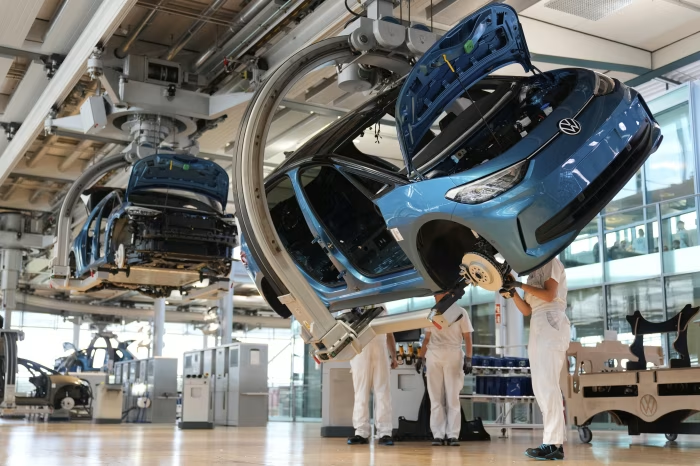
Eurozone industrial activity continued its upward trajectory, with recent data showing that manufacturing and production sectors extended gains for the second consecutive quarter. The growth reflects resilient demand, improving supply chains, and ongoing investment in technology and energy efficiency across the region.
Key Drivers of Industrial Growth
- Manufacturing Recovery: Manufacturing output has been a major contributor to the gains, particularly in machinery, automotive, and chemical sectors. Firms report stronger order books and increased utilization of production capacity, signaling confidence in sustained demand.
- Supply Chain Stabilization: After years of disruptions caused by global events, supply chains in Europe have shown significant stabilization. Raw material availability has improved, and logistics bottlenecks have eased, allowing manufacturers to operate more efficiently.
- Energy and Technology Investment: Companies in the Eurozone are investing heavily in energy-efficient technologies, automation, and digital transformation. These investments have not only improved productivity but also enhanced competitiveness in global markets.
Country-Level Performance
Germany, as the Eurozone’s industrial powerhouse, continued to lead growth, supported by automotive and machinery exports. France and Italy also reported solid gains, while smaller economies, including Spain and the Netherlands, benefited from increased demand for high-value industrial goods.
Export demand from Asia and North America played a key role, with companies reporting rising international orders that compensated for softer domestic consumption in some markets. Analysts noted that diversified trade relationships helped buffer against regional economic uncertainties.
Challenges and Risks
Despite the positive momentum, challenges remain. Rising energy costs, labor shortages in certain skilled trades, and ongoing geopolitical tensions pose potential headwinds. Additionally, inflationary pressures on raw materials could squeeze profit margins if companies are unable to pass costs onto consumers.
Central banks in the Eurozone are closely monitoring the industrial expansion, balancing growth with monetary policies aimed at controlling inflation. Policy decisions in the coming months could influence the pace of industrial activity, especially in energy-intensive sectors.
Outlook for the Eurozone Industry
Analysts are cautiously optimistic about continued industrial growth in the Eurozone. Companies are expected to maintain investment in modernizing production and adopting sustainable practices, which should support long-term competitiveness.
The growth also underscores the region’s resilience in adapting to external shocks and shifting global demand. If trends continue, the Eurozone could strengthen its position as a leading manufacturing hub, supporting employment and economic stability across member states.
















Leave a Reply