

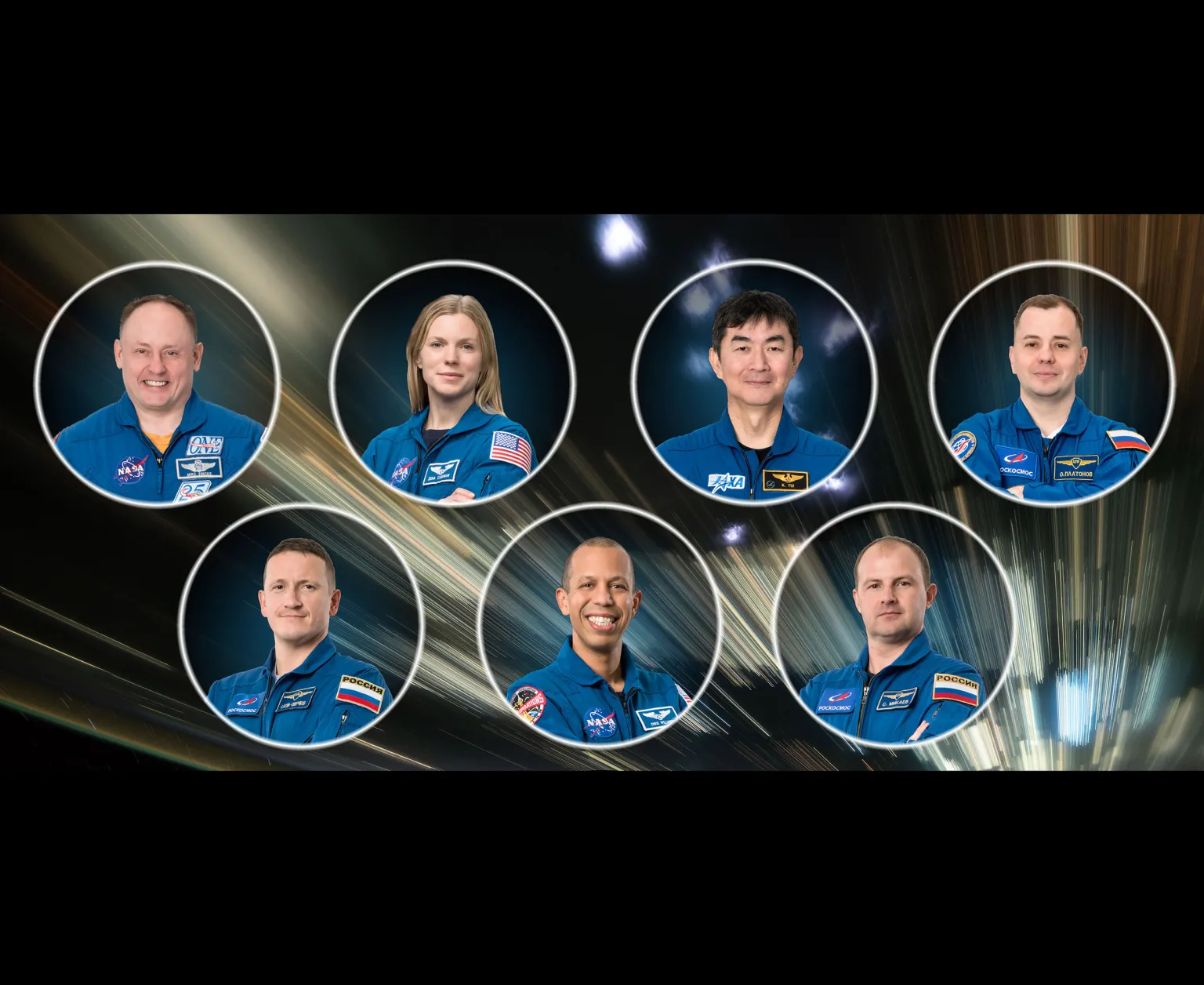
The crew of Expedition 74 aboard the International Space Station (ISS) has been spearheading a series of groundbreaking experiments, combining biomedical research with cutting-edge space technology to advance knowledge both on Earth and in orbit. The initiative highlights the ISS’s role as a unique laboratory for innovation under microgravity conditions.
One of the most notable experiments focuses on stem cell research in space. Scientists are exploring how microgravity affects cellular growth, differentiation, and gene expression. Early findings suggest that stem cells behave differently in orbit, which could provide critical insights for regenerative medicine, tissue engineering, and disease modeling on Earth. Understanding these mechanisms may also support long-term human spaceflight, including potential missions to Mars, by revealing how the human body can adapt or deteriorate in prolonged low-gravity environments.
In parallel, the crew is testing advanced space technologies, including autonomous robotic systems, AI-assisted monitoring, and novel materials designed to withstand the harsh conditions of space. These technologies aim to improve life-support systems, streamline station operations, and enhance the efficiency of scientific experiments, reducing manual intervention by astronauts.
Expedition 74’s efforts also include collaborative projects with universities, private companies, and international space agencies. These partnerships are designed to translate space-based research into practical applications on Earth, from medical devices to industrial processes. For example, insights from fluid dynamics studies in microgravity could inform advanced manufacturing techniques and energy-efficient systems on Earth.
Commander Elena Ramirez emphasized the importance of innovation in orbit: “Being aboard the ISS allows us to test ideas that would be impossible under Earth’s gravity. Every experiment we conduct has the potential to improve life both here on our planet and for future explorers in space.”
The mission has already generated preliminary publications in peer-reviewed journals and is expected to produce valuable datasets for years to come. Analysts note that the focus on stem cells and space technology positions Expedition 74 as a leading example of how human spaceflight can drive interdisciplinary scientific progress.
With the ISS slated for continued operation in the coming years, missions like Expedition 74 demonstrate the station’s role as a hub for pioneering research, inspiring the next generation of scientists and engineers while pushing the boundaries of what humanity can achieve in orbit.













Leave a Reply