

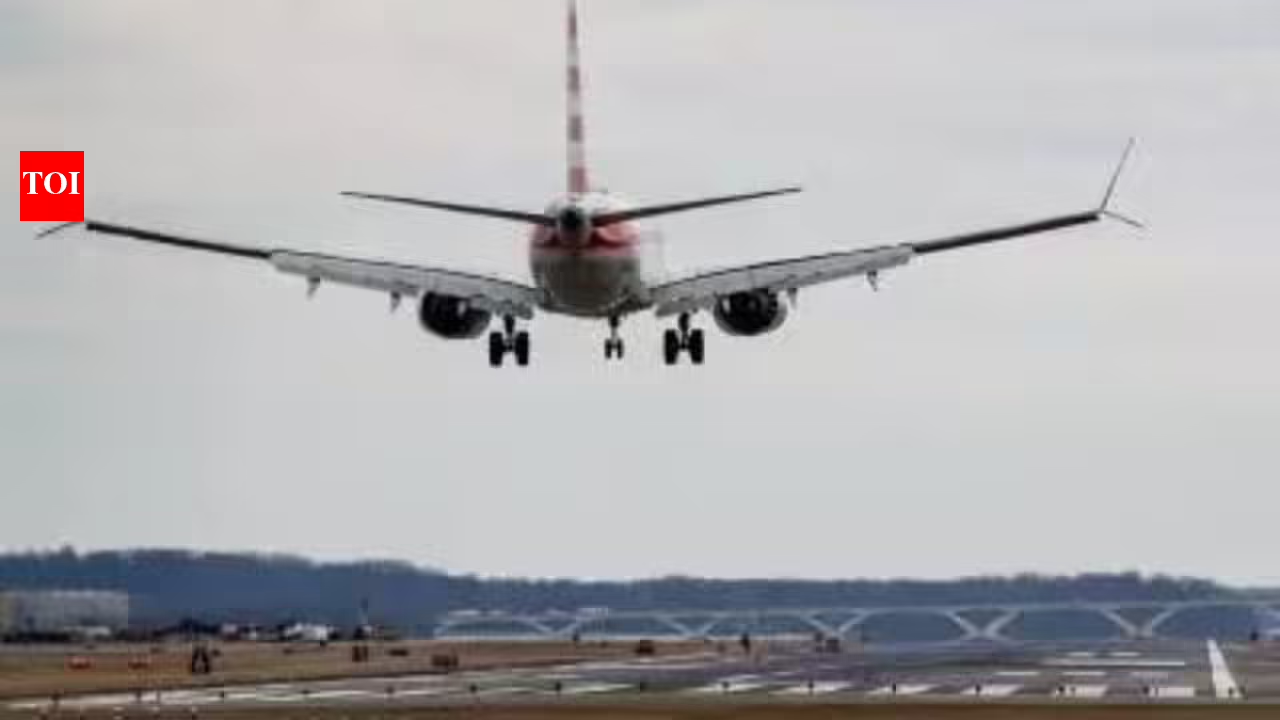
The U.S. Federal Aviation Administration (FAA) has issued a safety advisory to airlines regarding increased military activity in parts of Latin America, covering areas of Mexico, Central America, and South America. The alert urges airlines and pilots to exercise heightened caution when operating flights over these regions due to potential risks to civilian air traffic.
The advisory, which is effective for 60 days, highlights concerns that ongoing military operations and exercises could interfere with navigation systems, airspace control, and flight safety. While flights are not prohibited, airlines are encouraged to monitor conditions closely and adjust flight paths if necessary.
Reason for the Warning
FAA officials cited an uptick in military exercises, patrols, and operations in regions including Mexico, Panama, Colombia, and Ecuador. Such activity may pose hazards to civilian flights, particularly if unmanned aircraft or unexpected maneuvers are involved. The advisory aims to alert pilots to these risks and ensure the safety of both passengers and crews.
The FAA’s alert comes amid increased military presence in the southern Caribbean and along key transnational air routes, linked in part to counter-narcotics operations and regional security initiatives. These developments have prompted greater caution among airlines, particularly U.S.-based carriers flying long-haul routes across the Americas.
Implications for Airlines and Passengers
The FAA advisory identifies several potential risks to commercial flights:
- Interference with satellite-based navigation and communication systems
- Unpredictable airspace restrictions due to military maneuvers
- Potential proximity to military aircraft operations that could affect flight safety
Airline operations centers have been instructed to maintain continuous communication with air traffic control and consider alternate routes to avoid areas of active military operations. These precautions aim to minimize exposure to potential hazards while maintaining scheduled flights.
Regional and Industry Response
Authorities in affected countries, such as Mexico, have emphasized that their civil aviation systems remain fully operational and that the advisory is a precautionary measure for U.S. airlines. Meanwhile, major carriers are reviewing flight plans, updating safety protocols, and coordinating with international air traffic controllers to ensure passenger safety.
Passengers may experience longer flight times or modified flight paths as airlines prioritize safety and compliance with FAA guidance. The alert underscores the intersection of regional security and commercial aviation, showing how geopolitical developments can have direct operational impacts on global air travel.
Looking Ahead
The FAA and airlines will continue monitoring developments in Latin American airspace over the coming weeks. The advisory serves as a reminder of the need for vigilance and adaptability in regions where military activity and civilian aviation intersect. Airlines are expected to maintain heightened awareness and take proactive measures to ensure the safety of passengers and crew.
















Leave a Reply