

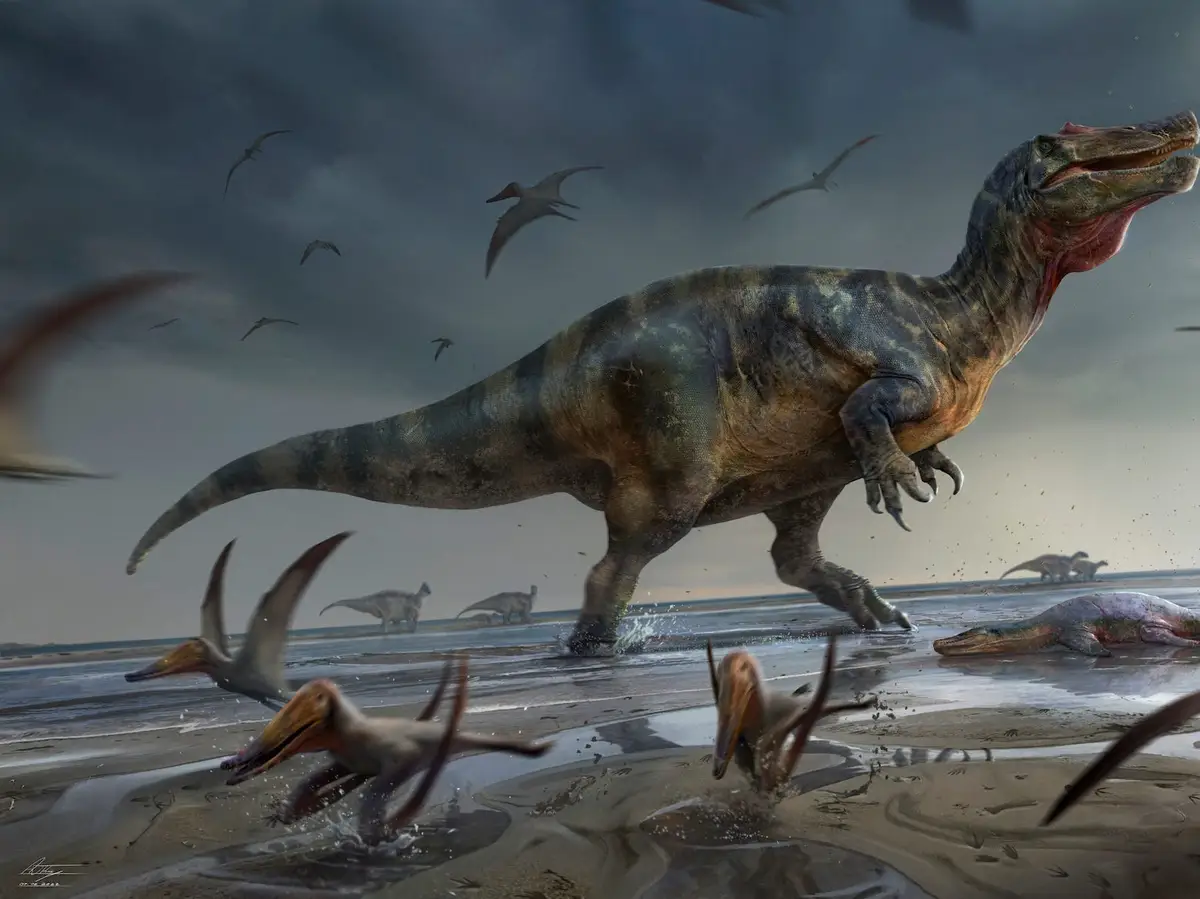
Paleontologists in Patagonia, Argentina, have uncovered a remarkable new dinosaur species named Joaquinraptor casali. This predator, dating back about 66 to 70 million years ago, stunned researchers not just with its size and fearsome anatomy but also with the dramatic state in which it was found: jaws clenched around the leg of a crocodile-like creature.
A Predator Like No Other
- Size and Strength: Estimated at around seven meters long and nearly a ton in weight, Joaquinraptor was a formidable hunter. At about 19 years old when it died, it was mature and possibly still growing.
- Unique Weaponry: Belonging to the megaraptorans, it boasted long, muscular arms with enormous claws likened to hedge trimmers—designed for slashing and grappling prey.
The Gruesome Discovery
Excavations in Patagonia’s Lago Colhué Huapi region revealed an unusually complete skeleton, including skull fragments, ribs, vertebrae, and limb bones. Most shocking was the preserved leg of a crocodile relative lodged firmly in its jaws, suggesting the predator either died mid-meal or during a violent struggle with its prey.
Insights Into Its World
- Apex Predator: With agility, powerful arms, and slicing claws, Joaquinraptor likely targeted crocodilians, hadrosaurs, and young sauropods, cementing its role at the top of the food chain.
- Ancient Patagonia: The landscape then was lush, warm, and filled with rivers and floodplains, supporting a diverse range of life and making it an ideal hunting ground.
- Fossil Significance: Unlike many megaraptoran discoveries that are fragmentary, this specimen provides a clearer picture of its evolutionary relationships and hunting strategies.
Unanswered Questions
Scientists are still probing whether its death was directly linked to the crocodilian encounter, how its claws functioned in detail, and where exactly it fits among its megaraptoran relatives worldwide.
Final Take
The discovery of Joaquinraptor casali offers a rare snapshot of predator-prey dynamics frozen in time. Its terrifying claws, agile body, and the fossilized evidence of a deadly hunt reveal the brutal reality of life at the end of the dinosaur era—and provide paleontologists with invaluable clues about one of the most fearsome hunters ever to roam South America.











Leave a Reply