

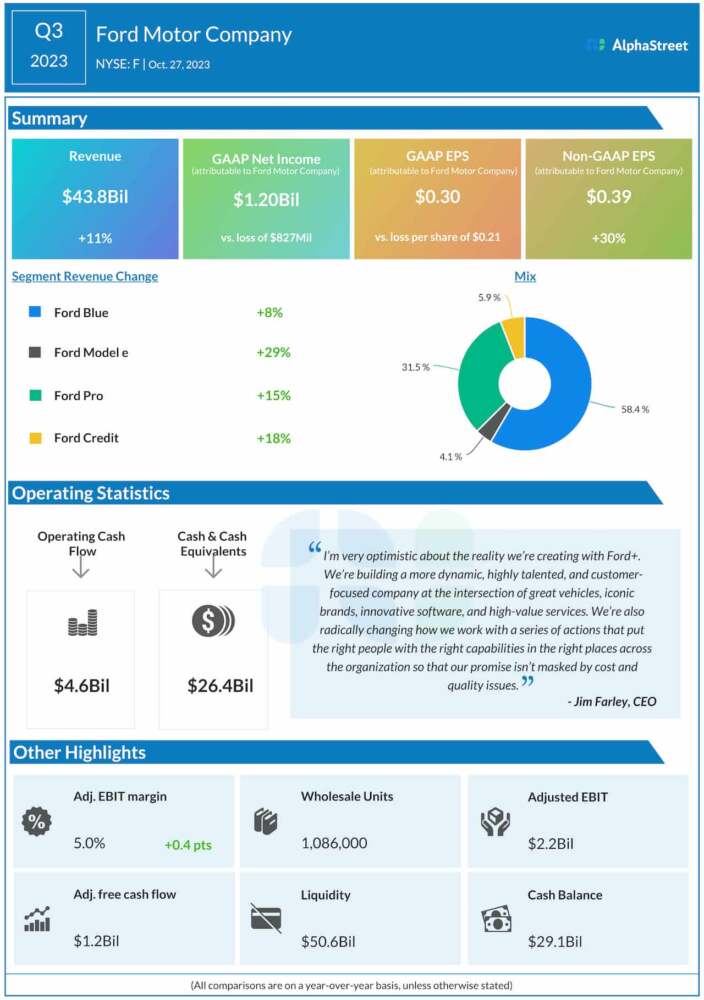
Ford Motor Company reported a generally strong set of financial results for the fourth quarter of 2025, demonstrating resilient demand for its vehicles and solid operational performance — but a substantial pension charge significantly reduced its bottom‑line figures and drew investor attention to long‑standing legacy costs.
Strong Sales and Operational Results
Throughout the final quarter of the year, Ford’s revenue climbed, supported by broad consumer demand across its lineup, notably in trucks, SUVs and a growing portfolio of electrified vehicles. The company’s best‑selling models maintained their market appeal, contributing to improved unit deliveries compared with the prior quarter.
Ford executives highlighted effective pricing strategies and disciplined cost controls as key contributors to top‑line strength. They also pointed to ongoing improvements in manufacturing efficiencies and supply chain resilience as factors that helped support margins, even as global economic uncertainty and competitive pressures persisted.
Electric vehicle models, such as the latest versions of the Mustang Mach‑E and F‑150 Lightning, continued to generate significant interest, supporting Ford’s ambition to expand its foothold in the EV segment. While EV profitability remains a work in progress, improved production processes and growing consumer acceptance signalled progress toward Ford’s electrification goals.
Pension Charge Clouds the Profit Picture
Despite the operational gains, Ford’s net income was heavily affected by a large pension charge — a non‑cash expense reflecting updated actuarial assumptions tied to the company’s defined benefit pension obligations. Legacy pension plans, which have long been a financial consideration for traditional automakers, require periodic adjustments to reflect changing economic conditions and long‑term liabilities.
The charge reduced reported earnings for the quarter and underscored the enduring impact of pension obligations on the company’s financial statements. Though it does not directly affect Ford’s cash flows or operational performance, the pension adjustment influenced investor perceptions and tempered enthusiasm about the headline earnings results.
Company leadership was quick to reassure markets that the pension expense was an accounting adjustment rather than an indication of deteriorating business fundamentals. They emphasised that Ford’s core operations remained robust and that the company continues to manage its legacy costs prudently alongside forward‑looking investments.
Forward Guidance and Strategic Priorities
Looking ahead to 2026, Ford’s management expressed cautious optimism, projecting continued revenue growth while recognising ongoing macroeconomic challenges. Interest rate trends, raw material costs, and global economic headwinds are among the factors that could influence performance in the coming quarters.
Ford reiterated its commitment to long‑term strategic priorities, including electrification, connected vehicle technologies and enhanced digital customer experiences. The company plans to maintain disciplined capital allocation while investing in next‑generation platforms designed to strengthen its competitive position.
Investor and Analyst Perspectives
Financial analysts reviewing the results noted that while the pension charge is a significant accounting item, it should not overshadow the company’s underlying performance. Some industry observers argued that addressing pension liabilities transparently may benefit Ford in the long run by clarifying future obligations and reducing uncertainty.
Others highlighted that Ford’s ability to deliver solid revenues and maintain margin discipline during a period of rising costs and competitive pressures reflects resilience in the company’s product strategy and operational execution. However, they also cautioned that legacy costs like pensions remain a structural consideration for Wall Street as the automotive industry continues to evolve.
Broader Market Implications
Ford’s earnings released in this environment of broader market volatility and shifting consumer preferences provide insights into how legacy automakers are managing the transition from traditional vehicles to electrified offerings. The company’s performance suggests that while EV adoption is strengthening, legacy cost structures still play a significant role in financial outcomes.
Investors will be closely watching Ford’s performance in the first quarter of 2026 and beyond for signs of sustained profitability improvement, particularly as EV investments ramp up and production efficiencies potentially increase.
What This Means for Different Stakeholders
- Customers may benefit from continued innovation and expanded electrified vehicle options in Ford’s lineup.
- Employees and retirees will watch how pension obligations are managed alongside growth initiatives.
- Investors will need to balance short‑term accounting impacts against long‑term operational trends.
- Industry competitors will observe how Ford navigates the dual pressures of legacy cost burdens and strategic transformation.
Conclusion
Ford’s fourth‑quarter financial report paints a picture of a company that is fundamentally strong in its core operations but still navigating the financial realities of legacy pension obligations. While the significant pension charge dampened headline profits, steady revenue growth, robust demand across key product lines and progress in the electric vehicle segment offer reasons for cautious optimism as the company moves further into 2026.

















Leave a Reply