

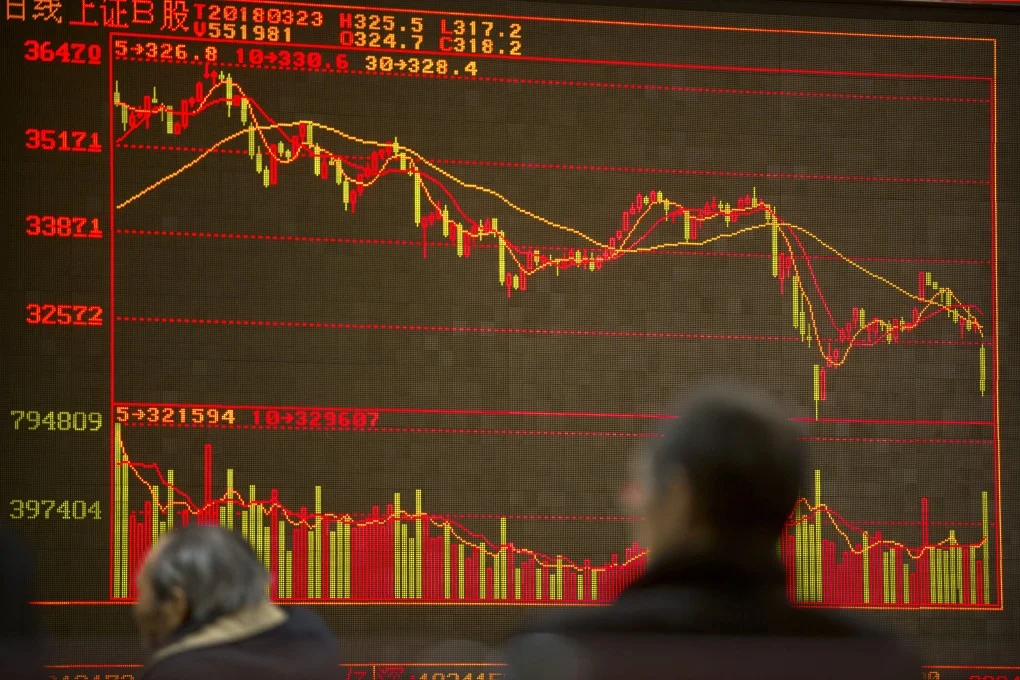
Global financial markets ended the week on edge as a sharp sell-off in technology stocks, weak Chinese trade data, and rising concerns about global monetary policy combined to unsettle investors. The synchronized decline across major regions — from Wall Street to Tokyo to Hong Kong — signals that markets may be entering a new phase of volatility after months of strong rallies driven by optimism about artificial intelligence, easing inflation, and central bank rate cuts.
Tech Stocks Trigger Global Decline
Technology shares, which had dominated the global stock rally for much of 2024 and early 2025, became the focal point of the latest correction. The Nasdaq Composite fell nearly 3 percent this week, its steepest weekly decline in months, while similar losses hit Asia’s leading markets. Japan’s Nikkei index tumbled about 5 percent, erasing gains accumulated earlier this quarter, and South Korea’s KOSPI dropped nearly 5 percent as chipmakers and software companies faced widespread selling pressure.
In Tokyo, shares of major conglomerates with large exposure to U.S. tech companies slid sharply. A prominent Japanese investment firm lost over 20 percent of its value amid growing investor unease about the sustainability of global tech valuations. The downturn also spilled into cryptocurrency markets, where Bitcoin fell more than 7 percent, reflecting a broader retreat from speculative assets.
Analysts said that after an extraordinary run-up in valuations, the tech sector is now being tested by questions over profitability, rising competition in artificial intelligence, and tightening liquidity conditions. “Markets have reached a point where optimism alone can’t justify prices,” one global strategist commented. “Investors are shifting from growth-at-any-price to selective caution.”
Weak Chinese Data Deepens Gloom
Compounding the market pressure was new evidence that China’s post-pandemic recovery continues to stall. Official data showed that exports fell by 1.1 percent in October compared with a year earlier — the first decline since early 2025. Imports grew only marginally, suggesting domestic demand remains sluggish.
The unexpected contraction in exports was attributed to weaker global demand, geopolitical tensions with major Western economies, and the lingering effects of trade restrictions. Manufacturing output and new orders also slowed, further dimming hopes of a strong rebound in Asia’s largest economy.
For global markets, China’s slowdown is particularly troubling. Its vast supply chains connect industries ranging from semiconductors to consumer goods, meaning weaker Chinese demand ripples through regional economies. The MSCI Asia-Pacific index dropped nearly 3 percent for the week, while currencies tied to commodities and trade — such as the Australian dollar and Korean won — came under pressure.
Investors Brace for Shifting Monetary Winds
At the same time, investors are growing anxious about the future direction of global monetary policy. Over the past year, central banks have executed more than 150 interest-rate cuts in an effort to sustain growth. Yet inflation remains stubborn in many advanced economies, leading to speculation that the rate-cutting cycle may pause.
U.S. Federal Reserve officials recently hinted at a more cautious stance, and several European policymakers have warned that further easing could stoke long-term inflationary risks. This shift in tone has rattled bond markets: U.S. Treasury yields initially dropped on safe-haven buying but then rebounded as traders reassessed future rate expectations.
In Asia, liquidity tightening is being felt most acutely in equity markets that had benefited from easy money and speculative flows. As one Hong Kong-based economist observed, “The flood of cheap liquidity that lifted everything from AI stocks to property markets is receding, and investors are realizing that fundamentals matter again.”
Oil, Currency, and Commodity Moves Reflect Anxiety
Energy markets also reflected the broader risk-off tone. Oil prices slipped below recent highs as traders worried that slower Chinese growth could weaken demand. Brent crude hovered around mid-$70 per barrel, while gold climbed toward $2,500 an ounce, as investors sought safety in precious metals.
The U.S. dollar strengthened modestly against major currencies, supported by its safe-haven appeal. The Japanese yen, which had been under pressure for months due to policy divergence, finally firmed as investors unwound risk positions. Meanwhile, Asian emerging-market currencies experienced renewed volatility amid capital outflows.
Corporate Outlook and Investor Sentiment
Companies are also beginning to feel the impact of the shifting environment. Analysts warn that upcoming corporate earnings reports — especially from semiconductor producers and AI-related firms — could determine whether markets stabilize or extend their slide.
Several investment banks have already revised their global growth forecasts downward, citing weaker manufacturing data and reduced consumer spending in key economies. In Europe, the slowdown in industrial production and lower export orders are adding to concerns that the global economy is entering a softer phase just as fiscal support begins to fade.
The Bigger Picture: End of the “Easy Money” Era
The broader narrative emerging from global markets is one of adjustment. For the past two years, equities and risk assets thrived on abundant liquidity, record-low interest rates, and a surge of investor enthusiasm around AI and green technologies. Now, as policy normalizes and economic data disappoint, the exuberance that once defined global investing is giving way to caution.
While some analysts stress that this correction is healthy, others warn that a deeper downturn could follow if growth data continues to weaken or if central banks miscalculate their next moves. “We are witnessing the first signs of a post-liquidity world,” said a London-based fund manager. “It’s not panic — it’s realization.”
Outlook: A Cautious Road Ahead
Looking forward, investors will be watching for clues from the next round of inflation reports, central bank meetings, and corporate earnings. The path ahead appears uncertain: while markets could rebound if inflation cools further and China introduces new stimulus, the downside risks remain significant.
The consensus among analysts is that 2025’s strong start may give way to a more turbulent second half, marked by slower growth, shifting investor psychology, and higher volatility. The age of effortless market gains appears to be ending — replaced by a period that will test patience, strategy, and resilience.
Headline Summary:
- Global markets post steep weekly losses led by tech sector decline.
- China’s exports fall unexpectedly, deepening concerns over global demand.
- Central banks signal caution as inflation remains sticky.
- Investors flock to gold and bonds amid volatility.
- Analysts warn the “easy money” era is ending as fundamentals return to focus.















Leave a Reply