

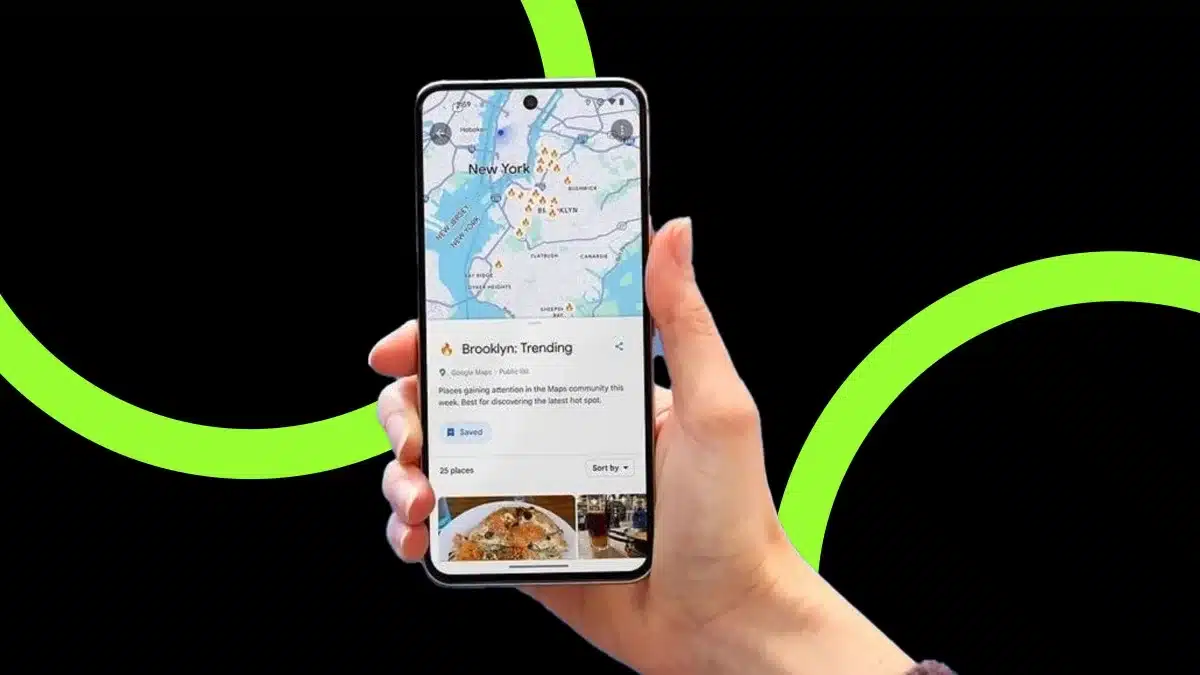
Google has officially unveiled one of its most significant updates to date for Google Maps, introducing its advanced Gemini AI system directly into the app. This transformation takes navigation far beyond simple turn-by-turn instructions—ushering in a new age of intelligent, conversational, and context-aware travel assistance.
With Gemini now baked into Maps, Google aims to redefine how people move through the world—whether driving, walking, or exploring new cities—by turning Maps into a smart co-pilot that can anticipate needs, respond naturally, and adapt to real-time conditions.
A Smarter Way to Navigate
For years, Google Maps has dominated the navigation market, but this latest integration pushes it even further. Instead of functioning as a static map that provides directions, the app can now act as a voice-enabled assistant that understands context, intent, and user behavior.
Users can ask questions in natural language such as:
- “Where can I stop for coffee before my next meeting?”
- “Is there a gas station open on my route?”
- “Find a scenic path with less traffic.”
Gemini processes these queries in real-time, referencing live traffic data, user preferences, and environmental conditions to deliver tailored responses. The AI can also hold multi-turn conversations, meaning users don’t need to restate details in follow-up questions—it remembers the context.
New AI-Powered Features
1. Conversational Navigation
Instead of relying solely on pre-set commands, drivers can speak casually with the system while keeping their hands on the wheel. Gemini understands nuanced speech patterns, accents, and follow-up instructions. This makes navigation feel more natural and human-like.
2. Landmark-Based Directions
For many drivers, spatial references are easier to follow than street names. Gemini leverages Google’s Street View and image recognition data to give directions such as, “Turn right after the white mosque,” or “Go past the tall blue building, then take the second left.” This feature uses billions of visual data points from Google’s mapping archive to ground directions in recognizable features.
3. Hands-Free Assistance
Gemini’s hands-free mode integrates with Android Auto and voice control systems. Users can send messages, check calendars, or even ask for restaurant reservations—all without touching the screen. The system also provides real-time alerts for accidents, road closures, and weather changes along your route.
4. Visual Search and Lens Integration
When walking or exploring, users can activate a live camera feed to point at buildings or landmarks. Gemini will instantly identify them, showing historical information, reviews, or directions to the entrance. This blends Google Lens capabilities with Maps’ robust location database.
5. Multi-App Ecosystem
Gemini’s integration connects Google Maps with apps like Calendar, Assistant, and YouTube. For example, if you have a meeting scheduled across town, Maps can automatically suggest the best departure time based on traffic, or warn you of delays that may cause you to arrive late.
How Gemini Changes the User Experience
This upgrade transforms Google Maps from a reactive tool into a proactive assistant. Instead of waiting for users to input destinations, Gemini can predict what you might need based on context—suggesting routes home after work, proposing lunch spots near your destination, or reminding you about parking restrictions when you arrive.
For commuters, this means less screen interaction and greater safety. For travelers, it creates a personalized exploration experience that adjusts based on behavior, preferences, and travel history.
The move also deepens Google’s strategy of embedding its Gemini AI ecosystem into everyday products, much like how Search, Gmail, and Photos have evolved with generative and predictive intelligence.
A Competitive Edge in the Navigation War
The navigation market is becoming increasingly competitive, with Apple Maps, Waze, and third-party apps adding new layers of personalization. But Google’s decision to integrate Gemini gives it a decisive technological advantage.
Apple has made strides with Siri and detailed map rendering, but Gemini’s conversational intelligence and integration with the entire Google ecosystem could make it the most advanced navigation AI currently available.
For Google, this update isn’t just about improving Maps—it’s about solidifying its dominance in location-based AI services, an area crucial to advertising, mobility, and autonomous driving research.
Challenges and Limitations
Despite its potential, Gemini’s integration into Google Maps faces a few challenges:
- Dependence on Connectivity
Most of Gemini’s advanced features rely on strong internet connections. In low-signal regions or developing markets, users may experience reduced functionality or latency. - Privacy and Data Sensitivity
The conversational model requires access to user data—such as voice input, location history, and app usage patterns. Google has promised enhanced privacy settings and local data processing to limit exposure, but concerns remain about how much personal data the AI will analyze. - Accuracy and Reliability
While Gemini is highly advanced, no AI is perfect. Incorrect assumptions, misunderstood queries, or “AI hallucinations” could lead to navigation errors or confusion—especially when driving. - Rollout Timeline
The update will initially reach Pixel users and select regions before expanding globally. Users in North America and Europe will get it first, followed by markets in Asia and the Middle East over the next several months.
Potential Impact in South Asia
For users in countries like Pakistan, India, and Bangladesh, the Gemini update could be especially transformative. Navigating chaotic city streets, unmarked roads, or small towns often requires local context—something landmark-based navigation handles better than standard directions.
The AI’s ability to recognize visual cues such as mosques, markets, or recognizable stores could make Google Maps far more intuitive in regions where addresses aren’t always reliable.
Looking Ahead: The Future of AI-Powered Travel
The Gemini integration is just the beginning. Future versions of Google Maps are expected to include predictive planning, suggesting trips based on user habits, energy-efficient routing for EVs, and even augmented reality overlays for walking tours.
Eventually, Google may extend this AI layer to public transit and ride-hailing, turning Maps into a universal travel companion capable of managing your entire journey—from booking to navigation to scheduling.
Final Thoughts
By embedding Gemini AI into Maps, Google is redefining what it means to navigate. The app is no longer just a tool to reach your destination—it’s becoming an interactive partner that understands context, preferences, and intent.
While there are still questions about privacy, accuracy, and access, one thing is clear: this update marks a major leap toward the next generation of intelligent, human-like navigation.
As technology continues to blur the line between digital assistants and real-world interaction, Google Maps with Gemini stands as one of the clearest examples yet of how artificial intelligence can reshape the way we move through the world.













Leave a Reply