

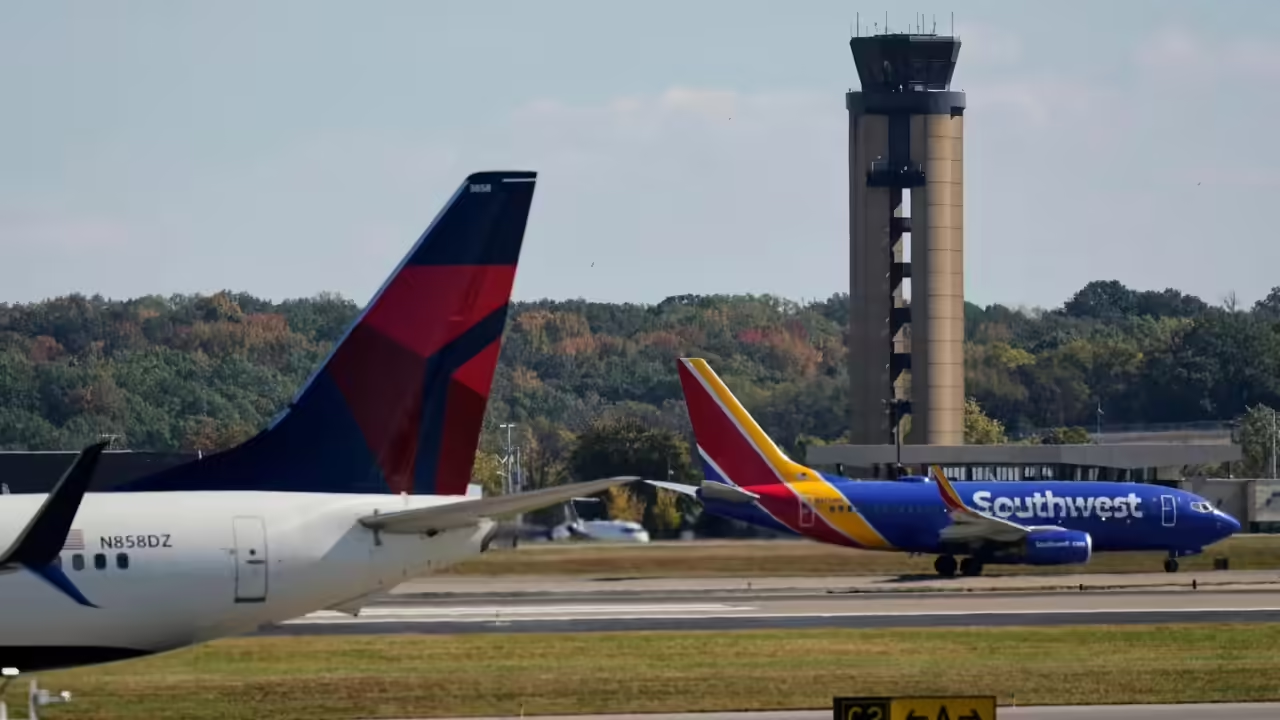
As the U.S. federal government shutdown enters its sixth week, the ripple effects are now extending beyond federal paychecks and public services, reaching the skies. The Federal Aviation Administration (FAA) has warned that private jets could face operational restrictions at major airports across the country due to staffing shortages among air traffic controllers and security personnel. This move highlights how deeply the shutdown is affecting sectors far removed from Capitol Hill, and underscores the vulnerability of the aviation system during prolonged funding gaps.
Operational Challenges Amid the Shutdown
The FAA is grappling with unprecedented absenteeism among its workforce. Many air traffic controllers and security screeners, although required to report for duty, are unpaid, leading to fatigue, stress, and increased safety concerns. The agency has indicated that limiting non-commercial traffic — including private jets — is one way to reduce operational strain and maintain safety standards.
While commercial flights are prioritized due to their high passenger volumes and economic significance, private jets are increasingly considered discretionary. Consequently, some major airports could implement restrictions on takeoffs, landings, or slot availability for business and charter flights. Preliminary discussions point to around a dozen airports being most affected, particularly those where commercial and private operations share airspace and resources.
Why Private Jets Are Targeted
- Alleviating System Strain: Air traffic management requires precision and constant monitoring. Limiting private-jet operations reduces complexity, allowing controllers to focus on commercial traffic.
- Prioritizing Essential Flights: During crises, resources are concentrated on flights carrying larger passenger volumes or critical cargo. Private business jets, often used for executive or leisure travel, are deprioritized.
- Public Perception: Luxury travel while federal employees go unpaid is politically sensitive. Curtailing private-jet operations demonstrates that no sector is entirely insulated from the effects of the shutdown.
Implications for Private Aviation
- Delays and Cancellations: Private-jet passengers may experience longer wait times, denied flight slots, or forced rerouting. Even seasoned business travelers who rely on flexibility could face significant disruptions.
- Financial Impact on Operators: Charter companies may face higher operational costs due to rerouting, slot management, and longer turnaround times, which could translate into higher prices for clients.
- Insurance and Liability Risks: Increased congestion and operational uncertainty may prompt insurers to adjust coverage terms or premiums for flights operating during the shutdown.
- Economic Ripple Effects: Private aviation is closely tied to corporate travel, executive mobility, and high-end tourism. Constraints on this sector may indirectly affect business deals, meetings, and tourism revenues.
Broader Consequences for the Aviation Industry
The potential curtailment of private flights comes on top of other aviation-related shutdown effects. The FAA previously announced a 10% reduction in scheduled commercial flights at 40 high-volume airports, citing controller fatigue and resource shortages. If the shutdown continues, reductions could increase to 20%, affecting both domestic and international travel.
Economists estimate that each additional week of shutdown costs the U.S. economy billions of dollars. Aviation alone is a critical component, as delays, cancellations, and reduced capacity reverberate through tourism, cargo logistics, and business operations.
Political and Industry Reactions
The potential restrictions on private jets have caught the attention of both policymakers and the public. Some lawmakers view this as an opportunity to apply pressure on luxury travel sectors, framing it as a fairness measure while federal employees remain unpaid. Industry groups, however, argue that such limits could have unintended consequences, including economic losses and disruptions to corporate operations.
Private aviation advocates stress that business jets are not merely luxury items but often critical tools for time-sensitive travel, especially for sectors like finance, healthcare, and emergency management. They warn that blanket restrictions could hamper essential business operations and economic efficiency.
Looking Ahead: Navigating Uncertainty
Private jet operators and clients are being advised to plan for contingencies. This includes building scheduling buffers, preparing for rerouted flights, and monitoring FAA updates closely. As Thanksgiving and the winter holiday season approach, the stakes are higher, with peak travel coinciding with an ongoing shutdown.
The crisis also serves as a stark reminder of how interconnected government operations and private-sector activities are. A prolonged shutdown affects more than federal paychecks—it disrupts travel, commerce, and critical infrastructure that millions rely on daily.
Strategic Lessons
The situation highlights several broader lessons:
- Preparedness for Operational Disruptions: Aviation operators must maintain contingency plans for government-related crises that impact staffing and airspace management.
- Interdependence of Public and Private Sectors: Government funding issues can rapidly cascade into private operations, affecting sectors not directly connected to federal payrolls.
- Political Leverage and Public Perception: The visible impact on private aviation may increase political pressure to resolve the shutdown, particularly if high-profile executives or luxury travel are disrupted.
Conclusion
The potential restriction of private jets during the government shutdown underscores the wide-reaching consequences of political stalemate. From executive travel to corporate operations, the aviation sector is feeling the strain, reflecting broader vulnerabilities in infrastructure and logistics. For now, private-jet operators and passengers must prepare for delays, cancellations, and operational uncertainty, while policymakers weigh the economic, political, and safety implications of prolonged federal inactivity.
The skies over the U.S. may remain unpredictable until lawmakers and the White House reach a resolution, reminding both the public and private sectors that government operations underpin much more than the daily routines of federal employees—they sustain the very systems on which business and travel depend.














Leave a Reply