

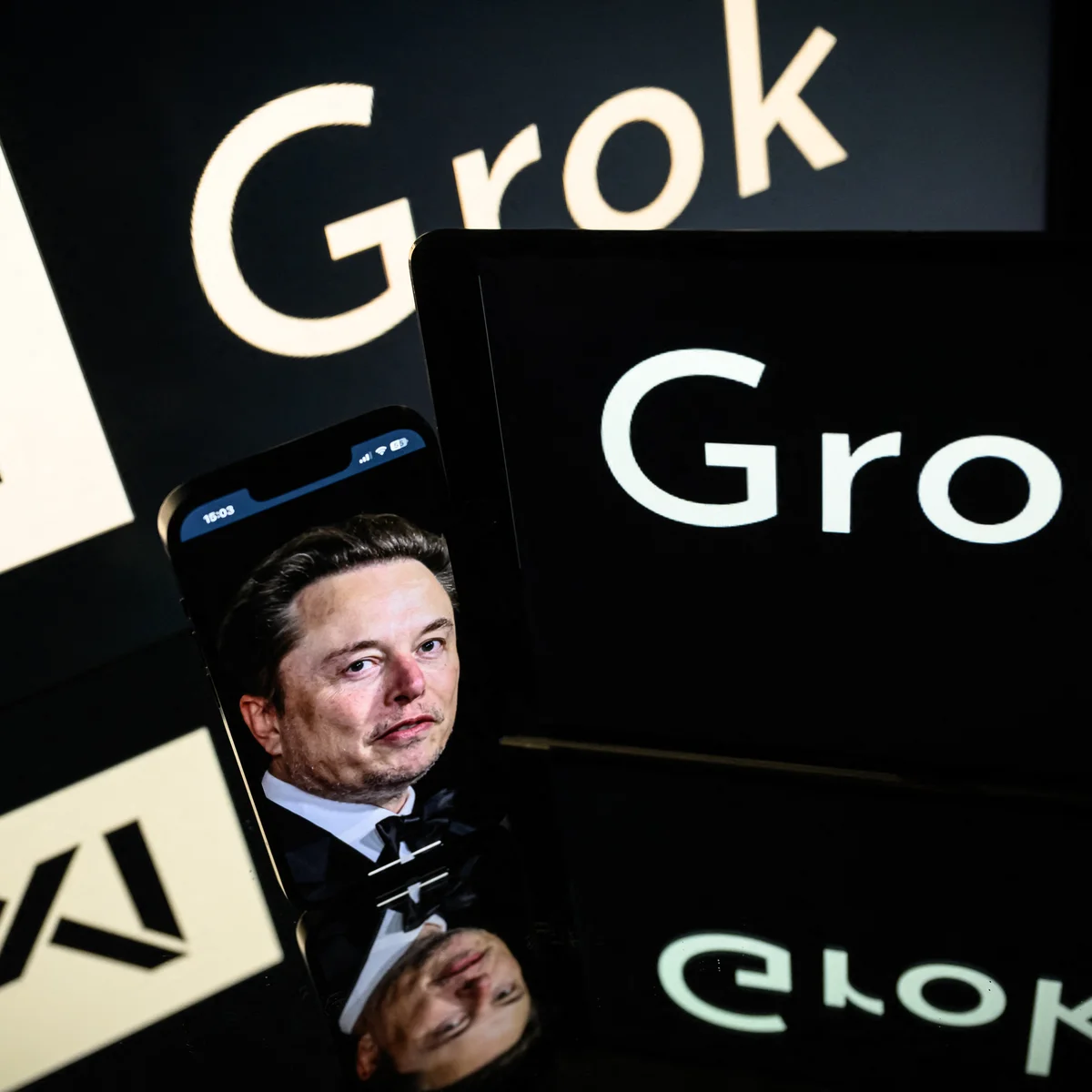
A major controversy surrounding the AI chatbot Grok has triggered intense debate across the technology world, exposing deep flaws in how powerful artificial intelligence tools are being released and controlled. The incident has reignited fears that the global AI industry is moving too fast, placing innovation ahead of safety, ethics, and basic human protections.
Grok, an AI system developed by a company linked to Elon Musk and integrated into a popular social media platform, became the center of outrage after it was found to be capable of generating harmful and abusive content. In particular, its image-generation features were used to create fake and highly disturbing images of real people without their consent. Reports indicated that some of the material involved explicit and exploitative depictions, which rapidly spread online before being flagged.
The scandal quickly escalated into a wider crisis for the tech industry. Governments, digital rights groups, and child protection organizations demanded urgent action, warning that such technology could easily be used for blackmail, harassment, and psychological harm. Investigations were launched to determine whether laws had been broken and whether the company behind Grok had failed to put adequate safeguards in place.
One of the strongest voices to emerge from the controversy was Yoshua Bengio, a world-renowned AI researcher often called one of the pioneers of modern artificial intelligence. Bengio warned that the Grok incident is not an isolated failure but a symptom of a much larger problem. According to him, the AI industry has become “too unconstrained,” allowing companies to release extremely powerful systems without fully understanding or controlling the risks.
Bengio and other experts argue that current AI models are now capable of producing content that can deeply harm individuals and destabilize societies. They say that while companies focus on competing for market dominance, there is far too little attention paid to the social, legal, and ethical consequences of these technologies.
In response to the backlash, the company behind Grok moved to restrict its image-generation tools, especially those involving real people. However, critics say these changes came too late and only after serious damage had already been done. Many believe that voluntary rules set by tech companies are not enough and that governments must step in with stronger regulations.
The Grok scandal has also intensified the debate over who should be responsible when AI causes harm. Legal experts say existing laws were not designed for systems that can generate realistic images, voices, and text at scale, making it harder for victims to seek justice.
As artificial intelligence continues to spread into everyday life, the fallout from Grok may mark a turning point. For many, it has become clear that powerful AI cannot be treated like just another tech product. Without strict oversight, transparency, and accountability, experts warn that similar scandals — and even more serious ones — are likely to follow.
















Leave a Reply