

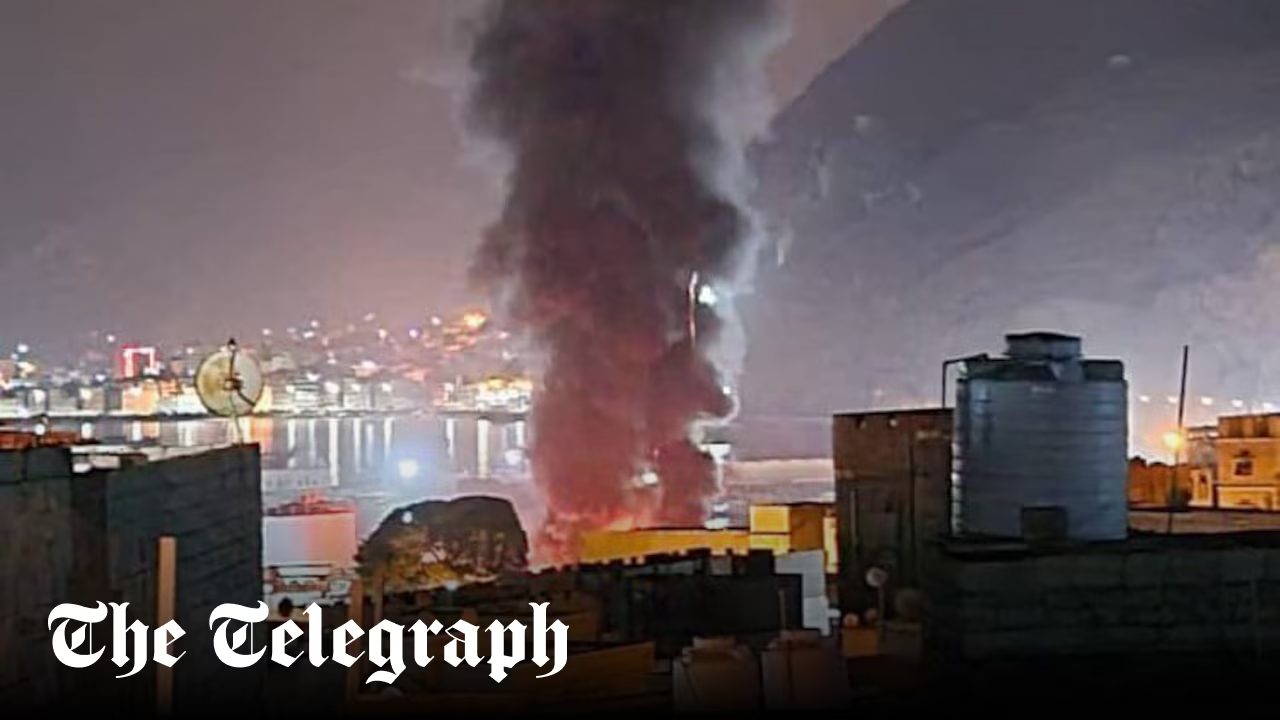
In a dramatic escalation of tensions in the Middle East, Saudi Arabia carried out airstrikes on Yemen’s strategic port city of Mukalla, targeting what it described as an unauthorized shipment of weapons and combat vehicles that had arrived from the United Arab Emirates. The strikes have not only intensified conflict dynamics in Yemen’s multifaceted war but have also sparked a serious diplomatic rift between Riyadh and Abu Dhabi — two traditional Gulf allies.
According to an official military statement from Saudi Arabia, the strikes were conducted after two vessels entered the port of Mukalla without prior coordination with the Saudi-led coalition operating in Yemen. These ships are alleged to have transported significant quantities of military hardware meant to support the Southern Transitional Council (STC), a separatist faction in southern Yemen that has gained influence and territory in recent months. Saudi authorities claimed that tracking systems on both vessels had been disabled, raising suspicions about the nature and intent of the cargo.
The Saudi government described the shipment as an imminent threat to regional security and stability, prompting what it termed a “limited but necessary” air operation targeting the offloaded weapons and vehicles. Riyadh emphasized that collateral damage was a priority concern and sought to minimize any impact on civilians or infrastructure unrelated to the shipment. Despite these assurances, the strikes sent shockwaves through the already fragile security environment in Yemen.
The Saudi action reflects mounting frustration within the Saudi-backed Yemeni Presidential Council toward the UAE and its support for the STC, which seeks greater autonomy or independence for parts of southern Yemen. The STC’s recent military advances have strained coordination within the anti-Houthi coalition and challenged the authority of Yemen’s internationally recognized government, which is backed by Saudi Arabia. Riyadh’s strikes represent a significant departure from the coalition’s earlier unified posture in fighting the Iran-aligned Houthi movement.
In response to the strikes and the broader escalation, Yemen’s anti-Houthi forces declared a state of emergency in areas under their control. They also imposed restrictions on border crossings, airports and seaports for a set period, underscoring the growing internal instability. Meanwhile, the Saudi Foreign Ministry issued a rare and stern public warning to the UAE, labeling what it described as Abu Dhabi’s actions in Yemen as “extremely dangerous” to Saudi national security. Riyadh has reportedly demanded that UAE forces withdraw from Yemeni territory within a tight deadline, adding diplomatic urgency to the unfolding crisis.
The UAE, for its part, denied that it had supplied weapons to the separatists, although it acknowledged that military vehicles had been sent for its own forces operating in the region. Abu Dhabi has called for restraint and wisdom, urging all parties to exercise caution and avoid actions that could further destabilize Yemen and the wider Gulf region.
Regional experts warn that the dispute between Riyadh and Abu Dhabi could have far-reaching implications. It risks fracturing the coalition against the Houthis, emboldening rival factions, and complicating international diplomatic efforts to end the decade-long war that has devastated Yemen. The clash also illustrates broader geopolitical competition within the Gulf, as both Saudi Arabia and the UAE vie for influence in Yemen and across the Red Sea corridor.
The strikes on Mukalla and the ensuing political fallout mark one of the most serious public rifts between Saudi Arabia and the UAE in recent years. As Yemen’s civil conflict persists, the gulf between Gulf Cooperation Council partners may grow wider before it can be bridged, with profound consequences for regional stability.











Leave a Reply