

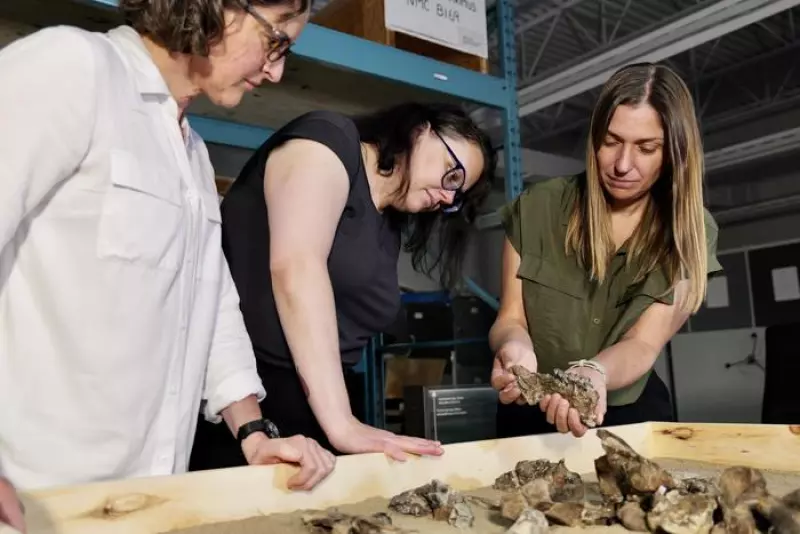
A remarkable fossil unearthed in the High Arctic is reshaping scientific understanding of how ancient animals moved across the planet. Paleontologists have identified the remains of a prehistoric rhino species in a region far north of where such creatures were believed to roam, suggesting that ancient migration routes were far more complex—and wide-reaching—than previously thought.
The fossil, found in permafrost layers once covered by dense forests millions of years ago, dates back to a period when the Arctic was warmer, wetter, and capable of supporting large herbivores. While rhinos of various species once spread widely across Asia, Europe, and North America, discovering one this far north challenges long-held assumptions about their environmental limits.
Researchers believe this Arctic rhino may have migrated seasonally or taken advantage of lush northern ecosystems created by global warming cycles during the mid-Cenozoic era. At that time, Greenland, the Canadian Arctic, and parts of Siberia supported rich vegetation, making them suitable environments for large browsing animals.
What stands out most is how this discovery disrupts the traditional map of ancient terrestrial travel. For decades, scientists assumed that only select mammals were capable of crossing Arctic land bridges due to harsh climates. The presence of a rhino—an animal typically associated with temperate or tropical habitats—suggests a far more diverse array of species may have moved through these northern corridors.
This finding also introduces new questions: Were Arctic conditions more stable and hospitable for longer periods than previously believed? Did other large mammals, perhaps not yet discovered, follow similar northern routes? And could this help explain puzzling fossil dispersal patterns found across continents?
Experts say the Arctic rhino is more than just a surprising fossil—it is a clue to a broader, interconnected story of prehistoric life. As climate patterns fluctuated and continents shifted, these massive animals may have been far more adaptable than assumed, taking advantage of ecological windows that opened only briefly in Earth’s history.
Further analysis of the specimen is expected to reveal details about its diet, physiology, and evolutionary relationships. Scientists hope that understanding how this rhino survived in such an unexpected habitat may offer new insights not only into ancient migrations but also into how large mammals respond to climate changes over long timescales.
As research continues, one thing is increasingly clear: the Arctic still holds untold chapters of Earth’s deep past—chapters that may fundamentally alter our understanding of where ancient animals lived, how they traveled, and how interconnected prehistoric ecosystems truly were.












Leave a Reply