

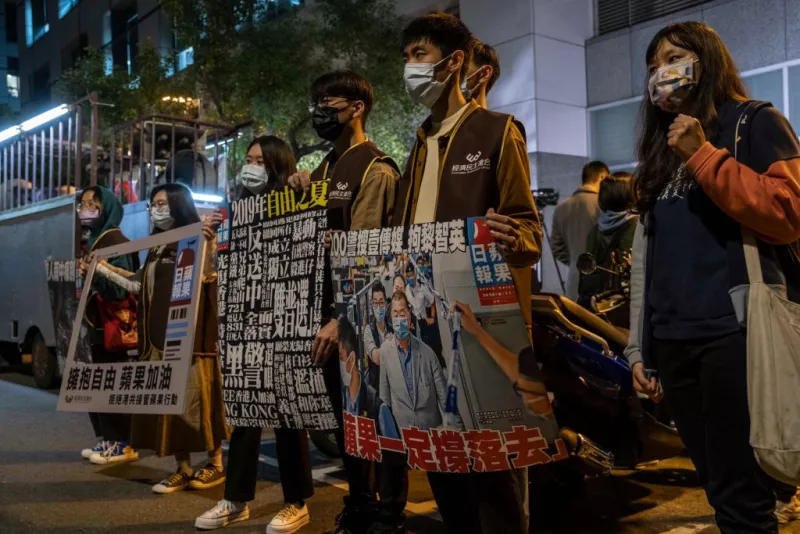
A Hong Kong court has convicted prominent pro-democracy activist and media tycoon Jimmy Lai, delivering a landmark verdict that underscores the city’s sweeping political transformation under Beijing’s national security framework. The ruling marks a pivotal moment for press freedom and civil liberties in Hong Kong, once known for its robust legal protections and independent media environment.
Jimmy Lai, the founder of the now-defunct Apple Daily newspaper, was found guilty on charges linked to national security and public order offenses. Prosecutors argued that Lai used his media platform and international connections to promote actions deemed hostile to the state. The defense rejected those claims, insisting that his activities amounted to peaceful advocacy, journalism, and the exercise of free expression.
A Symbolic Figure in Hong Kong’s Democracy Movement
Lai has long been one of the most recognizable figures in Hong Kong’s pro-democracy movement. As a self-made businessman who built a media empire from scratch, he became known for his outspoken criticism of Beijing and his support for democratic reforms. Apple Daily, before its forced closure, was among the city’s most influential newspapers and a frequent critic of both the Hong Kong government and Chinese authorities.
His arrest and prosecution have been widely viewed as emblematic of the broader crackdown on dissent that followed the introduction of the national security law. Since its enactment, dozens of activists, politicians, academics, and journalists have been arrested or convicted, while many others have left the city.
Court Ruling and Charges
The court concluded that Lai’s actions crossed the legal threshold established by the national security legislation, which criminalizes acts such as collusion with foreign forces and activities seen as undermining state authority. Judges ruled that his writings, interviews, and alleged coordination with overseas figures were sufficient to support a conviction.
Sentencing has been scheduled for a later date, and Lai could face a lengthy prison term. Legal experts note that penalties under the national security law can range from several years in prison to life sentences in the most serious cases.
International and Local Reaction
The conviction has drawn strong reactions from international governments, press freedom organizations, and human rights groups. Critics argue the case demonstrates how broadly the national security law can be applied and warn it will further chill free speech and independent journalism in Hong Kong.
Within the city, the verdict has reinforced a climate of caution. Many media outlets now avoid sensitive political coverage, and public demonstrations have all but disappeared. Supporters of the government, however, say the ruling proves that no one is above the law and that stability and security must take precedence after years of political unrest.
Broader Implications for Hong Kong
Jimmy Lai’s conviction is widely seen as a turning point in Hong Kong’s post-handover history. Once a bastion of free expression in Asia, the city is increasingly aligned with mainland China’s political and legal norms. The outcome of the case is likely to influence how journalists, business leaders, and activists operate in the years ahead.
As Lai awaits sentencing, his supporters say his case will be remembered as a defining chapter in Hong Kong’s struggle over identity, freedom, and the rule of law. For many observers, the verdict signals not just the fate of one man, but the reshaping of an entire city.










Leave a Reply