

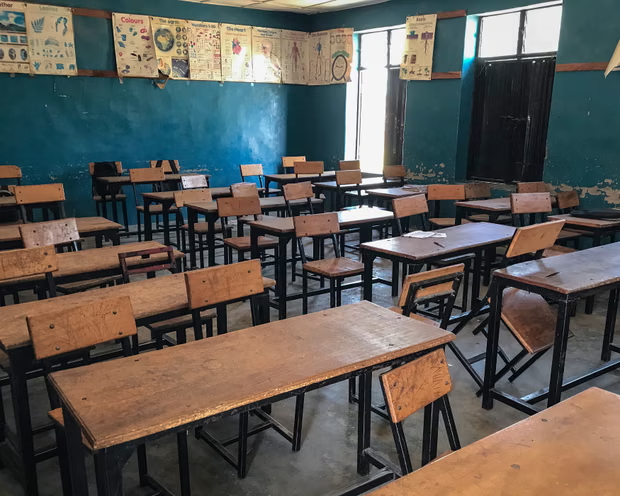
A group of Nigerian schoolchildren who were abducted in a traumatic attack are set to be reunited with their families, bringing a moment of relief and cautious celebration after days of fear, uncertainty, and national concern. The children, whose kidnapping had reignited anxieties about school safety and insecurity in parts of Nigeria, were freed following efforts involving security forces, local authorities, and community intermediaries.
Officials confirmed that the students were released alive and are currently undergoing medical checks and psychological assessments before being formally handed over to their families. Authorities said the priority now is to ensure the children’s physical health and emotional well-being after what is believed to have been a deeply distressing experience.
The abduction occurred when armed attackers stormed a school, seizing pupils and fleeing into remote areas. Such incidents have become a grim pattern in parts of northern and central Nigeria, where criminal gangs and armed groups increasingly target schools for ransom or leverage. The latest kidnapping triggered widespread outrage, prompting renewed calls for stronger protection of educational institutions and tougher action against those responsible.
Parents of the abducted children described the days following the attack as agonizing. Many gathered daily near government offices and security checkpoints, pleading for swift action. For families living in already vulnerable communities, the abduction represented not only a personal nightmare but also a broader fear that education itself has become dangerous.
The Nigerian government welcomed the release, describing it as a positive outcome achieved through coordinated efforts. While officials have not disclosed full details of how the children were freed, citing security reasons, they emphasized that dialogue, intelligence operations, and pressure on the abductors played key roles. In similar past cases, negotiations and ransom payments have been alleged, though authorities often avoid confirming such claims.
Security analysts say the incident highlights the persistent challenge Nigeria faces in combating armed groups that operate with relative ease in rural and forested regions. These groups exploit weak security presence, poverty, and difficult terrain to carry out attacks and evade capture. Schools, often lacking adequate fencing or guards, are seen as soft targets.
Human rights advocates and education campaigners stressed that while the release of the children is welcome, it does not address the root causes of the crisis. They argue that repeated kidnappings have already disrupted schooling for thousands of children, particularly girls, whose families may withdraw them from school out of fear. This has long-term consequences for literacy, economic development, and social stability.
Medical professionals involved in the children’s care said reunification would be handled carefully. Many of the students are expected to need counseling to cope with trauma, fear, and possible exposure to violence during captivity. Psychologists warn that without proper support, some children may struggle with anxiety, nightmares, or difficulties returning to school.
Community leaders have also called for solidarity rather than stigma as the children return home. In previous cases, victims of abduction have faced social challenges, including fear-driven isolation or misconceptions about their experiences. Religious and traditional leaders are urging communities to provide comfort, reassurance, and protection.
The incident has renewed debate over school security across Nigeria. Proposals include deploying more security personnel to vulnerable areas, investing in early-warning systems, relocating schools from high-risk zones, and addressing broader socio-economic factors that fuel crime. Some state governments have already closed or relocated schools in response to repeated attacks, though critics argue this effectively hands victory to criminal groups.
As families prepare to embrace their children once more, the mood is one of relief tempered by unresolved fear. For many Nigerians, the release of the schoolchildren is a reminder of both resilience and fragility—proof that lives can be saved, but also evidence that the threat remains.
The coming days will focus on healing, reunification, and recovery. Yet the larger question persists: how to ensure that Nigerian children can pursue education without the constant shadow of violence. For now, the safe return of the freed schoolchildren stands as a rare moment of hope in a struggle that is far from over.
















Leave a Reply