

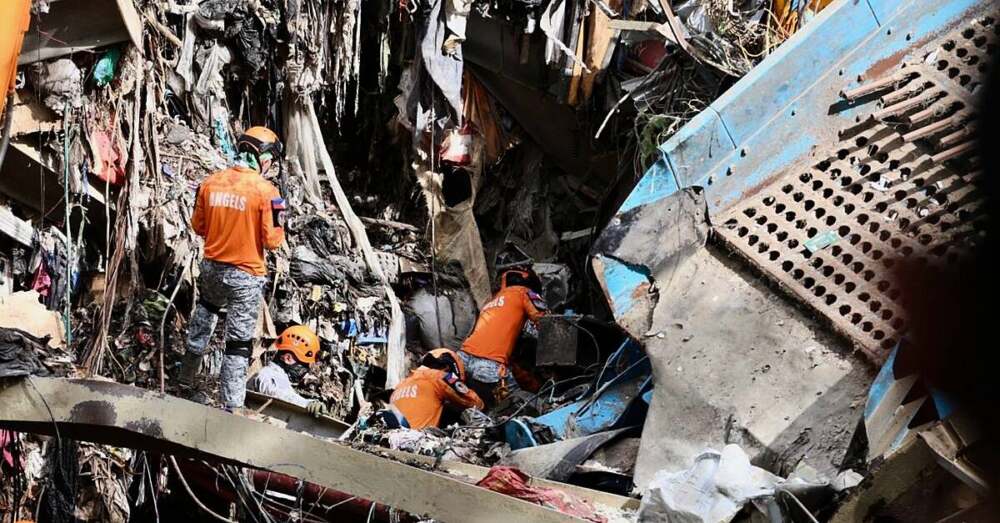
In a dramatic and emotionally charged rescue operation, emergency teams in the Philippines have reported detecting signs of life deep beneath a colossal pile of compacted waste that collapsed at a large landfill site earlier this week. The development has offered a surge of hope for families of the missing, even as authorities warn that the situation remains extremely dangerous and rescue efforts will be slow and painstaking.
The tragedy occurred at a waste disposal facility on the outskirts of a bustling Philippine city, where towering mounds of garbage had been accumulating for years. In the early hours of the disaster, one of these unstable heaps — made up of thousands of tons of compressed refuse — suddenly gave way, cascading down and burying several structures and dozens of workers beneath an avalanche of debris.
Rescue crews confirmed that multiple workers were confirmed dead, while dozens more were missing, presumed trapped under the unstable mass of trash. Among the injured, a number were pulled from the wreckage with varying degrees of injuries and rushed to nearby hospitals for urgent medical treatment.
Signs of Life Renew Hope
Word that rescuers had identified indications of life deep within the tangled ruins sparked an immediate upshift in operations. Specialized detection equipment picked up vital signs in a specific area beneath the collapsed landfill, prompting teams to switch from general clearance to focused extraction efforts. This development brought relief to anxious relatives who had been waiting near the scene, many of them clutching photographs and personal belongings of loved ones still missing.
Officials cautioned, however, that detecting possible survivors is just the beginning of an extremely delicate process. The massive accumulation of garbage presents a host of hazards — including toxic gases released by decomposing waste, shifting layers of debris, and the possibility of further collapses — all of which make every movement risky for both trapped individuals and rescuers.
A Treacherous Search Underway
Heavy machinery, including cranes and excavators, has been brought in to help reach deeper layers of the debris. Yet teams are moving deliberately, coordinating hand crews with powerful equipment to avoid destabilizing the site. In several sections, rescuers have had to pause operations momentarily due to dangerous shifts in the trash mound or to ventilate pockets filled with methane and other hazardous gases.
Emergency responders have described the scene as one of the most difficult they have ever encountered: towering layers of rubbish interspersed with crumpled metal sheeting, broken wooden beams, and tangled wires. Navigating this treacherous terrain while trying to preserve any evidence of life requires both precision and patience.
Families in Limbo
Outside the active rescue zone, relatives of the missing have maintained a vigil, alternating between clinging to hope and confronting harsh uncertainty. Some have shared stories of loved ones who went to work at the landfill that morning as they did every day, never imagining they would be caught in such a catastrophic event.
Community leaders have been offering support, organizing prayer gatherings and counseling services to help families cope. Local officials have also pledged assistance with medical costs and other needs for the affected families, while urging the public to respect the ongoing rescue operations and refrain from interfering.
Questions About Safety and Waste Management
The disaster has reignited broader concerns about waste management policies and safety practices at landfill sites across the country. Residents and advocacy groups have renewed calls for stricter oversight, improved engineering standards for waste piles, and better protections for workers who often operate in hazardous conditions.
Experts note that landfills in rapidly urbanizing areas frequently grow taller and more unstable than recommended, especially when regulatory systems lag behind community growth. This tragedy has underscored the human cost of such systemic gaps in planning and enforcement.
The Road Ahead
As night falls and the rescue operation continues around the clock, each indication of possible survivors renews the collective hope of the community. Rescuers, family members and volunteers remain steadfast in their efforts, committed to bringing everyone home if possible. But officials stress that the path to recovery — for survivors and for the community at large — will be long and fraught with challenges.















Leave a Reply