

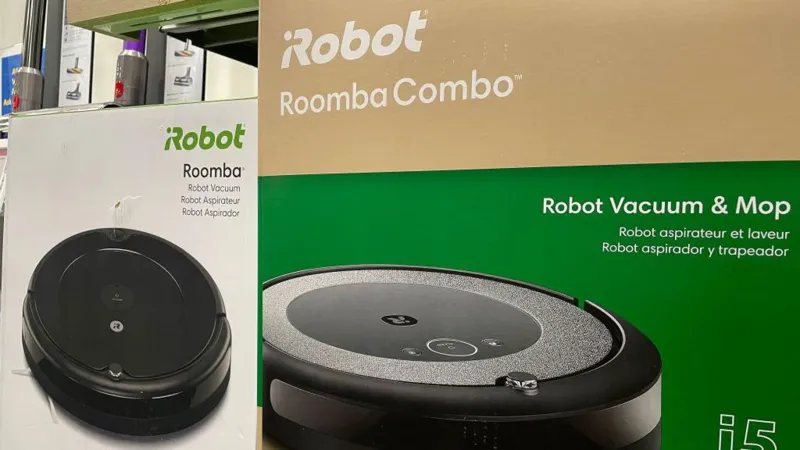
iRobot, the American robotics company best known for its Roomba robotic vacuum cleaners, has filed for bankruptcy protection and agreed to sell its assets to a Chinese technology company, marking a dramatic fall for one of the pioneers of consumer robotics.
The company announced the move after months of financial strain, declining sales, and mounting debt. Once celebrated as a symbol of American innovation, iRobot has struggled to adapt to intense global competition, shifting consumer demand, and rising production costs in the smart home market.
From Robotics Pioneer to Financial Crisis
Founded in 1990, iRobot built its reputation on advanced robotics research before achieving mainstream success with the launch of the Roomba vacuum. The product helped define an entirely new category of household automation and turned iRobot into a globally recognized brand.
However, in recent years, the company faced increasing pressure from lower-cost competitors, particularly from Asia, offering similar robotic vacuums with advanced features at more affordable prices. At the same time, inflation, supply chain disruptions, and weakening consumer spending reduced demand for premium home electronics.
Efforts to diversify beyond robotic vacuums, including mopping devices and other smart home products, failed to generate enough revenue to offset losses. Cost-cutting measures, layoffs, and restructuring attempts were not sufficient to stabilize the company’s finances.
Bankruptcy Filing and Sale Agreement
Under the bankruptcy filing, iRobot will seek court approval for the sale of its assets to a Chinese firm specializing in consumer electronics and artificial intelligence-powered home devices. The deal is expected to transfer iRobot’s brand, patents, and core technologies to the new owner.
Company officials said the sale represents the best available option to preserve the Roomba brand and continue product development. The transaction is also intended to protect remaining jobs and maintain customer support for existing devices, although some operations may be downsized or relocated.
The bankruptcy filing allows iRobot to restructure its obligations while completing the sale, ensuring creditors receive partial repayment and enabling an orderly transition of ownership.
National Security and Data Concerns
The sale to a Chinese company is likely to draw scrutiny from U.S. regulators and lawmakers, particularly over data privacy and national security concerns. Robotic vacuums often collect detailed information about home layouts and user habits, raising questions about how such data might be handled under foreign ownership.
While iRobot has said it complies with strict data protection standards, critics argue that the transfer of ownership could expose sensitive consumer data to foreign access. Regulatory reviews may impose conditions on the deal, including limits on data storage and data transfer practices.
Industry Impact and Market Implications
iRobot’s collapse highlights the challenges facing U.S. consumer electronics companies competing in a globalized market dominated by aggressive pricing and rapid innovation. Analysts say the case underscores how quickly technological leadership can erode without sustained investment and adaptability.
For consumers, the sale could result in changes to pricing, software ecosystems, and future product direction. The new owner is expected to integrate iRobot’s robotics expertise with its own manufacturing scale and artificial intelligence capabilities, potentially reshaping the Roomba lineup.
The End of an Era
For many, iRobot’s bankruptcy marks the end of an era in consumer robotics. The company helped bring advanced automation into everyday households and inspired a generation of engineers and entrepreneurs.
As the sale moves forward, the future of the Roomba brand now rests in the hands of its new owner. Whether it will regain its former dominance or become another legacy name absorbed into a global tech conglomerate remains an open question.











Leave a Reply