

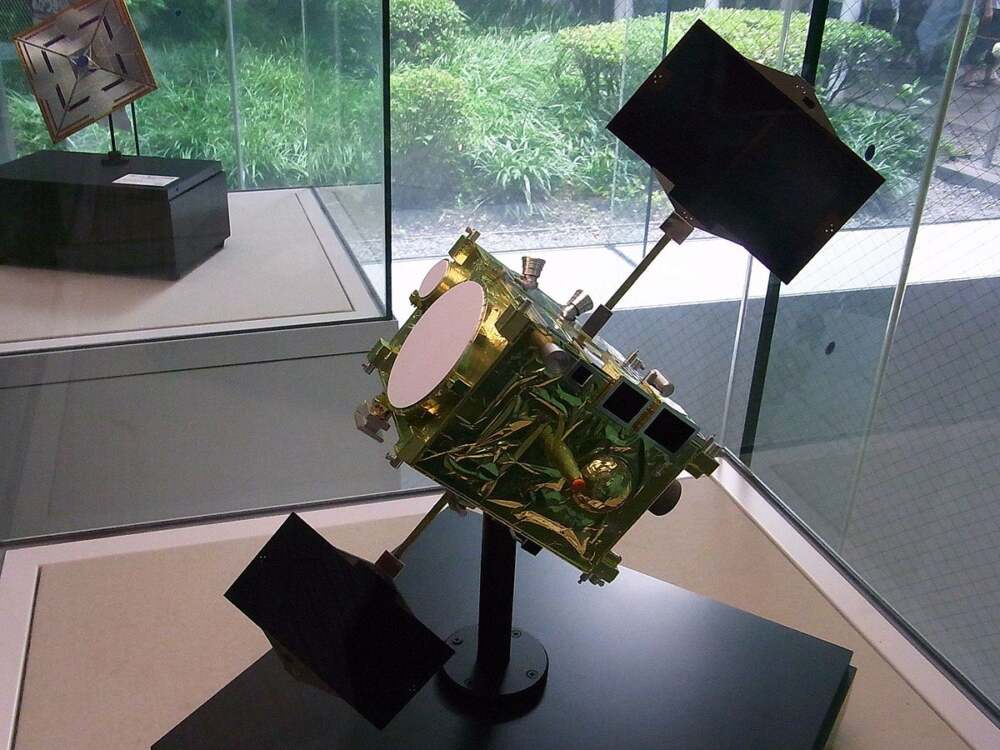
The Japan Aerospace Exploration Agency (JAXA) has officially ended operations of its Venus Climate Orbiter, Akatsuki, closing the chapter on the only spacecraft dedicated to studying Venus in recent years. The mission was declared over on September 18, 2025, after repeated attempts to restore control and communication proved unsuccessful.
From Failure to Redemption
Akatsuki was launched in May 2010 with the goal of studying Venus’s thick, cloud-covered atmosphere. However, its first attempt to enter orbit around the planet later that year failed due to an engine malfunction. For five years, the spacecraft remained in orbit around the Sun, with mission engineers carefully planning a second chance.
In December 2015, against the odds, Akatsuki successfully entered Venusian orbit using only its smaller thrusters. This marked a historic milestone, making Japan the first nation outside of the United States and the Soviet Union to orbit the planet.
A Treasure Trove of Data
Over the course of its mission, Akatsuki carried six scientific instruments to study Venus in visible, ultraviolet, and infrared light, as well as equipment for radio science experiments. These tools allowed scientists to:
- Observe the planet’s swirling cloud systems in unprecedented detail.
- Measure the structure and dynamics of the atmosphere across multiple layers.
- Detect thermal emissions that revealed how Venus radiates heat back into space.
- Study chemical signatures that shed light on the planet’s complex climate.
Although some instruments experienced failures over the years, several continued returning valuable science well past the mission’s primary objectives.
The End of an Era
In April 2024, Akatsuki lost its ability to maintain orientation in space, preventing its antenna from pointing toward Earth. Despite months of effort, mission control was unable to re-establish stable communication. By September 2025, JAXA concluded the mission had ended.
Looking Ahead
With Akatsuki gone, Venus is currently without an orbiting spacecraft dedicated to continuous observation. However, several international missions are planned for the coming decade, aiming to probe the planet’s mysterious clouds, extreme surface conditions, and possible signs of past habitability.
For now, Akatsuki’s legacy stands as a remarkable story of resilience—turning an early failure into a decade of groundbreaking science at Earth’s nearest planetary neighbor.













Leave a Reply