

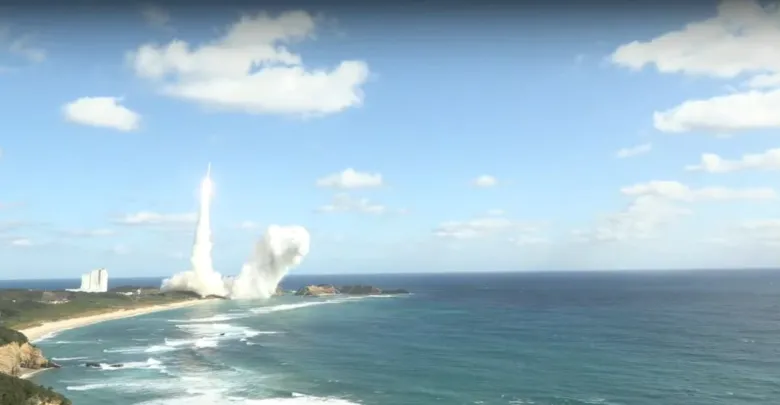
Japan’s space program suffered a significant blow as its latest H3 rocket experienced a second-stage anomaly, resulting in the loss of the QZS-5 satellite intended for deployment. The setback marks a major challenge for Japan’s ambitious H3 program, which was designed to enhance the nation’s domestic launch capabilities and reduce reliance on foreign launch providers.
The H3 rocket, developed by the Japan Aerospace Exploration Agency (JAXA) in collaboration with Mitsubishi Heavy Industries, was carrying the QZS-5 satellite, part of Japan’s Quasi-Zenith Satellite System (QZSS). The system is a regional satellite navigation network intended to improve GPS coverage and accuracy across Japan, particularly in urban areas with tall buildings or rugged terrain.
According to preliminary reports from JAXA, the rocket’s second stage failed to perform as expected shortly after ignition, preventing the satellite from reaching its designated orbit. Engineers are now investigating the root cause of the anomaly, examining telemetry data and conducting detailed simulations to determine whether the issue stemmed from propulsion, guidance systems, or other critical components.
The loss of QZS-5 is particularly impactful because it represents a key component of Japan’s navigation satellite network. The QZSS system is designed to provide high-precision positioning for both civilian and military applications, enhancing infrastructure, transportation, and emergency response capabilities across the country. The failure delays the network’s expansion and will require adjustments in satellite deployment schedules.
Japan’s H3 rocket program was intended to replace the H-IIA and H-IIB rockets, offering improved cost efficiency and flexibility in launching a variety of payloads, from communications satellites to scientific probes. The program has been closely watched by the global space community as a potential competitor to commercial launch services and as a symbol of Japan’s growing domestic space capabilities.
While the failure is a setback, JAXA emphasized that safety and thorough investigation remain the top priorities. Lessons learned from the anomaly will be incorporated into design reviews, testing procedures, and subsequent launches to prevent recurrence. Officials stressed that the H3 program remains on track in its broader mission, though schedules for future satellite deployments, including replacement QZSS satellites, may be adjusted.
International space analysts note that setbacks are not uncommon in the development of new rocket systems, particularly when transitioning from legacy designs to next-generation vehicles. The H3’s first-stage systems have generally performed reliably, but the second-stage anomaly underscores the complexity of orbital insertion and the precision required for satellite deployment.
Despite the loss, Japan’s commitment to expanding its space capabilities remains steadfast. JAXA plans to continue testing, refining, and eventually deploying the H3 rocket for a wide range of scientific, commercial, and strategic missions. The agency also intends to maintain transparency about technical challenges and progress, reinforcing confidence in Japan’s growing presence in the global space sector.
The incident serves as a reminder of the inherent risks of spaceflight and the technical challenges nations face when developing advanced launch vehicles. As Japan investigates the H3 anomaly, the global space community will be watching closely, recognizing that each test, success, or setback contributes to the advancement of space exploration and satellite technology.














Leave a Reply