

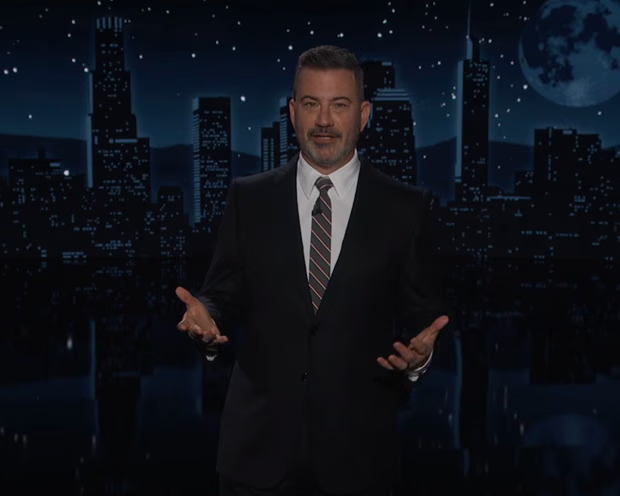
Late-night host Jimmy Kimmel delivered a sharp critique of former President Donald Trump’s recent speech, jokingly referring to it as a “surprise primetime episode of The Worst Wing” during his monologue. The quip reflects Kimmel’s ongoing satirical coverage of Trump’s public appearances and political commentary.
Kimmel’s Take on the Speech
In his opening segment, Kimmel dissected key moments from the speech, highlighting what he described as exaggerations, partisan rhetoric, and theatrical delivery. By dubbing it The Worst Wing, Kimmel drew a humorous parallel to a reality-show format, implying that the performance was both chaotic and over-the-top.
- Satirical Observations: Kimmel poked fun at Trump’s speaking style, noting abrupt topic changes, exaggerated claims, and familiar rhetoric.
- Cultural Commentary: The monologue framed the speech as part of a broader trend in media spectacle, blending politics with entertainment in ways that dominate primetime news cycles.
Context and Timing
Trump’s speech, delivered in a high-profile media slot, was intended to reach a national audience and influence ongoing political discussions. Late-night shows, including Kimmel’s, have routinely responded with satire, balancing critique with humor to engage viewers.
Audience and Social Media Reaction
Kimmel’s segment quickly gained traction online, with clips shared widely on social media platforms. Fans praised the comedic timing and pointed observations, while critics argued that such mockery risks oversimplifying complex political messages.
The “Worst Wing” joke has since become a trending phrase among online commentators, reflecting the continued interplay between political events and late-night comedy.
The Role of Satire in Political Coverage
Analysts note that Kimmel’s commentary exemplifies the modern late-night approach to political coverage—blending humor, opinion, and critique to shape public perception. By framing Trump’s speech as a theatrical performance, Kimmel encourages audiences to question rhetoric while engaging in entertainment-driven discourse.
Looking Ahead
As political figures increasingly use media platforms for direct communication, late-night satire is expected to remain a key outlet for commentary and public debate. Kimmel’s segment illustrates how humor can frame narratives and influence audience interpretation, particularly in moments of high-profile political spectacle.










Leave a Reply