


Scientists have uncovered a surprising new way to monitor pieces of defunct spacecraft and other space debris as they plummet back to Earth — by listening for them with instruments originally designed to detect earthquakes.
When objects from orbit enter the atmosphere, they often travel at extremely high speeds — faster than the speed of sound. As they push through the air, they generate shock waves similar to the sonic booms caused by supersonic aircraft. These shock waves send faint vibrations through the ground, and researchers have now discovered that networks of seismic sensors can pick up these signals.
Traditionally, space‑debris tracking has relied on radar and optical telescopes to follow objects while they are still in orbit. But once a piece of space junk begins its uncontrolled fall through the atmosphere, those systems can lose track of its exact path, especially when debris fragments and spreads out. At this late stage, knowing where the pieces are headed can be crucial — not only for scientific study, but also for public safety if any fragments survive to the surface.
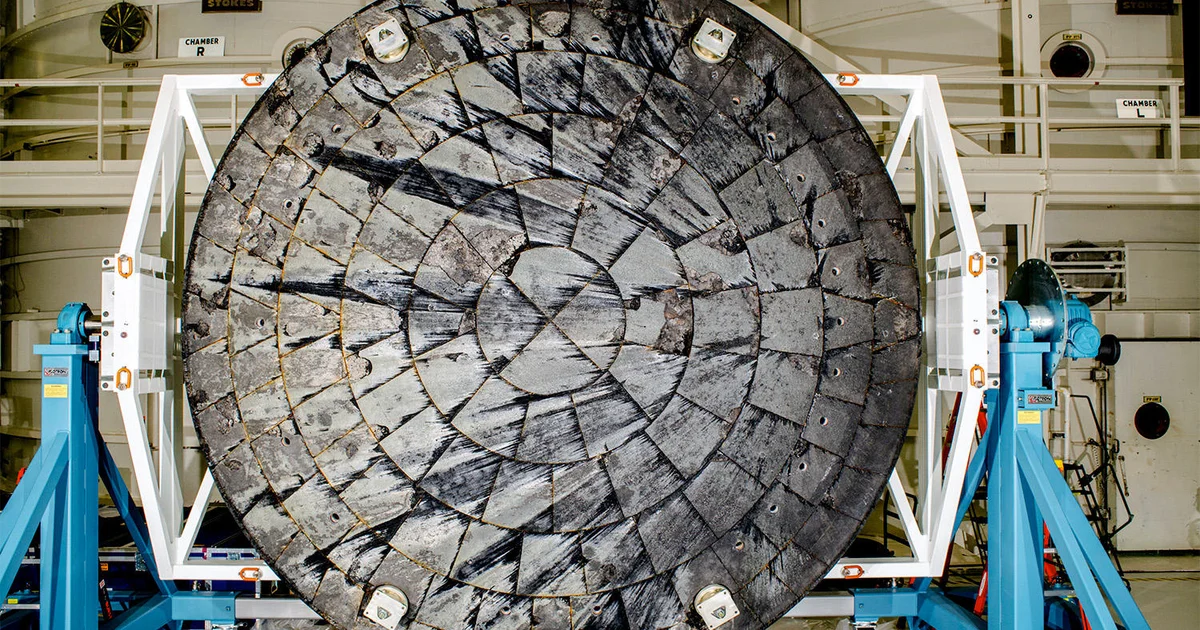
In a recent study, researchers examined seismic data collected during the 2024 reentry of a discarded orbital module. As the object entered the atmosphere over a densely instrumented region, its supersonic descent produced a series of shock waves. These waves were recorded by more than one hundred seismic stations, which allowed scientists to reconstruct the object’s trajectory through the sky with remarkable detail.
One of the key advantages of this method is precision. By comparing the arrival times of seismic signals at different ground stations, the researchers were able to estimate the object’s speed, altitude range, the angle at which it fell, and how it broke apart as it burned up. This level of detail goes beyond what traditional tracking systems often achieve once the debris begins to interact with the atmosphere.
In the case examined, the seismic method revealed that the object’s actual path through the atmosphere differed by a significant distance from what orbital predictions had estimated. This underscores how atmospheric dynamics can alter a reentering object’s flight path in ways that are difficult to predict using space‑based tracking alone.
The findings also highlighted the characteristic pattern of sonic booms produced by such reentries. Larger fragments tended to generate a stronger initial signal, while smaller pieces produced a complex sequence of weaker shock waves as they disintegrated. These acoustic fingerprints offer scientists a new way to analyze how space debris breaks apart during reentry — information that could improve future models of debris behavior.
While most space junk burns up completely high in the atmosphere, larger or denser pieces occasionally survive to reach the ground. By refining seismic tracking techniques, scientists hope to provide more accurate forecasts of where such debris might land, giving authorities better situational awareness and response capabilities.
The growing number of satellites and rocket stages in Earth orbit means that uncontrolled reentries are becoming more common. With tens of thousands of objects currently circling the planet at high speed, the challenge of tracking them — and understanding their potential impact when they fall — is a pressing concern.
Seismic monitoring networks, already scattered across the globe to study earthquakes and underground activity, now offer an unexpected dual purpose. By tuning into the subtle ground vibrations caused by sonic booms, researchers are turning the Earth itself into a giant, passive detector for incoming space debris. This innovative approach not only enhances our ability to track falling objects but also demonstrates how scientific tools can find new uses in an increasingly crowded space environment.










Leave a Reply