

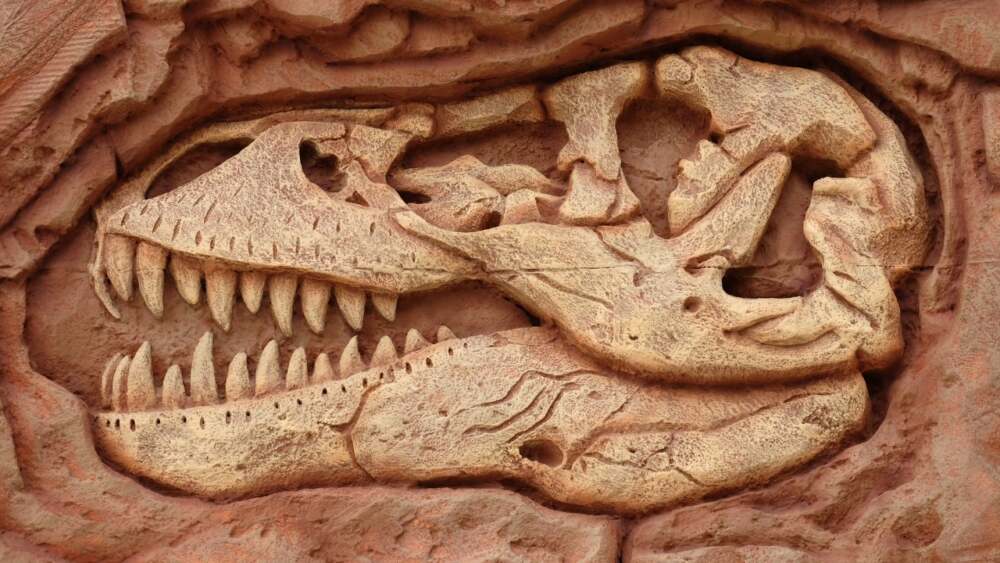
Paleontologists have uncovered the oldest and most complete fossil of a dome-headed dinosaur, Zavacephale rinpoche, in Mongolia’s Gobi Desert. This remarkable discovery, dating back approximately 108 million years to the Early Cretaceous period, offers unprecedented insights into the evolution of pachycephalosaurs—a group of bipedal, herbivorous dinosaurs known for their distinctive dome-shaped skulls.
Discovery and Significance
The fossil was unearthed in 2019 by a team led by Mongolian paleontologist Tsogtbaatar Chinzorig from North Carolina State University. While surveying a hillside in the Khuren Dukh formation, they discovered the top of a dinosaur’s skull protruding from a cliff. Upon excavation, the team found a juvenile specimen approximately 3 feet (1 meter) long and weighing around 13 pounds (6 kilograms). Despite its small size, Zavacephale possessed a fully developed cranial dome, formed primarily from a single thickened bone, distinguishing it from later species whose domes were composed of two fused bones.
This specimen is the oldest known pachycephalosaur by about 15 million years, pushing back the timeline for the emergence of dome-headed dinosaurs. The preservation of the skull, limbs, tail, and even gastroliths—stones ingested to aid digestion—provides a comprehensive view of the species’ anatomy and behavior.
Anatomical Insights
The well-preserved skeleton reveals that Zavacephale had long legs, short arms, and small hands, resembling a juvenile dinosaur. Analysis of growth rings in the limb bones indicates the individual was at least two years old at the time of death, suggesting that the cranial dome began developing early in life. The dome was adorned with small spikes and nodes, possibly serving as a display feature or for social interactions.
The presence of gastroliths further suggests that Zavacephale engaged in behaviors to aid in the digestion of plant material, providing additional context to its feeding habits.
Implications for Evolutionary Studies
The discovery of Zavacephale rinpoche fills a significant gap in the fossil record, offering new perspectives on the early evolution of pachycephalosaurs. The specimen’s age and completeness allow scientists to study the development of the cranial dome and its potential functions, such as head-butting behavior or species recognition. This find enhances our understanding of the diversity and adaptability of dinosaurs during the Early Cretaceous period.
Conclusion
The excavation of Zavacephale rinpoche marks a pivotal moment in paleontology, providing a rare glimpse into the life of one of the earliest dome-headed dinosaurs. As research continues, this discovery promises to shed light on the complex evolutionary pathways that led to the diverse array of dinosaur species that once roamed the Earth.












Leave a Reply