

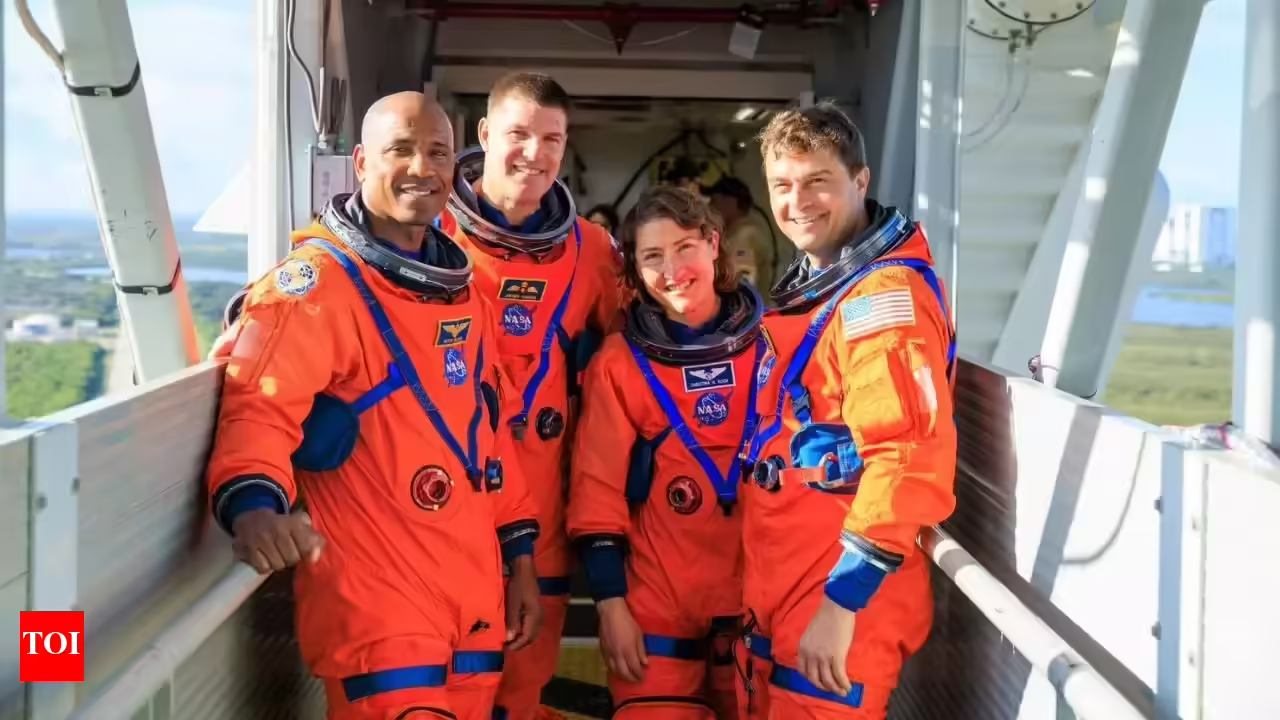
NASA is preparing for a landmark mission that will return humans to deep space: the Artemis II mission, scheduled for early 2026. This flight will carry four astronauts on a 10‑day journey around the Moon, marking the first crewed lunar flyby since the Apollo program ended in 1972. The mission is a critical step in NASA’s Artemis program, which aims to establish sustainable lunar exploration and ultimately pave the way for human missions to Mars.
A Milestone in Human Spaceflight
Unlike previous Artemis missions that tested spacecraft without humans, Artemis II will carry a crew aboard the Orion spacecraft, launched atop NASA’s powerful Space Launch System (SLS) rocket. The spacecraft will perform a free-return trajectory around the Moon, allowing it to swing around the far side before returning to Earth — a crucial test of life-support systems, navigation, and crew operations in deep space.
The Crew
The mission’s four astronauts represent a diverse and experienced team:
- Commander Reid Wiseman, who will oversee mission operations and spacecraft navigation.
- Pilot Victor Glover, responsible for assisting in flight control and monitoring spacecraft systems.
- Mission Specialist Christina Koch, contributing extensive experience in space missions and operations.
- Jeremy Hansen, representing the Canadian Space Agency, set to become the first Canadian to travel to the Moon’s vicinity.
The crew will test Orion’s systems, monitor spacecraft performance, and document lunar features while experiencing the effects of deep-space travel firsthand.
Journey Beyond Earth
After launch from Florida’s Kennedy Space Center, Orion will spend several days in orbit around Earth for final system checks before performing a burn to head toward the Moon. The spacecraft will travel approximately 230,000 miles from Earth, offering unprecedented views of both the lunar far side and the Earth from deep space. This phase will allow astronauts to test life-support systems, radiation shielding, and other critical technologies for long-duration missions.
Scientific and Operational Goals
Artemis II’s mission objectives include validating spacecraft systems, studying environmental factors such as radiation, and practicing navigation and communication for future lunar surface missions. The crew will observe and photograph geological features on the Moon’s far side, contributing data for the next mission, Artemis III, which is planned to land astronauts at the lunar South Pole.
International Collaboration and Public Engagement
The mission highlights international cooperation, with Canada participating in human space exploration through astronaut Jeremy Hansen. NASA has also encouraged public engagement, offering people the opportunity to symbolically participate in the mission by submitting their names to be carried aboard the spacecraft.
Looking Forward
As final preparations continue, including spacecraft assembly and mission rehearsals, Artemis II represents a new era of human space exploration. The mission will inspire a new generation of space enthusiasts, demonstrate critical capabilities for future lunar landings, and lay the groundwork for humanity’s first journey to Mars.
Artemis II promises not only to reignite the excitement of lunar exploration but also to serve as a bridge to sustained human presence beyond Earth, rekindling the spirit of adventure and discovery that defined the Apollo era.













Leave a Reply