

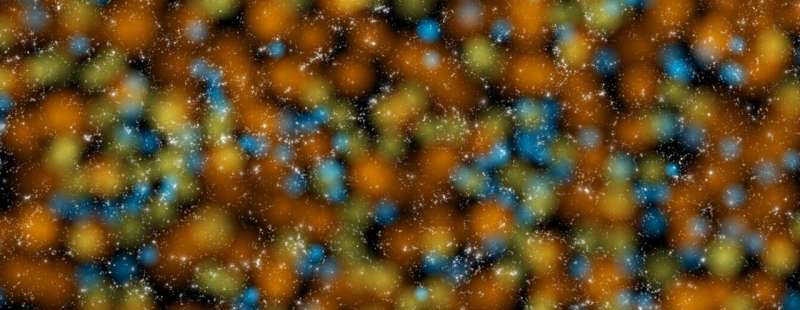
NASA’s Nancy Grace Roman Space Telescope, the agency’s next-generation wide-field observatory, is preparing to embark on a mission that could transform our understanding of the large-scale structure of the universe. Scientists report that the telescope is expected to observe and map thousands of newly discovered cosmic voids, vast empty regions of space that offer critical clues about the nature of dark energy, dark matter, and cosmic evolution.
What Are Cosmic Voids?
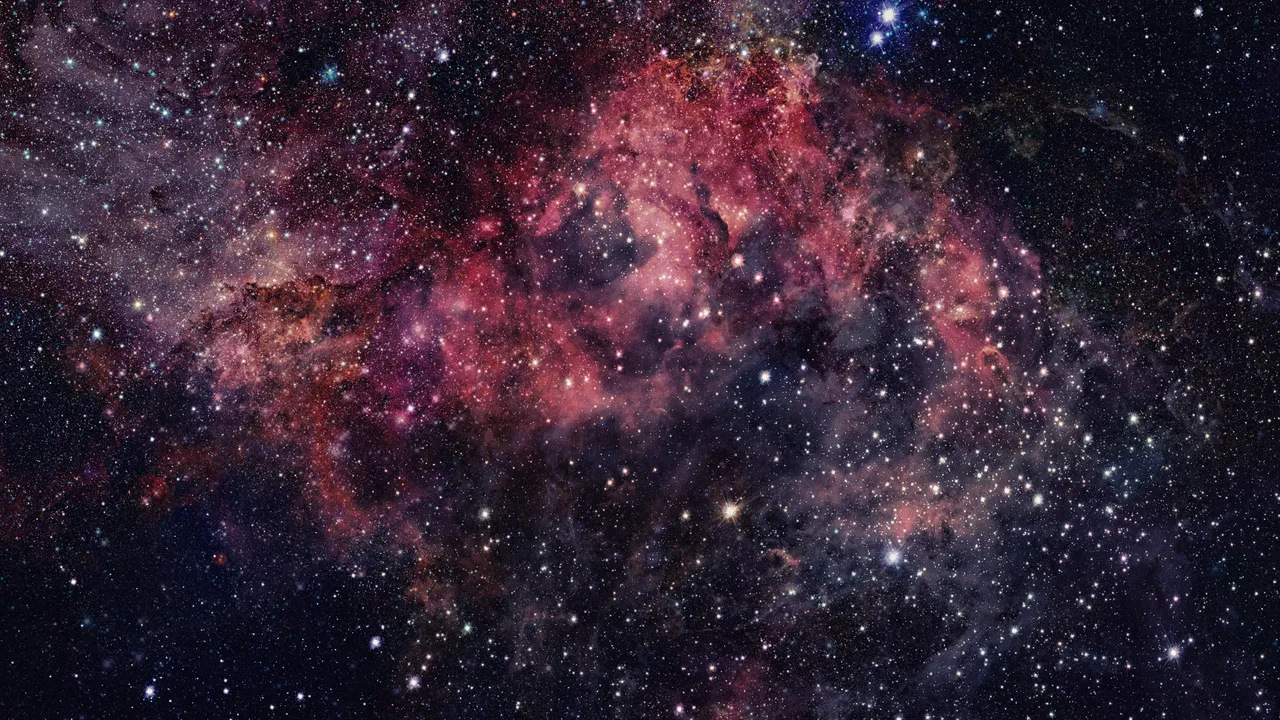
Cosmic voids are immense, sparsely populated regions of space, often spanning hundreds of millions of light-years, with far fewer galaxies than surrounding regions. They form naturally as matter clusters into galaxies, clusters, and filaments, leaving large empty spaces in between.
Studying these voids is essential because:
- Their size and distribution provide a sensitive probe of dark energy, the mysterious force accelerating the expansion of the universe.
- Voids can reveal how matter interacts gravitationally, offering insight into the behavior of dark matter.
- Observing cosmic voids helps refine cosmological models, giving scientists a better understanding of how the universe evolved over billions of years.
Roman Telescope’s Role in Cosmic Cartography
The Roman Telescope, equipped with a wide-field infrared camera and high-resolution imaging capabilities, will survey vast regions of the sky far more efficiently than previous space telescopes. Unlike the Hubble Space Telescope, which has a narrower field of view, Roman can capture detailed maps of enormous swaths of the universe, making it ideal for identifying cosmic voids.
NASA scientists anticipate that Roman will:
- Detect thousands of new voids, significantly expanding the existing catalog
- Measure void shapes, sizes, and distribution patterns with unprecedented precision
- Track galaxy motion and clustering at the edges of voids to test theories of cosmic expansion
Dr. Michael Alvarez, a cosmologist involved in the mission, explained, “By studying voids, we can see the universe’s structure in a completely new way. The Roman Telescope will give us the most detailed 3D map of cosmic emptiness ever created.”
Why This Matters for Cosmology
Understanding cosmic voids is not merely an exercise in mapping “empty space.” These regions act as natural laboratories for studying the universe’s most fundamental forces. Insights gained from void observations can:
- Improve constraints on dark energy models, helping scientists understand why the universe is accelerating
- Test alternative theories of gravity, providing checks against Einstein’s general relativity
- Offer new perspectives on galaxy formation and evolution, since galaxies at void edges may behave differently from those in denser regions
The Roman Telescope’s observations will therefore play a crucial role in refining cosmological theories and simulations for decades to come.
Looking Ahead
The Roman Telescope is expected to launch in the mid-2020s, ushering in a new era of large-scale cosmic surveys. By charting thousands of cosmic voids, it promises to illuminate the structure of the universe in ways that have never been possible before.
Scientists hope that the data collected will not only answer existing questions about dark energy and dark matter but also uncover unexpected phenomena lurking in the vast emptiness of space.
With Roman’s advanced capabilities, humanity is poised to explore the universe’s empty regions—and discover that even emptiness has a story to tell.








Leave a Reply