

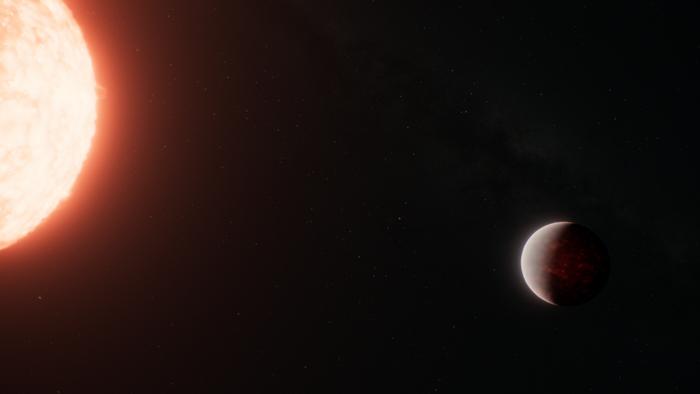
NASA’s James Webb Space Telescope has made a striking discovery, detecting a thick, shrouding atmosphere around an exoplanet with surface temperatures hot enough to melt rock. The observation provides unprecedented insight into the extreme conditions of so-called “lava worlds” and demonstrates Webb’s growing capability to study distant planets in remarkable detail.
The exoplanet, located hundreds of light-years from Earth, is tidally locked, meaning one side perpetually faces its star while the other remains in darkness. Temperatures on the star-facing side are so intense that molten rock flows across the surface, giving rise to a dramatic and dynamic environment. Despite these conditions, Webb’s instruments detected significant amounts of gas and atmospheric particles, suggesting that the planet maintains a dense, possibly evolving atmosphere.
Scientists are particularly interested in the composition of the atmosphere, which could include vaporized rock, metallic compounds, and other exotic elements. Studying such extreme exoplanets offers a window into planetary formation, atmospheric retention under extreme conditions, and the diversity of worlds beyond our solar system.
The discovery underscores the James Webb Space Telescope’s ability to probe the atmospheres of small, rocky planets, a major step forward in exoplanetary science. Previously, detecting atmospheres around such harsh, close-in worlds was extremely challenging due to their proximity to bright stars and intense radiation.
Researchers hope that continued observations will reveal seasonal or dynamic changes in the atmosphere, shedding light on weather patterns, volcanic activity, and atmospheric escape processes on ultra-hot exoplanets. The findings also contribute to a broader understanding of how planets evolve in extreme environments, informing models of planetary habitability and diversity across the galaxy.













Leave a Reply