

A remarkable new discovery is reshaping our understanding of early human creativity. Scientists have found compelling evidence that the world’s oldest known cave art was not created by Homo sapiens, but by their evolutionary relatives — the Neanderthals. This finding challenges one of the longest-held beliefs in archaeology and human history: that modern humans were the first species capable of symbolic and artistic expression.
Ancient Art Older Than Humanity Itself
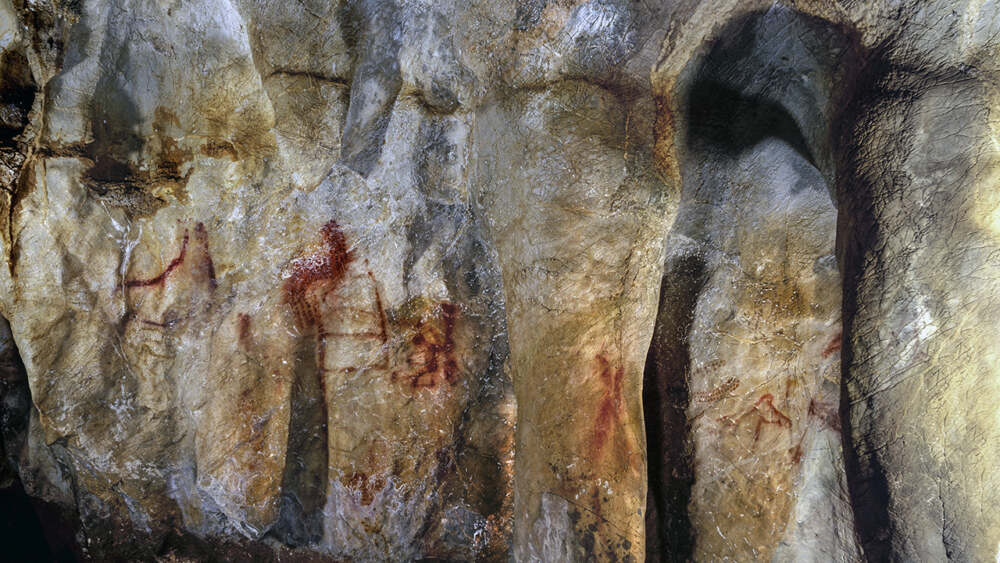
Archaeologists studying several caves in Spain — including La Pasiega, Maltravieso, and Ardales — have determined that red ochre and black pigment markings found on cave walls date back at least 64,000 years. That’s roughly 20,000 years before modern humans are believed to have arrived in Europe.
These markings include dots, hand stencils, and geometric shapes deliberately placed in areas of the caves that required artificial light to access. The sophistication of the pigments and their intentional arrangement suggest these were not random smudges but purposeful works of symbolic art.
A New View of the Neanderthal Mind
For decades, Neanderthals were depicted as primitive, tool-using brutes who lacked culture or imagination. However, this discovery paints a very different picture — one of a species capable of thought, communication, and perhaps even spirituality.
If Neanderthals created art, it means they understood the concept of symbolism — the ability to let one thing stand for another. This is one of the most complex forms of abstract thinking, often regarded as a foundation of language, religion, and culture.
The pigments used in these caves were mixed and applied with intention, showing an understanding of materials, color contrast, and design. These are traits long considered exclusive to modern humans.
Rethinking What It Means to Be Human
This revelation forces scientists to reconsider when and how creativity first evolved. Symbolic expression may not have been a sudden leap made by Homo sapiens but rather a shared inheritance of several ancient human species.
It also raises the possibility that Neanderthals engaged in other cultural behaviors that left little trace — body decoration, tool ornamentation, or even rituals. Each new finding narrows the cognitive and emotional gap between them and us.
Debates and Ongoing Research
Not all experts agree that these markings are definitive proof of Neanderthal art. Some caution that dating methods may provide only minimum ages for the paintings, leaving a small margin of uncertainty. Others question whether abstract marks alone qualify as “art” or if they served practical or ritual purposes instead.
Even so, the evidence continues to mount. More caves across Europe show similar pigment patterns, and the consistency in style supports the idea of a shared cultural tradition among Neanderthal groups.
A Legacy Written in Stone
If these findings hold true, then Neanderthals were not only intelligent hunters and toolmakers — they were artists, capable of imagination and expression. Their creations bridge the vast gap between biology and culture, showing that creativity may be as ancient as humanity itself.
The cave walls, adorned with their silent markings, stand as a testament to a truth that humbles us: the story of art began not with us, but with another kind of human who saw the world and chose to leave a mark.














Leave a Reply