

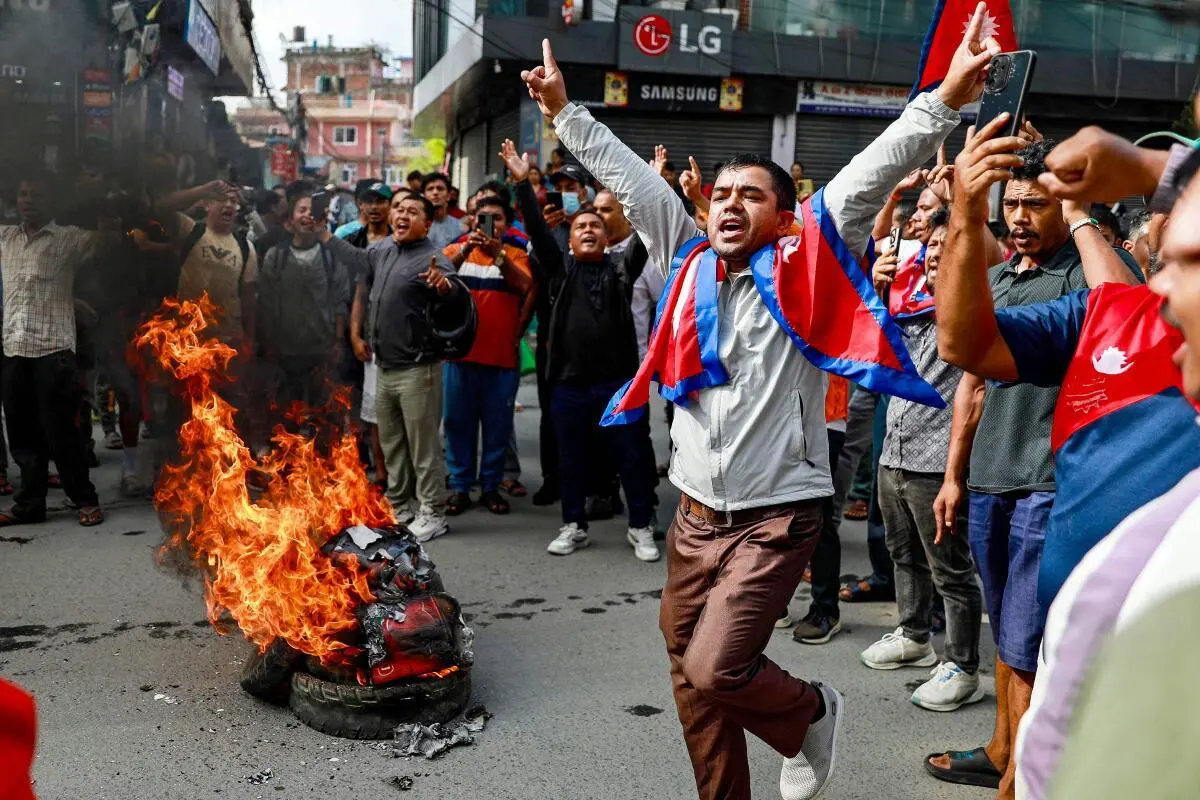
In a historic turn of events, Nepal has witnessed a transformative political upheaval led by its Generation Z. What began as a protest against a government-imposed social media ban swiftly escalated into a nationwide movement challenging deep-rooted corruption, political nepotism, and systemic inequality.
The Spark: Social Media Ban and Youth Outrage
The catalyst for the unrest was the government’s abrupt decision to block access to 26 major social media platforms. This move was perceived by many, especially the youth, as an infringement on free expression and a tactic to suppress dissent. However, the ban merely ignited a pre-existing frustration among young Nepalese over unemployment, political corruption, and the elite’s ostentatious display of wealth amidst widespread poverty.
Escalation: From Digital Protests to Street Uprising
Protests erupted across the country, with Kathmandu witnessing some of the most intense demonstrations. The movement, dubbed the “Gen Z Protests,” saw thousands of young individuals taking to the streets, demanding accountability and systemic change. The situation intensified when security forces responded with force, leading to tragic casualties among protesters. The violence culminated in the storming of the Nepalese Parliament on September 9, 2025, marking a pivotal moment in the nation’s democratic journey.
A New Dawn: Sushila Karki Appointed as Interim Prime Minister
In the wake of the unrest, Prime Minister K.P. Sharma Oli resigned, and the political landscape shifted dramatically. Sushila Karki, a former Chief Justice known for her anti-corruption stance, was appointed as Nepal’s first female Prime Minister. Her selection was notably influenced by the Gen Z movement, which conducted online polls via platforms like Discord to endorse her candidacy. Karki’s appointment symbolizes a significant step towards youth empowerment and institutional reform in Nepal.
Path Forward: Elections Scheduled and Calls for Reform
Under Karki’s leadership, the interim government has committed to holding fresh parliamentary elections on March 5, 2026. This move aims to restore democratic processes and address the demands of the youth-led protests. However, the Gen Z activists emphasize that the struggle is far from over. They advocate for comprehensive reforms, including anti-corruption measures, enhanced political transparency, and policies that address youth unemployment and social justice.
Regional Implications and Global Attention
Nepal’s Gen Z Uprising has garnered international attention, highlighting the power of youth-led movements in shaping political landscapes. The protests resonate with similar global movements where young people challenge established norms and demand accountability. As Nepal navigates this transformative period, the world watches closely, recognizing the potential for such movements to inspire change beyond national borders.
Conclusion: A Nation at a Crossroads
Nepal stands at a critical juncture. The Gen Z-led protests have not only toppled a government but have also ignited a broader conversation about governance, accountability, and the role of youth in shaping the future. As the nation prepares for upcoming elections, the aspirations of its young citizens will undoubtedly play a pivotal role in determining the path forward. The events of September 2025 will be remembered as a testament to the power of collective action and the enduring spirit of a generation determined to redefine their nation’s destiny.






Leave a Reply