

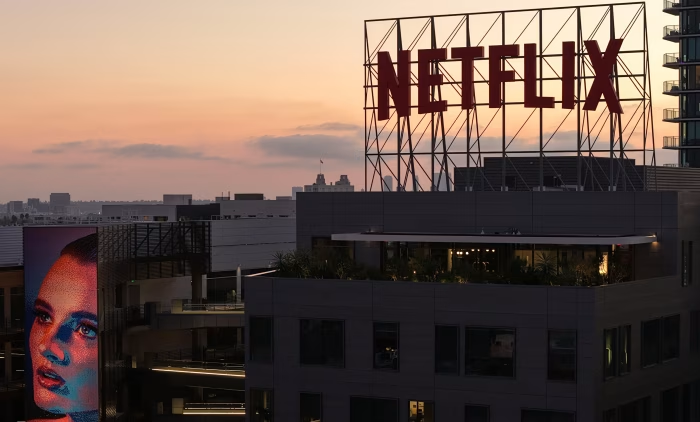
In a landmark deal set to reshape the entertainment industry, Netflix has announced plans to acquire Warner Bros. in a transaction valued at $72 billion. The acquisition signals Netflix’s continued push to expand its content library and strengthen its position as a global media powerhouse.
The Deal at a Glance
The deal, one of the largest in the streaming and media sector in recent years, gives Netflix access to Warner Bros.’ vast film and television portfolio, including iconic franchises, blockbuster films, and popular television series. Analysts say the acquisition could allow Netflix to consolidate content, attract new subscribers, and compete more aggressively with other major streaming platforms.
Strategic Rationale
Netflix’s strategy has increasingly focused on owning premium content rather than relying solely on licensing agreements. By bringing Warner Bros. under its umbrella, Netflix gains:
- Exclusive Access to Blockbuster Franchises: Including globally recognized films and series that can drive subscriptions.
- Expanded Production Capabilities: Utilizing Warner Bros.’ production studios to scale original content creation.
- Enhanced Global Reach: Leveraging Warner Bros.’ international distribution networks to strengthen Netflix’s footprint in key markets.
Industry experts note that the acquisition aligns with Netflix’s long-term strategy to diversify its content offerings while controlling costs associated with licensing third-party films and shows.
Market Reaction
The announcement sent shockwaves through the entertainment and stock markets. Netflix shares surged on the news, while analysts weighed the implications for rival streaming services, including Disney+, HBO Max, and Amazon Prime Video. Investors see the move as a potential game-changer, though some caution that integrating a legacy studio like Warner Bros. will pose operational and cultural challenges.
Challenges Ahead
While the acquisition offers significant opportunities, Netflix faces hurdles in merging two large organizations with distinct corporate cultures. Warner Bros.’ existing distribution deals, workforce management, and legacy systems could complicate integration. Furthermore, regulatory scrutiny may arise given the scale of the deal and its potential impact on competition within the media industry.
Industry Implications
The acquisition may trigger a new wave of consolidation across streaming and traditional media. Other companies may pursue similar mergers or acquisitions to remain competitive, particularly as global streaming audiences continue to grow and demand for exclusive, high-quality content rises.
Looking Forward
Once completed, the Netflix-Warner Bros. deal could redefine the dynamics of the entertainment industry. With a combination of deep content libraries, production capabilities, and global reach, Netflix is positioning itself not just as a streaming service, but as a dominant media conglomerate with influence across film, television, and digital platforms.

















Leave a Reply