

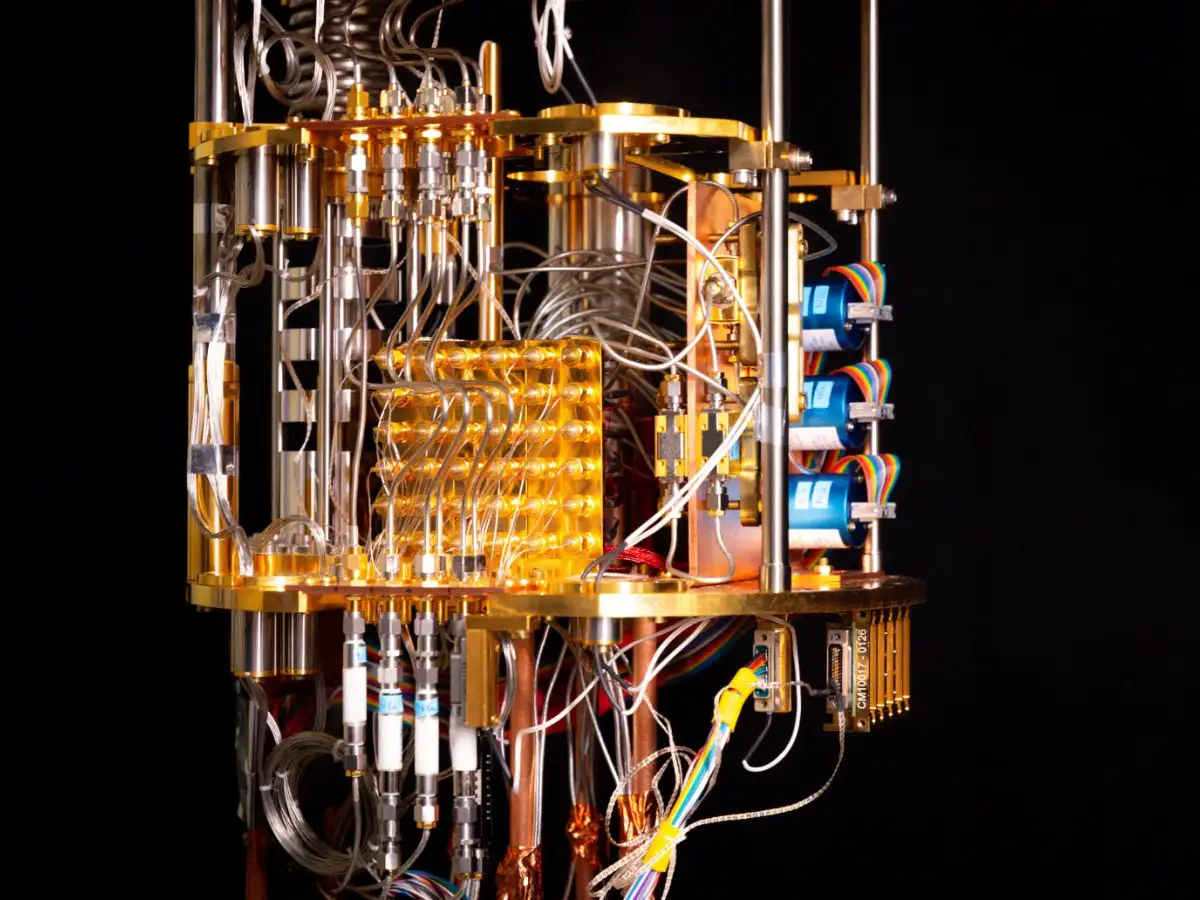
Scientists have announced a major advance in quantum computing, potentially clearing one of the biggest hurdles standing between today’s experimental devices and tomorrow’s fault-tolerant, large-scale quantum machines.
What the New Research Shows
- A research team has developed improved techniques for stabilizing quantum bits (qubits). In particular, they focused on reducing certain types of quantum errors that degrade performance over time — a key challenge in making quantum computers reliable.
- They report better coherence times under realistic conditions. That means qubits can maintain their fragile quantum states longer than before, giving more time for computations to run before errors creep in.
- The researchers also demonstrated enhancements in error monitoring and correction protocols. These improvements reduce the overhead (extra hardware and procedures needed) for keeping computations accurate.
Why It’s Important
- Better error resistance makes quantum computers more usable: Quantum error correction is one of the major bottlenecks. If qubits can stay stable longer and errors can be corrected more efficiently, that brings practical quantum computation closer.
- It helps bridge the gap between today’s devices (which are powerful but noisy and limited) and what’s needed for large-scale applications in chemistry, materials science, cryptography, optimization, and beyond.
- Lowering hardware demands and improving stability helps reduce cost and complexity, making broader deployment more feasible.
What We Still Need to Solve
- Even with these advances, fully fault-tolerant quantum computers (which can run arbitrary algorithms reliably) are still years away. Challenges include scaling up the number of qubits, maintaining consistency across many qubits, and managing heat, noise, and decoherence in real environments.
- Some error types are still difficult to suppress; the newest work addresses particular error modes but not all. The more complete the suppression and correction, the closer we get to practically useful quantum machines.
- Manufacturing consistency, reliability, and integration with quantum software and control systems remain important hurdles.
Takeaway
This new study marks a significant step in quantum hardware development. By improving coherence time and refining error correction, researchers are chipping away at the thorny engineering problems that have held quantum computing back. While massive, fault-tolerant quantum systems are not here yet, this work brings them into clearer focus—and makes their eventual arrival more plausible.















Leave a Reply