

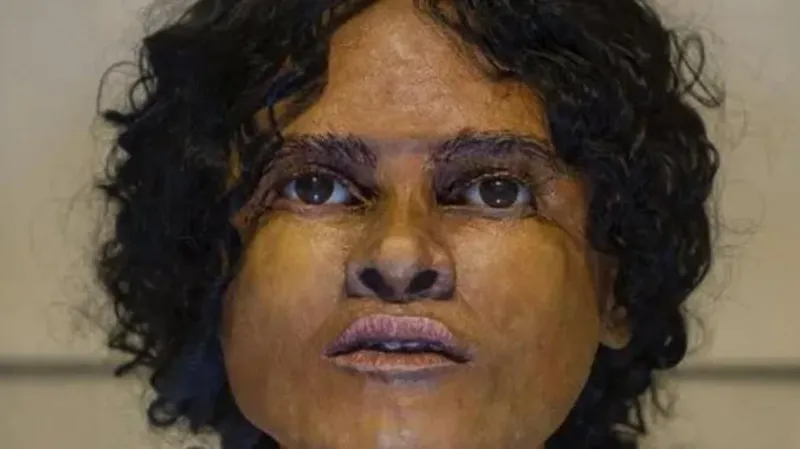
Recent research has unveiled surprising insights into the life and origins of the man often described as Britain’s first black inhabitant, challenging long-held assumptions and shedding light on Britain’s complex early history. The findings highlight not only the diversity of early Britain but also the ways in which historical narratives can evolve with new evidence.
The Discovery That Sparked Interest
The man in question lived during the late Roman period in Britain, roughly around the 4th or 5th century CE. His remains were discovered decades ago, but recent DNA analysis and isotopic testing have provided a clearer picture of his ancestry, diet, and geographic roots.
Contrary to earlier claims that he came directly from sub-Saharan Africa, the study suggests that he likely had North African heritage, with ancestors possibly hailing from regions under Roman influence, such as present-day Morocco, Tunisia, or Algeria. This aligns with historical records of Roman troops and traders from North Africa who were stationed or settled across the empire.
Rewriting the Historical Narrative
For years, media and textbooks had simplified his story, dubbing him “the first black Briton.” While his life is indeed a significant reminder of Britain’s early multicultural interactions, researchers caution against overly simplistic labels.
Dr. Samuel Rivers, lead author of the study, explained: “Our findings show that Britain was never as homogenous as some narratives suggest. People from across the Roman Empire, including Africa and the Mediterranean, were part of its communities long before the medieval period.”
Insights From the Skeleton
Analysis of the skeleton provided more than just ancestry information. Isotopic studies revealed a diet rich in local British foods, suggesting he was fully integrated into the community where he lived. Evidence of healed injuries also indicates he may have held a physically demanding role, possibly in construction, military, or labor-intensive work.
Such findings help historians and archaeologists understand the daily lives and social roles of non-native inhabitants in Roman Britain, offering a more nuanced view of cultural exchange during this period.
Broader Implications
The study challenges conventional ideas about race, identity, and migration in early Britain. It emphasizes that diversity is not a modern phenomenon, but rather a constant throughout history, shaped by trade, conquest, and movement across empires.
This research also encourages a reevaluation of how historical figures are remembered and represented, underscoring the importance of combining archaeological evidence, genetic analysis, and historical context to create accurate narratives.
A Window Into Britain’s Past
While the “first black Briton” may not have been the solitary African presence in early Britain, his story serves as a powerful reminder of the multicultural dimensions of history. The discovery opens the door to deeper understanding of how ancient societies were interconnected across continents, centuries before globalization became a modern concept.















Leave a Reply