

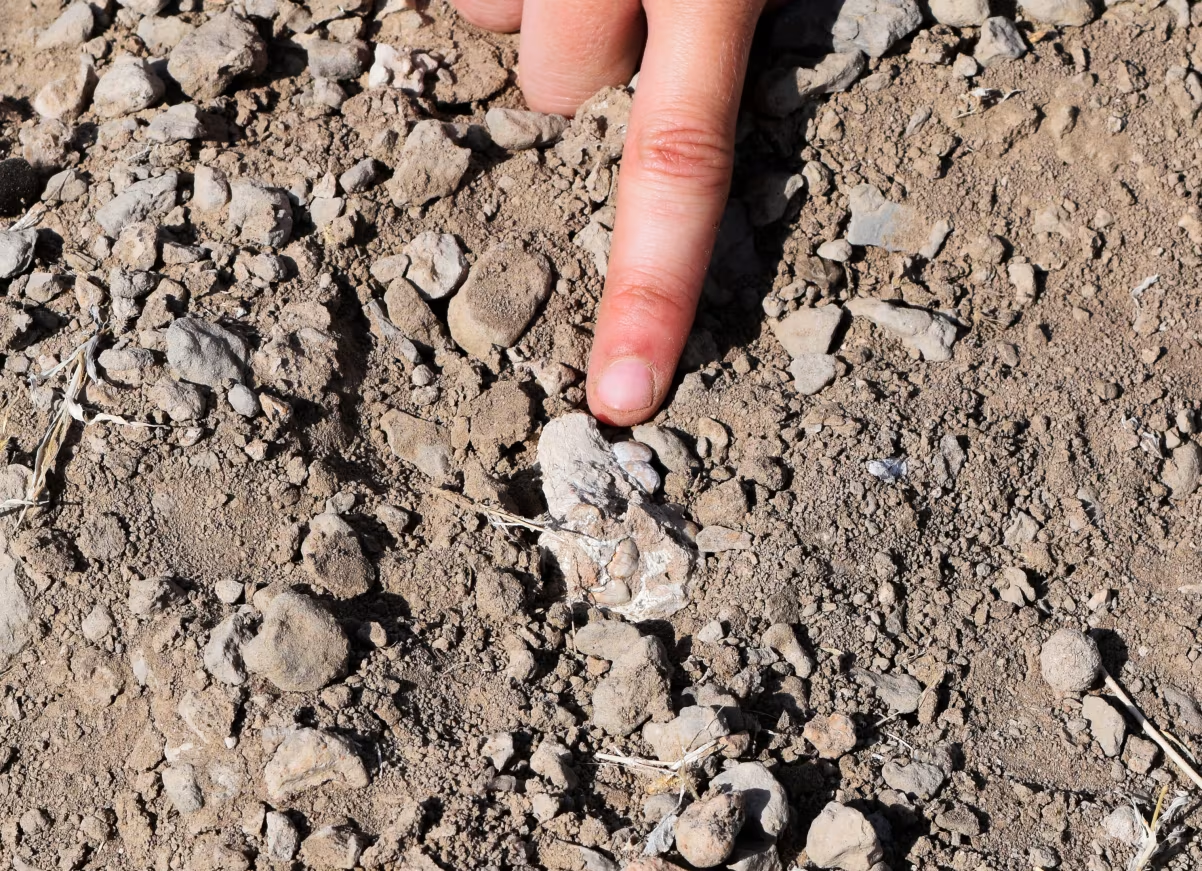
A recently unearthed foot fossil is shedding new light on the diversity of early human ancestors in Africa. Researchers have confirmed that the fossil does not belong to the famous Australopithecus afarensis species—of which “Lucy” is the most well-known specimen—but to a previously little-known relative that inhabited the same region around 3.5 million years ago.
The fossil, discovered in the Afar region of Ethiopia, includes remarkably well-preserved bones that provide unique insights into how this species moved and adapted to its environment. Preliminary analysis suggests that its foot was more robust than Lucy’s, indicating a combination of tree-climbing abilities and bipedal walking, a trait that may have helped it survive in a mixed woodland and savanna habitat.
“This discovery reveals that early hominin evolution was more complex than we imagined,” said one of the lead paleoanthropologists. “Lucy was not walking alone—she shared her world with other species, each with distinct adaptations and lifestyles.”
The fossil’s unique structure also offers clues about the diversity of locomotion among early hominins. While Lucy’s species displayed a relatively modern gait, the newly identified species appears to have retained primitive traits suited for climbing, suggesting that multiple strategies for survival coexisted at the time.
Experts believe this find could redefine timelines and ecological understanding of the region, highlighting the intricate web of interactions between early hominin species. The discovery adds to a growing body of evidence that Africa’s prehistoric landscape was home to a variety of species, each contributing to the evolutionary story that eventually led to modern humans.
The research team plans to continue excavations in the area, hoping to uncover more fossils that could reveal additional aspects of this little-known species’ life, diet, and social behavior.













Leave a Reply